Nazar & Negative Energy Protection
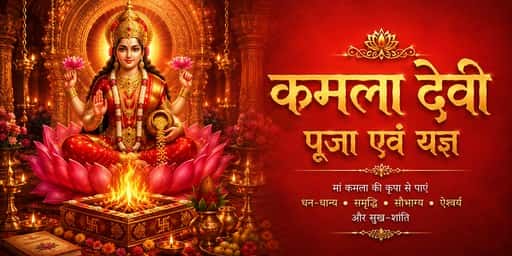
Kamla Devi Puja and Yajna
"Kamala Devi is the tenth and final of the ten Mahavidyas. She is the Tantric form of Lakshmi Mata. The goddess of supreme wealth, abundance, and good fortune. She sits upon a lotus, with elephants pouring sacred water over her head. Where Lakshmi gives wealth in its everyday form, Kamala gives wealth in its highest, most enduring form. Spiritual abundance. Material prosperity. The fortune that lasts across generations. This is one of the most powerful pujas for wealth and family lineage."
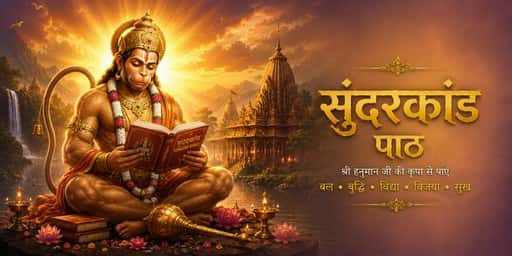
Sundar Kand Path
"Sundar Kand is the fifth chapter of the Ramcharitmanas, written by Tulsidas. It tells one story without a break. Hanuman crosses the ocean to Lanka. He finds Mata Sita. He faces Ravana's court without fear. He burns Lanka and returns with the news that changes everything. Of all the chapters in the Ramcharitmanas, only Sundar Kand has this quality. Every event in it ends in success."
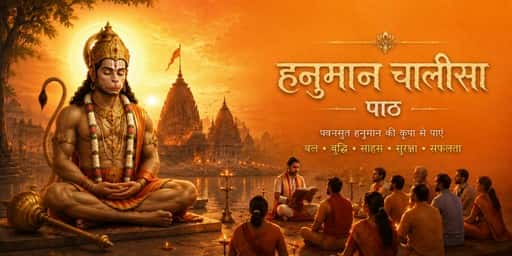
Hanuman Chalisa Path
"The Hanuman Chalisa is the most recited prayer in all of Hindu tradition. Forty verses written by Tulsidas in Awadhi, it tells the story of Hanuman's strength, his devotion to Ram, and his ability to lift any difficulty a devotee places before him. Tradition holds that wherever the Hanuman Chalisa is recited with sincerity, no harm can come. Families recite it before journeys. Students recite it before exams. Devotees recite it daily as a shield against fear. It is the most accessible, most powerful Hanuman prayer in existence."
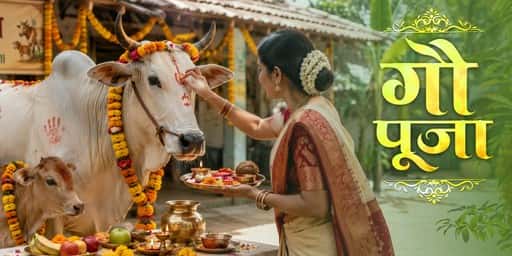
Gau Pujan (Gau Grass Feeding)
"Kamdhenu is the divine cow of Hindu tradition. The wish-fulfilling cow who emerged from the cosmic ocean during the great churning. Her name means "the cow of desires." Tradition holds that whoever worships Kamdhenu receives whatever they ask for, because she carries within her body all the gods, all the sacred rivers, and all the elements of the cosmos. She is also called Surabhi, "the fragrant one," and is the divine mother of all cows on earth. To worship Kamdhenu is to ask the most generous mother of the universe for her blessing."
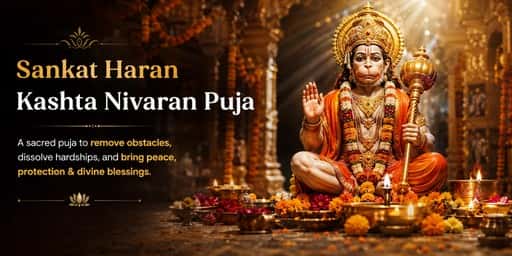
Sankat Haran Kashta Nivaran Puja
"Every life passes through phases when troubles arrive from all sides at once. Work stalls, health wavers, and peace leaves the home. The shastras prescribe the Sankat Haran Kashta Nivaran Puja for exactly these times. It is a focused worship of Shiv Ji, the lord who dissolves suffering as easily as he is pleased, performed to cut through accumulated sankat and kashta and open the path again."
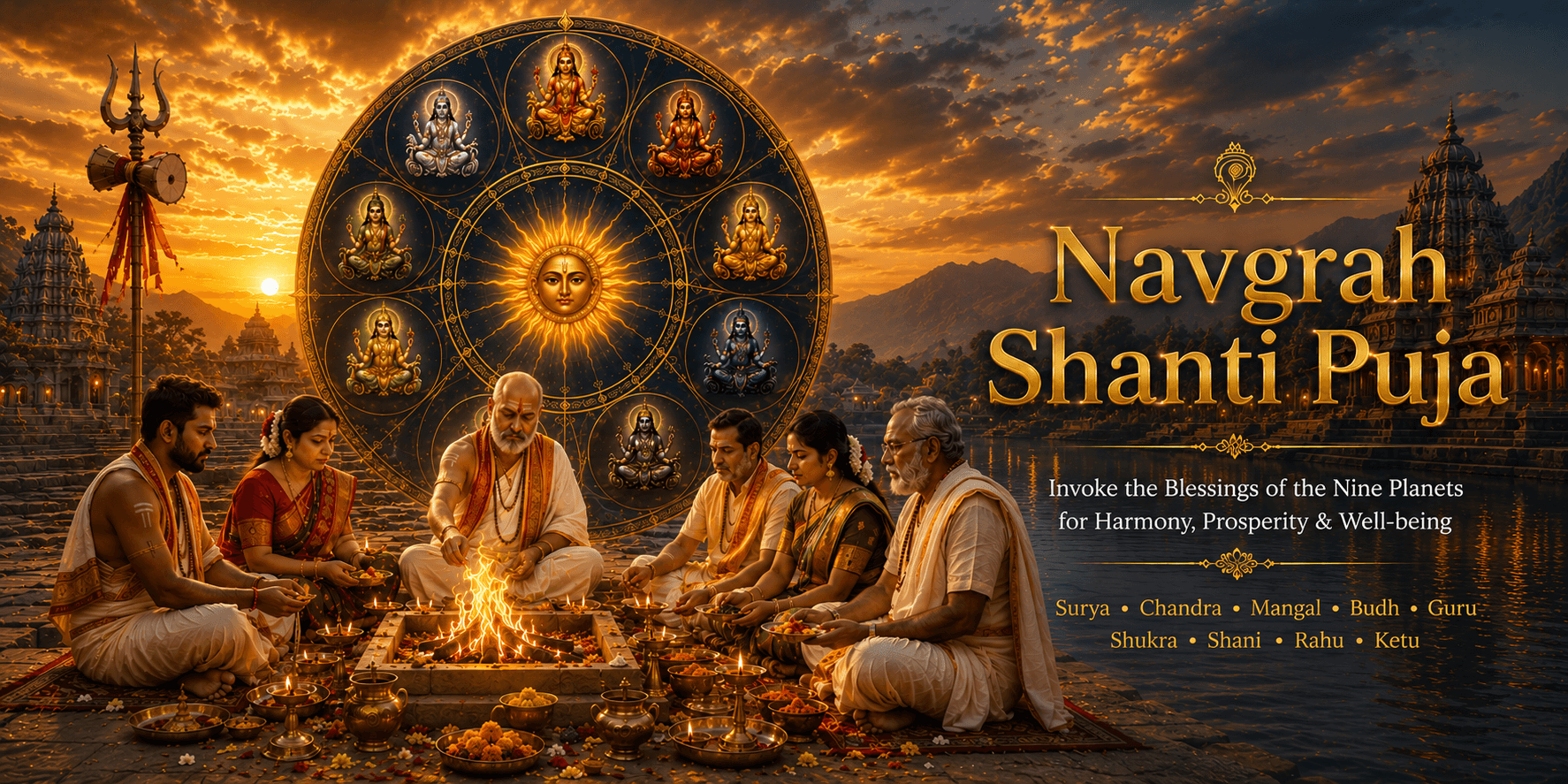
Navgrah Shanti Puja
"Every life is shaped by nine celestial forces. Surya, Chandra, Mangal, Budh, Guru, Shukra, Shani, Rahu, and Ketu. These are not distant stars. In Vedic tradition, they are living divine forces. At the moment of birth, their position imprints itself on the soul. That imprint is the birth chart. When the planets are favourably placed, life flows. When they fall into difficult positions, the devotee senses something is out of sync."
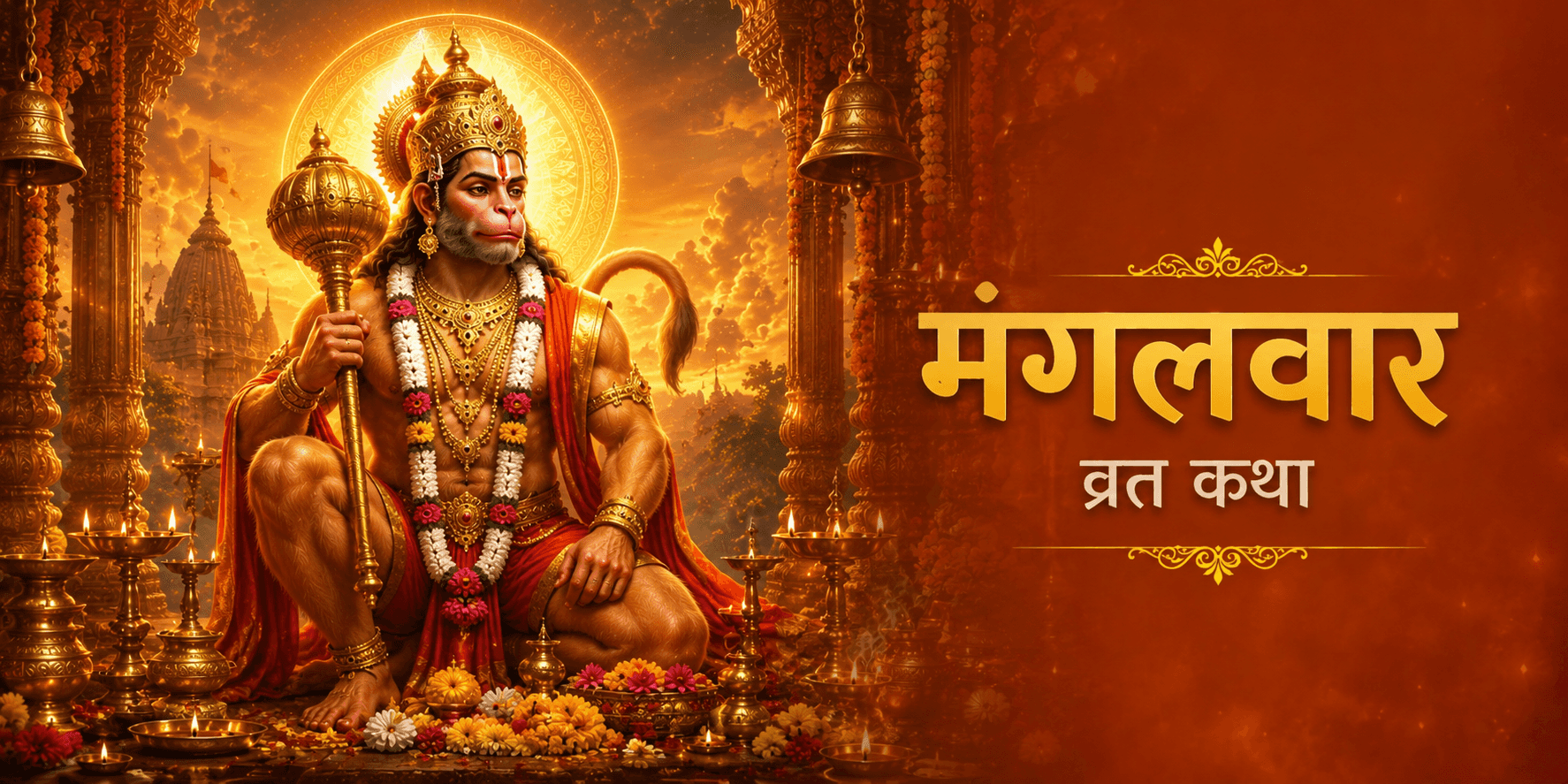
Mangalvar Vrat Katha
"Mangalvar Vrat is the Tuesday vrat dedicated to Hanuman Ji. Tuesday itself is the day ruled by Mangal Dev, the planet of strength and courage. Tradition holds that Hanuman Ji, born of fire and wind, is the only deity who fully channels Mangal's energy. The vrat is observed by devotees seeking inner courage, victory over enemies, success in marriage, promotion at work, and freedom from chronic illness. It is one of the most beloved weekday vrats in the Hindu calendar, observed by both men and women."
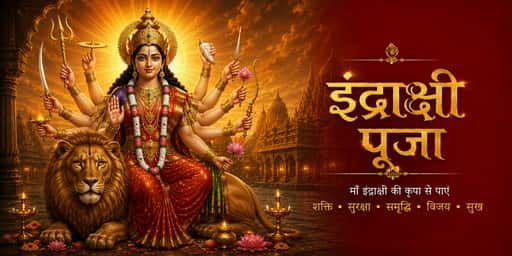
Indrakshi Puja
"Indrakshi Mata is one of the most powerful protective goddesses in the Vedic tradition. Her name means "she with the eyes of Indra." The Indrakshi Stotra was first taught by Lord Indra himself to sage Brihaspati. It is recited for protection from disease, from enemies, and from the unseen forces that can harm a devotee. For centuries, families have turned to this puja during prolonged illness, mysterious afflictions, and times when conventional remedies have not worked."
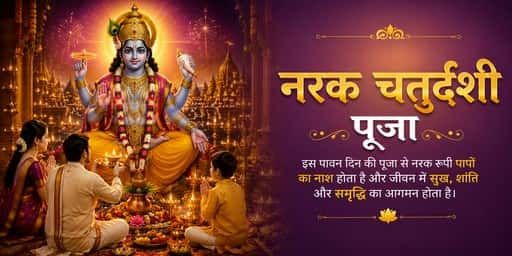
Narak Chaturdashi Puja
"Narak Chaturdashi falls the day before Diwali. It is also known as Chhoti Diwali or Roop Chaudas. The shastras tell how Krishna slew the demon Narakasura. His death freed sixteen thousand captives from the demon. The day marks the win of light over dark. People light lamps to drive away all evil. They worship Yamraj to escape the fear of an early death. They also honour Lakshmi, Ganesh, and Vishnu together. An oil bath at dawn is a key part of the day. It is said to wash away sin and bring beauty. The day clears negative force and brings family joy."
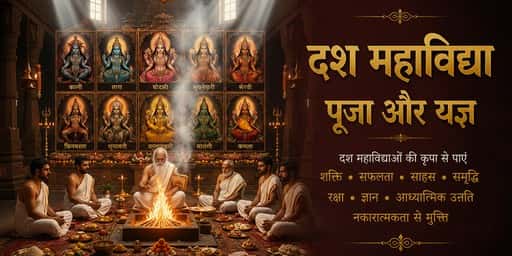
Das Mahavidya Puja and Yajna
"The Das Mahavidya are the ten supreme goddesses of the Tantric tradition. Kali. Tara. Tripura Sundari. Bhuvaneshwari. Tripur Bhairavi. Chhinnamasta. Dhumavati. Baglamukhi. Matangi. Kamala. Each one carries a different power. Each one answers a different prayer. Where individual Mahavidya pujas address one need, the Das Mahavidya Puja honours all ten together. It is the most complete Shakti puja in the entire Tantric tradition."
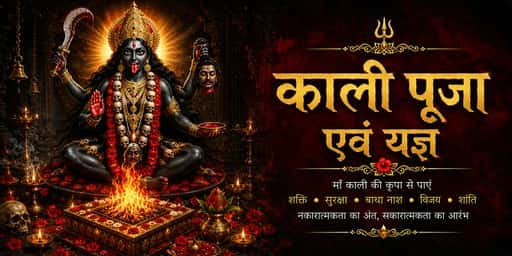
Kali Puja and Yajna
"Kali Mata is the first of the ten Mahavidyas. She is the supreme mother in her most powerful form. Dark as the night sky. Wearing a garland of skulls. Holding a sword in one hand and a severed head in the other. Standing on Lord Shiva himself, who lies beneath her in surrender. Kali is time. Kali is death. Kali is the force that destroys what must end so that what is true may rise. Her devotees turn to her not for gentle blessings but for absolute protection."
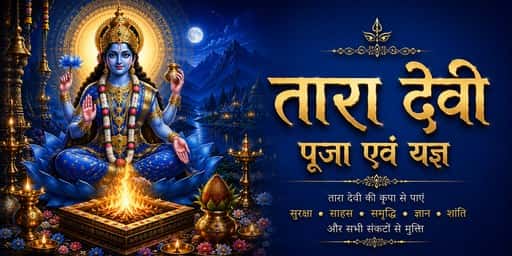
Tara Devi Puja and Yajna
"Tara Devi is the second of the ten Mahavidyas. Her name means "she who carries across." She is the goddess who carries the soul across the ocean of suffering. Across fear. Across confusion. Across the dark phases of life. She appears with a fierce form, but her energy is deeply maternal. She destroys what threatens her devotees, while holding them close. In some traditions, Tara is also worshipped as a form of Kali Mata. Wherever she is invoked, lost souls find their way home."