
Vedic Puja
Pashupatinath Puja At Kathmandu
"Pashupatinath of Kathmandu is one of the most sacred seats of Shiv Ji in the world, standing on the banks of the Bagmati river. Here Shiv Ji is worshipped as the protector of every creature, and the shastras hold his darshan and worship at this kshetra to be liberating. Devotees turn to Pashupatinath especially for protection from untimely death and prolonged illness, the graces closest to his form as the lord of life itself."
Sankat Haran Kashta Nivaran Puja
"Every life passes through phases when troubles arrive from all sides at once. Work stalls, health wavers, and peace leaves the home. The shastras prescribe the Sankat Haran Kashta Nivaran Puja for exactly these times. It is a focused worship of Shiv Ji, the lord who dissolves suffering as easily as he is pleased, performed to cut through accumulated sankat and kashta and open the path again."
Sundarkand Path Group Puja
"Sundarkand is the most loved part of the Ramayan. Its name means the beautiful chapter. It tells of Hanuman's leap across the sea to Lanka. He went to find Mata Sita, held by Ravana. He crossed the ocean, found her, and gave her Ram's ring. He then burned Lanka and returned with hope. The whole chapter sings of his courage and faith. Of all the Ramayan, this part holds the most power. Its path is said to clear trouble and fear. It brings strength, wisdom, and the grace of Hanuman. Devotees recite it to defeat enemies and gain peace."
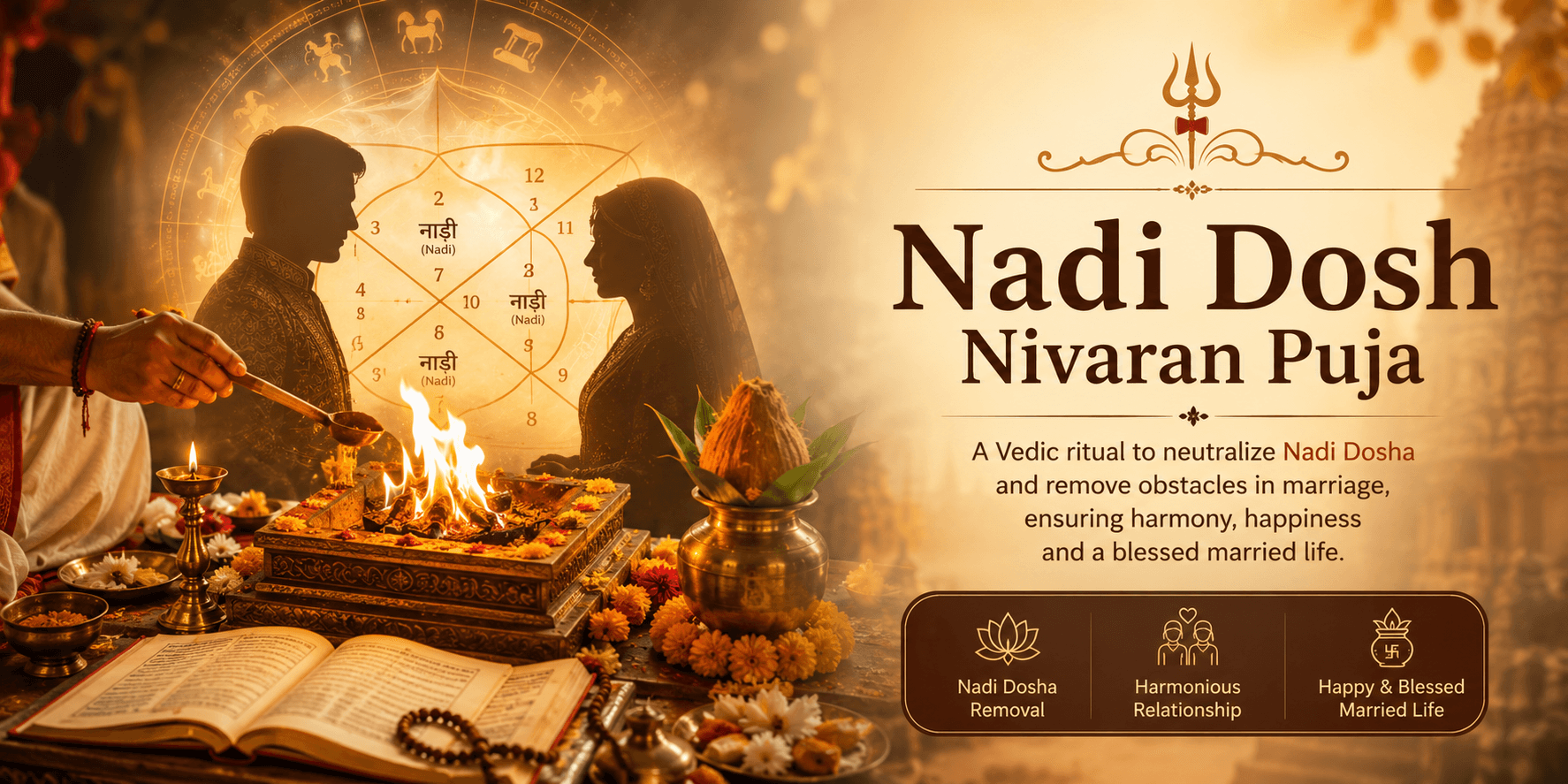
Nadi Dosh Nivaran Puja
"This puja addresses three related compatibility doshas identified during kundli milan. Nadi Dosh forms when both partners share the same Nadi, one of three energy currents in Vedic astrology. Gan Dosh forms when the partners belong to incompatible gans (Deva, Manushya, or Rakshasa). Nadi Dosh affects marital harmony at a deeper level. All three can shake the foundation of a marriage if left unaddressed."
Shani Dosh Nivaran Puja
"Shani is unlike any other deity. He is the son of Surya Dev. The cosmic disciplinarian. Slow, deliberate, and absolutely just. Where other planets bless quickly, Shani measures every action of every lifetime. He has often been misunderstood as a deity to fear. The truth is gentler. Shani is the teacher who refuses to let his students stay unchanged. His difficult phases, Sade Sati, Dhaiya, and natal Shani Dosh, are not punishments. They are rigorous spiritual education."
Garun Puran Path
"The Garun Puran is one of the eighteen Mahapuranas of Hindu scripture. It was narrated by Lord Vishnu himself to Garud Dev. The gentle escort of souls on their journey beyond this world. The path is performed in the days between a loved one's passing and the thirteenth-day ritual, known as Terahvin. This is the period when the soul, in Hindu belief, makes its transition from this life to the next. The Garun Puran is a guidebook for the soul. It explains what the departed will encounter on the onward journey, and the path that leads to peace."
Budh Dosh Nivaran Puja
"Budh is the youngest of the classical planets and the most quick-witted. The messenger of the cosmos. The deity of intellect, communication, learning, and skilled craft. He turns thought into words, and words into influence. When Budh shines strong, the devotee speaks with clarity and moves through ideas with ease. When his energy is afflicted, the gifts reverse. Words stumble. Thoughts scatter. Decisions feel impossible. The nervous system grows strained. For students, this can mean dropping grades. For professionals, losing influence. For everyone, the inner voice loses its clarity."
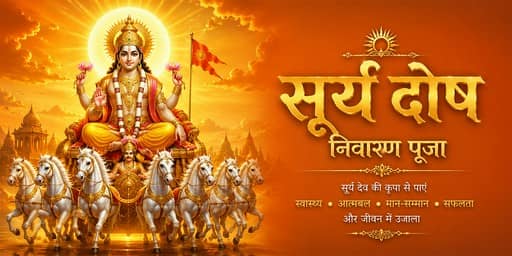
Surya Dosh Nivaran Puja
"Surya is the one deity every devotee can see with their own eyes, every day. The visible god. The giver of life. The centre of the entire solar system. In a birth chart, the Sun governs the soul, vitality, leadership, and the relationship with one's father. A Surya Grahan, the solar eclipse, is the moment his light is swallowed. The shastras treat this moment with great seriousness. A dosh born of the Grahan can dim recognition, weaken health, and hold back rightful advancement. This puja is performed to remove that shadow."
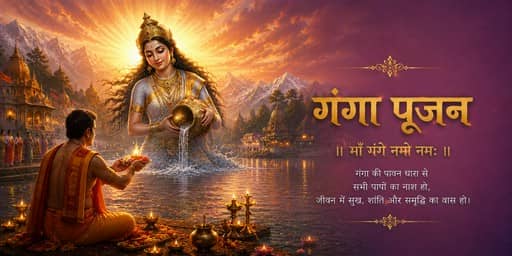
Ganga Pujan
"Ganga did not always flow on earth. Sage Bhagiratha did years of penance to bring her down, so her waters could free the souls of his ancestors. But her descent was so powerful, it would have shattered the earth. Lord Shiva caught her in his matted locks and let her flow gently onto the Himalayas. Since then, Ganga has been more than a river. She is the mother who takes away the sins of those who touch her waters."
-dosh-nivaran-puja-651eaa3142dc48b9696749c9-92729134-s.jpg&w=3840&q=70)
Brihaspati (Guru) Dosh Nivaran Puja
"Jupiter is the most benefic of all planets in Vedic astrology. The great teacher. The cosmic father. He governs wisdom, righteousness, faith, marriage, and children. When Jupiter shines strong, life expands naturally. Partnerships form. Families grow. Wealth flows. When he is afflicted, the very things he is meant to bring become hard to receive. Marriage delays for no clear reason. Children do not come. Wisdom feels just out of reach when decisions matter most. The devotee senses the door that Jupiter normally opens is somehow shut."
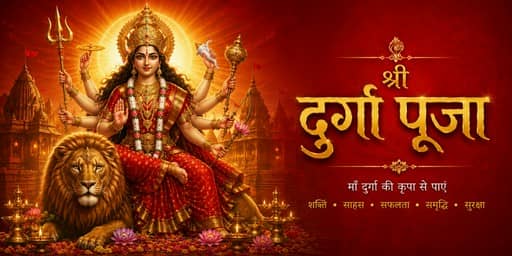
Durga Puja
"Maa Durga rides a lion. She holds eighteen weapons in her many arms. Each weapon is a gift from a different god. Her gaze is the gaze of a mother who will let nothing harm her children. The demon Mahishasura had a boon. No man, no god could kill him. He defeated even Indra. The gods released their combined energies. From that fire, Maa Durga emerged. After nine days of battle, on the tenth day, she slew Mahishasura. That day is Vijayadashami."