Popular Vedic Puja
-puja-651bd1c3052302caf9a15365-66742566-s.jpg&w=3840&q=60)
Deepawali (Diwali) Puja
"Deepawali (Diwali) is the biggest festival in the Hindu calendar. Every family prepares for it weeks in advance. The home is cleaned, diyas are lit, and everything is kept ready before the muhurat arrives. Mata Lakshmi walks the earth that night. She enters homes that are waiting. The ones that are not, she skips."
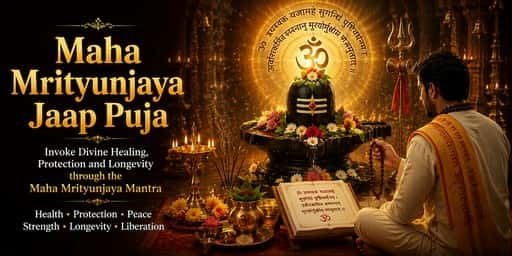
Maha Mrityunjaya Jaap Puja
"The Maha Mrityunjaya Mantra is one of the oldest prayers in the Rigveda. It is called the great death-conquering mantra. Sage Markandeya was the first to chant it. He prayed to Shiva and was saved from death itself. Devotees have chanted it ever since for healing, for safety, and for long life."
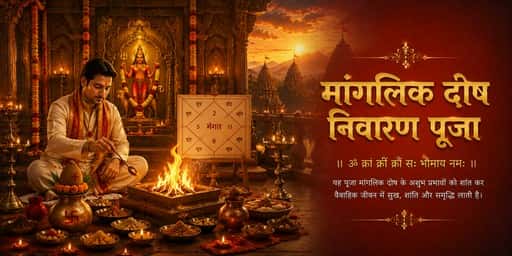
Mangalik Dosh Nivaran Puja
"Mars is the warrior of the cosmos. The planet of fire, courage, and ambition. When Mangal is well placed, he gives strength and drive. But when he falls into the 1st, 4th, 7th, 8th, or 12th house, the same energy turns sharp. This is Manglik Dosh, the most discussed astrological condition in marriage matching. The dosh shows up during kundli milan. A strong Manglik Dosh in either partner can bring friction, sudden quarrels, and unrest in married life."
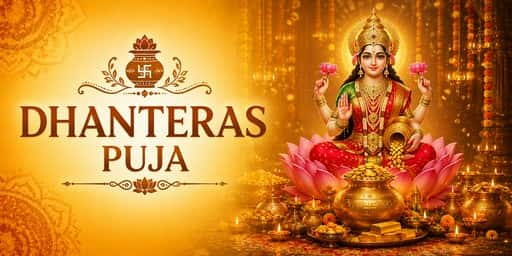
Dhanteras Puja
"Dhanteras marks the beginning of the Diwali festival. The word dhan means "wealth," and teras refers to the thirteenth lunar day. Tradition holds that on this day, Goddess Lakshmi emerged from the cosmic ocean during the great churning. Lord Dhanwantari, the divine physician, also emerged on this day, holding the pot of amrit (the nectar of immortality). The day is sacred to all three deities. Families buy gold, silver, and metal vessels on Dhanteras, believing that what is bought on this day grows multiplied through the year ahead."
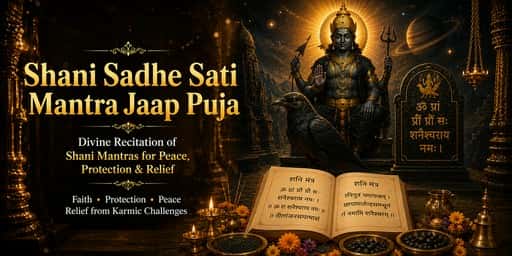
Shani Sadhe Sati Mantra Jaap Puja
"Sadhe Sati is the seven-and-a-half-year transit of Saturn across the Moon sign. It is the most discussed and most feared Shani period in Vedic astrology. During Sadhe Sati, life often feels relentlessly slow. Every effort takes years to bear fruit. Patience itself begins to feel exhausted. But Sadhe Sati is not punishment. Shani is the cosmic disciplinarian, slow and absolutely just. Those who walk through this transit with devotion emerge stronger, wiser, and aligned with their real purpose."
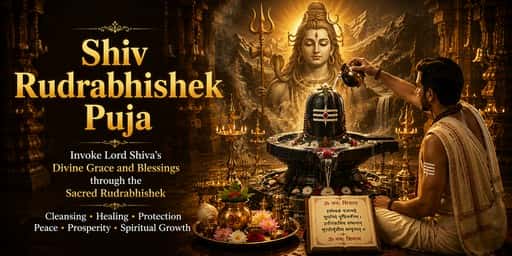
Shiv Rudrabhishek Puja
"Shiv Rudrabhishek is one of the oldest forms of Shiva worship. The Shivling is bathed with eleven sacred substances. Milk for purity. Honey for sweetness. Curd for prosperity. Ganga jal to clear past karma. Then ghee, sugar, rose water, sandalwood paste, panchamrit, coconut water, and bhasma. Each one carries its own meaning."
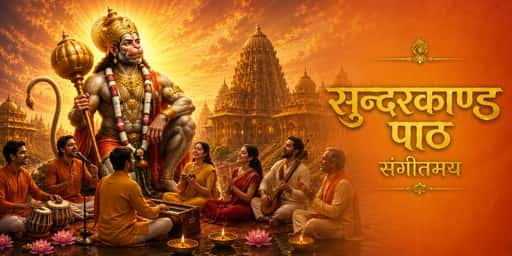
Sundarkand Path Sangeetmaya
"Sundarkand Path Sangeetmaya is the melodic, musical recitation of the Sundar Kand. The fifth chapter of the Ramcharitmanas. The same chapter where Hanuman crosses the ocean, finds Mata Sita, faces Ravana's court, and burns Lanka. The Sangeetmaya version adds melody, rhythm, and traditional instruments to the recitation. The verses are sung rather than read. The energy that results is different from a quiet path. It fills the home. It lifts the spirits of every listener. Families often book this version for celebrations, for housewarmings, and for the joyful welcome of Hanuman's grace."
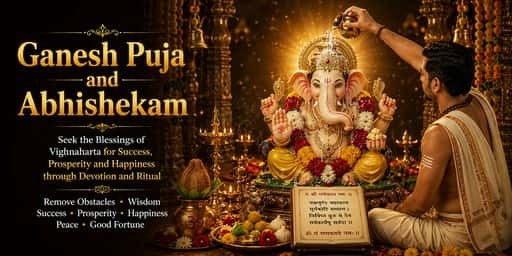
Ganesh Puja and Abhishekam
"Ganesh Ji is the first deity worshipped in every Hindu ritual. Families call on him before weddings, new homes, new businesses, and exams. He clears the path. He blesses the work ahead. Tradition says he is easily pleased. Laddus, modaks, and devotion are enough. Once Ganesh Ji is pleased, he also calls on Shree Lakshmi Mata to bless the home with wealth."
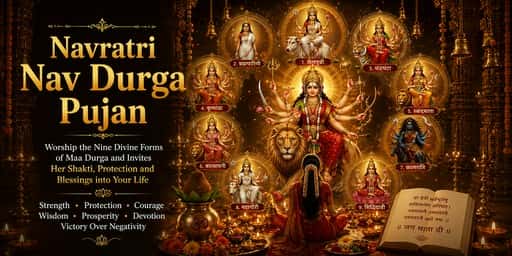
Navratri Nav Durga Pujan
"Navratri is nine nights of devotion to Maa Durga. Each night honours one of her nine forms. Shailputri, Brahmacharini, Chandraghanta, Kushmanda, Skandamata, Katyayani, Kaalratri, Mahagauri, and Siddhidatri. The first three days bring strength. The next three bring prosperity. The final three bring wisdom. By the ninth night, the devotee has been blessed by every form of the Mother."
-651e59fc42dc48b969674951-59962914-s.jpg&w=3840&q=60)
Kaal Sarp Dosh Nivaran Puja
"Kaal Sarp Dosh is one of the most discussed afflictions in Vedic astrology. It forms when all seven classical planets in the birth chart fall between Rahu and Ketu. The two shadow planets are visualised as the head and the tail of the cosmic serpent. When this alignment is present, life often feels as if it moves against an invisible current. Effort brings delayed results. Marriage, career growth, and the blessing of children appear blocked. The devotee senses a force beyond ordinary understanding holding them back. Ancient sages understood this as the karmic weight of past lives. Held in place by the serpent's coil around the soul's destiny. But the tradition has always carried hope alongside the diagnosis. Lord Shiva himself wears the serpent Vasuki as a garland around his neck. The same being who binds the soul can, with Shiva's grace, become an ornament of protection."
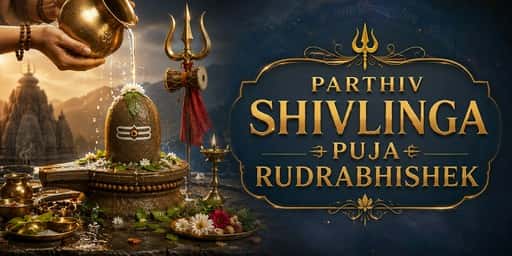
Parthiv Shivlinga Puja and Rudrabhishek
"A Parthiv Shivlinga is a Shivling shaped from sacred earth, prepared fresh for the puja. The tradition is one of the oldest in Hindu worship. Ancient texts hold that worshipping a Parthiv Shivling carries greater power than worshipping any permanent Shivling, because the very act of shaping the linga is itself a form of devotion. The earth is gathered. The form is made by hand. The Shivling stands only for the duration of the puja, then returns to the earth. This temporary, deeply personal Shivling carries Shiva's grace in its purest form."