Divine Collection
Enemy Suppression
Shanivar Vrat Katha
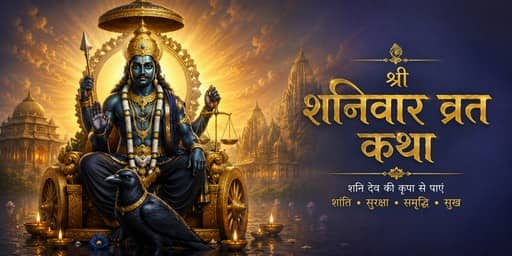
"Shanivar Vrat is the Saturday vrat dedicated to Shani Dev. Saturday itself is the weekday ruled by Saturn, the cosmic disciplinarian. The vrat is observed by devotees passing through difficult Shani periods. Sade Sati. Dhaiya. Shani Mahadasha. It is also observed by those seeking sharper intellect, protection from negative energy, and freedom from the misfortunes that Shani's harder phases bring. Tradition holds that those who observe Shanivar Vrat with devotion see Shani Dev's anger soften into his blessing."

Holika Puja and Katha
"Holika Puja is performed on the night before Holi. The story behind it is one of the most powerful in Hindu tradition. Holika was the sister of the demon king Hiranyakashipu. She had a boon that fire could not harm her. When her brother ordered her to kill his own son Prahlada, a devoted bhakta of Vishnu, she sat with him in a roaring fire, believing she would survive and the child would burn. But the opposite happened. Holika perished. Prahlada walked out unharmed. The fire that night marks the eternal truth. Where devotion stands, evil cannot. Holika Dahan, the burning of Holika, is observed every year to remember this victory."

Lalita Sahasranamam Path
"The Lalita Sahasranamam is the thousand names of Lalita Tripura Sundari. The supreme goddess of beauty, wealth, and divine play. Each of the thousand names describes a different aspect of her form, her power, or her grace. She is Lalita, the playful one. Tripura Sundari, the most beautiful in the three worlds. Raja Rajeshwari, the empress of all empresses. The Sahasranamam is part of the Brahmanda Purana, and is one of the most beloved texts in the Shri Vidya tradition. To recite it is to walk the devotee through a thousand doorways of the goddess's beauty."
Sundarkand Path Sangeetmaya
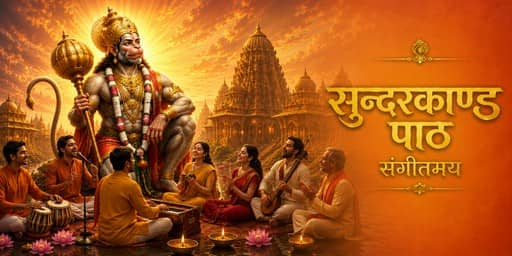
"Sundarkand Path Sangeetmaya is the melodic, musical recitation of the Sundar Kand. The fifth chapter of the Ramcharitmanas. The same chapter where Hanuman crosses the ocean, finds Mata Sita, faces Ravana's court, and burns Lanka. The Sangeetmaya version adds melody, rhythm, and traditional instruments to the recitation. The verses are sung rather than read. The energy that results is different from a quiet path. It fills the home. It lifts the spirits of every listener. Families often book this version for celebrations, for housewarmings, and for the joyful welcome of Hanuman's grace."
Rigveda Yajna
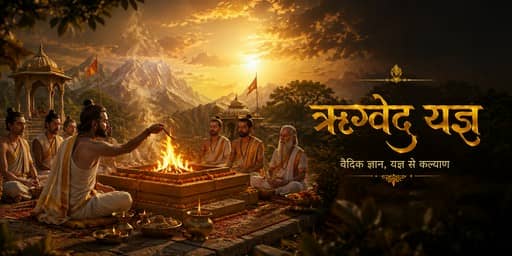
"The Rigveda is the oldest scripture in the Hindu tradition. The first of the four Vedas. Composed thousands of years ago, it contains over a thousand hymns dedicated to the gods, with the largest number addressed to Indra (the king of the gods) and Agni (the sacred fire). The Rigveda Yajna is the fire ritual built around these original hymns. It is one of the most powerful and most ancient yajnas in existence. To have it performed is to participate in the same tradition that the earliest sages of India established."
Hanuman Jayanti Puja
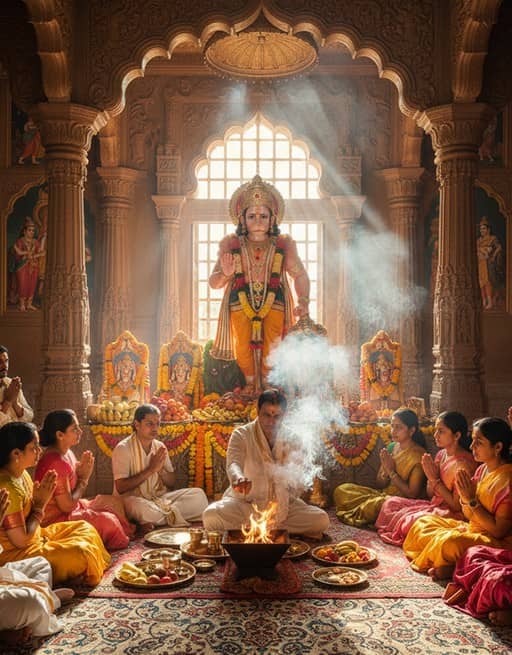
"Hanuman Jayanti is the birth anniversary of Lord Hanuman. The single most powerful day of the year for any Hanuman puja. Tradition holds that on this day, Hanuman was born to Anjana Mata and Kesari, with the blessing of Vayu Dev, the wind god. As a child, he leapt towards the sun thinking it was a fruit. His childhood mischief gave way to a lifetime of devotion to Lord Ram. To worship Hanuman on this day is to invoke the strongest possible form of his protective grace."
-651e59fc42dc48b969674951-59962914-s.jpg&w=3840&q=70)
Kaal Sarp Dosh Nivaran Puja
"Kaal Sarp Dosh is one of the most discussed afflictions in Vedic astrology. It forms when all seven classical planets in the birth chart fall between Rahu and Ketu. The two shadow planets are visualised as the head and the tail of the cosmic serpent. When this alignment is present, life often feels as if it moves against an invisible current. Effort brings delayed results. Marriage, career growth, and the blessing of children appear blocked. The devotee senses a force beyond ordinary understanding holding them back. Ancient sages understood this as the karmic weight of past lives. Held in place by the serpent's coil around the soul's destiny. But the tradition has always carried hope alongside the diagnosis. Lord Shiva himself wears the serpent Vasuki as a garland around his neck. The same being who binds the soul can, with Shiva's grace, become an ornament of protection."

Shatru Nashak Remedy Pujan
"Baglamukhi Mata is one of the ten Mahavidyas of the Tantric tradition. She is the fierce goddess who silences enemies, ill-wishers, and harmful forces with a single glance. Her devotees turn to her when ordinary remedies have failed. When opponents have grown too strong. When legal cases have stalled. When a rival's influence is spreading. When negative energy has settled in the home. Baglamukhi does not just defeat the enemy. She paralyses their power to harm."
Durga Puja
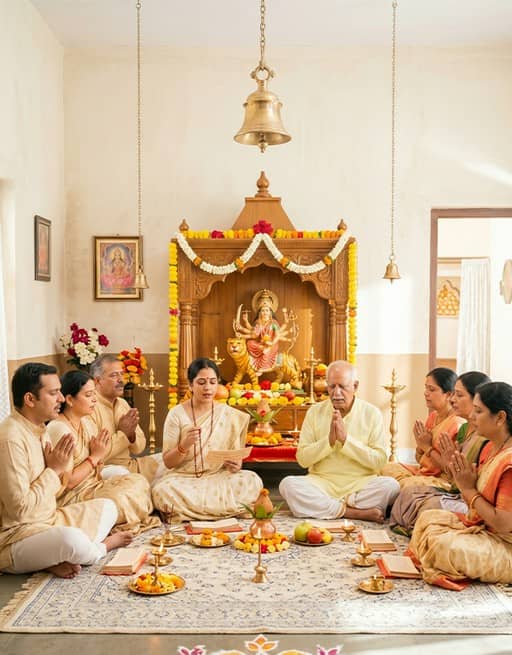
"Maa Durga rides a lion. She holds eighteen weapons in her many arms. Each weapon is a gift from a different god. Her gaze is the gaze of a mother who will let nothing harm her children. The demon Mahishasura had a boon. No man, no god could kill him. He defeated even Indra. The gods released their combined energies. From that fire, Maa Durga emerged. After nine days of battle, on the tenth day, she slew Mahishasura. That day is Vijayadashami."