Blessings
Shree Krishna Janmashtami Maha Puja
"Janmashtami is the birth anniversary of Lord Krishna. The night Vishnu took human form to end the rule of the tyrant Kansa. Tradition holds that Krishna was born in a prison cell in Mathura to Devaki and Vasudev, on the eighth lunar day of Krishna Paksha in the month of Bhadrapada. The chains fell open. The doors opened by themselves. Vasudev carried the infant across the flooded Yamuna to safety. The whole cosmos held its breath for this child's arrival. Devotees stay awake through the night, chanting his name, until the moment of his birth at midnight."
Rigveda Yajna
"The Rigveda is the oldest scripture in the Hindu tradition. The first of the four Vedas. Composed thousands of years ago, it contains over a thousand hymns dedicated to the gods, with the largest number addressed to Indra (the king of the gods) and Agni (the sacred fire). The Rigveda Yajna is the fire ritual built around these original hymns. It is one of the most powerful and most ancient yajnas in existence. To have it performed is to participate in the same tradition that the earliest sages of India established."
Ekadashi Vrat and Katha
"Ekadashi is the eleventh lunar day of every fortnight. There are twenty-four Ekadashis in a year, and each one carries the blessing of Lord Vishnu. The vrat is observed by devotees who fast through the day, listen to the Ekadashi katha, and break the fast only on Dwadashi, the day after. Tradition holds that observing Ekadashi Vrat for a year cleanses every sin and grants the devotee a place at Vishnu's feet. It is one of the most beloved vrats in the entire Hindu tradition."
Dhanteras Puja
"Dhanteras marks the beginning of the Diwali festival. The word dhan means "wealth," and teras refers to the thirteenth lunar day. Tradition holds that on this day, Goddess Lakshmi emerged from the cosmic ocean during the great churning. Lord Dhanwantari, the divine physician, also emerged on this day, holding the pot of amrit (the nectar of immortality). The day is sacred to all three deities. Families buy gold, silver, and metal vessels on Dhanteras, believing that what is bought on this day grows multiplied through the year ahead."
Gudi Padwa Puja
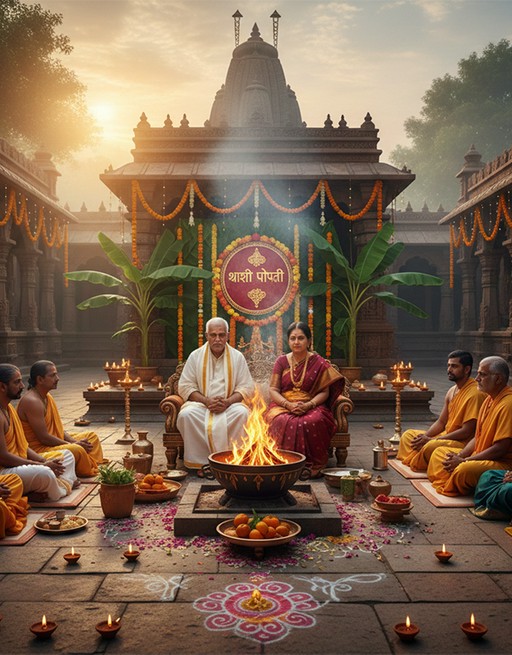
"Gudi Padwa marks the Hindu New Year. The first day of the month of Chaitra in Shukla Paksha. Tradition holds that on this day, Lord Brahma created the universe. It is also the day Lord Ram returned to Ayodhya after defeating Ravana, the day Lord Vishnu manifested as the Satya Yuga, and the day farmers across India begin their new agricultural cycle. Whatever is begun on Gudi Padwa is believed to carry blessings through the entire year ahead. Homes raise the gudi, the bright flag of victory, on this day."
Sudarshan Gayatri Mantra Siddhi Jaap and Yajna
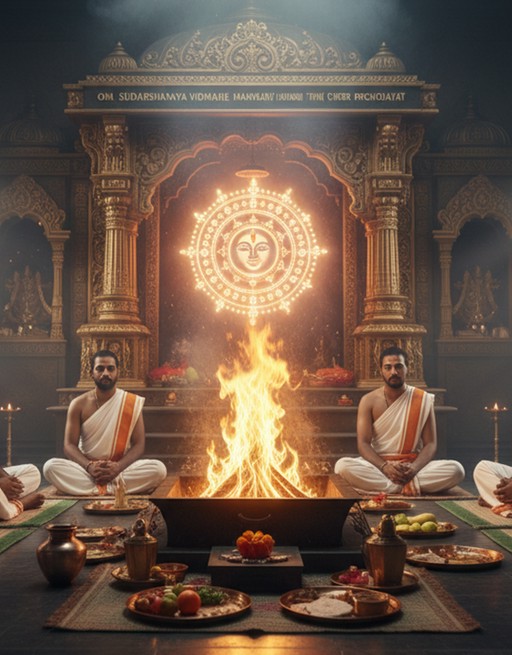
"Sudarshan is the spinning discus held by Lord Vishnu. The weapon of dharma. The destroyer of negativity. Wherever Sudarshan moves, evil cannot stand. The Sudarshan Gayatri Mantra is one of the most powerful mantras in the Vedic tradition. It invokes the protective and destructive power of the discus itself. Devotees turn to this puja when enemies have grown strong, when negative energies have settled, when business is sinking, and when money lost needs to return."
Kanya Pashupata Homam
"Kanya Pashupata Homam is performed for unmarried young women (kanyas) seeking the blessing of marriage and a loving life partner. The puja invokes Shiva in his form as Pashupati, the lord of all beings. In Hindu tradition, Shiva is the ideal husband. He is the husband of Parvati Mata, whose own penance to win him is one of the most beloved stories in scripture. Unmarried young women have, for centuries, prayed to Shiva for a partner blessed with the qualities they seek."
Special Maha Rudra Pujan and Yajna
"Maha Rudra is one of the highest forms of Shiva worship in the entire Vedic tradition. It involves the chanting of the Sri Rudram one hundred and twenty-one times. Eleven rounds of Rudram form one Laghu Rudra. Eleven Laghu Rudras together form one Maha Rudra. The power compounds at every level. This is the puja chosen when a community, a region, or a family needs Shiva's grace at the largest possible scale. It is also one of the most powerful pujas for rain, harvest, and the protection of crops."
Matangi Puja and Yajna
"Matangi Mata is the ninth of the ten Mahavidyas. She is the Tantric form of Saraswati Mata. The goddess of knowledge, music, speech, and the arts in their deepest expression. Where ordinary Saraswati blesses students and artists, Matangi blesses those who seek mastery. She gives command over speech, command over learning, command over the inner voice that turns thought into truth. Her devotees include scholars, writers, musicians, artists, and anyone whose work depends on the power of expression."
Dhumawati Puja and Yajna
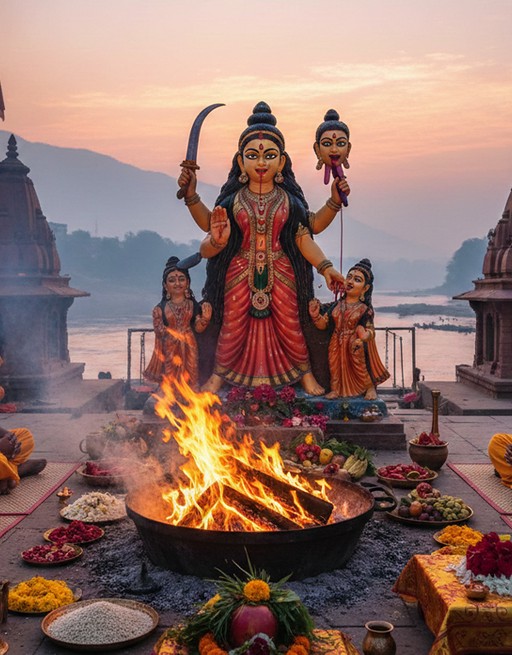
"Dhumavati Mata is the seventh of the ten Mahavidyas. She is unlike any other goddess in the Hindu tradition. She appears as an old widow, dressed in white, riding a chariot drawn by crows. She holds a winnowing basket in her hand. Where other goddesses give wealth, beauty, and abundance, Dhumavati gives something rarer. She removes what no longer serves the devotee. She destroys what holds them back. She clears away the smoke (dhuma) that hides the soul's true path."
Durga Saptashati Path
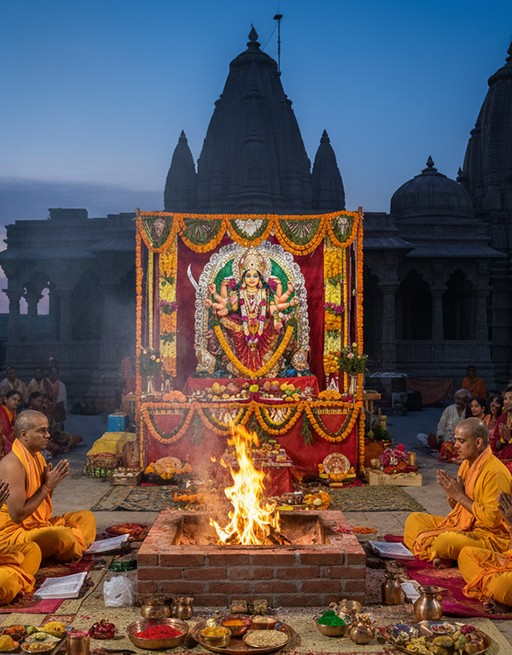
"Durga Saptashati is also known as the Devi Mahatmya. The Glory of the Goddess. The text has seven hundred verses drawn from the Markandeya Purana. They recount the great stories of Maa Durga's victories. Her birth from the combined energies of the gods. Her epic battle against Mahishasura. Her defeat of Shumbha and Nishumbha. For over fifteen centuries, devotees across India have recited it during Navratri and at every moment of crisis. The very chanting of its verses summons the goddess into the room. Each chapter is itself an invocation."
Hawan Puja at Kailash Mansarovar
"Kailash is not a temple built by human hands. It is the home Shiva chose for himself. The mountain has never been climbed, out of pure reverence, and pilgrims circle it instead in the sacred kora. At its feet lies Mansarovar, the lake born, tradition says, from the mind of Brahma himself. The shastras hold that the devtas descend to bathe in its waters at Brahma Muhurta, before dawn. A hawan performed on this ground is the rarest fire offering a devotee can make. Most devotees will never reach this altitude in their lifetime. This group hawan carries their names there."