Blessings
Shradh Puja
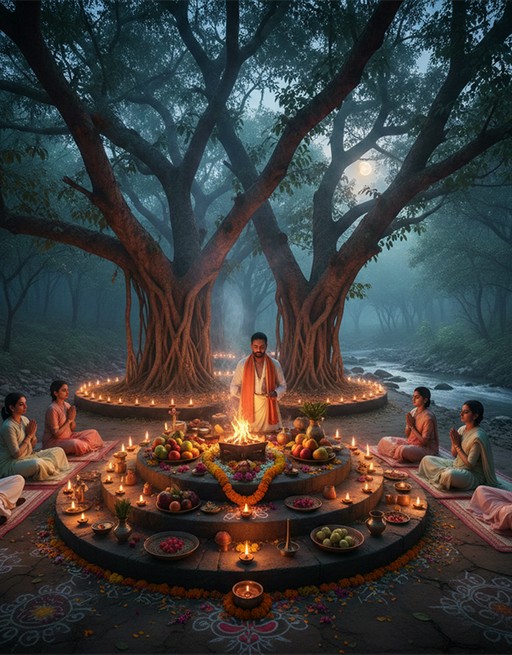
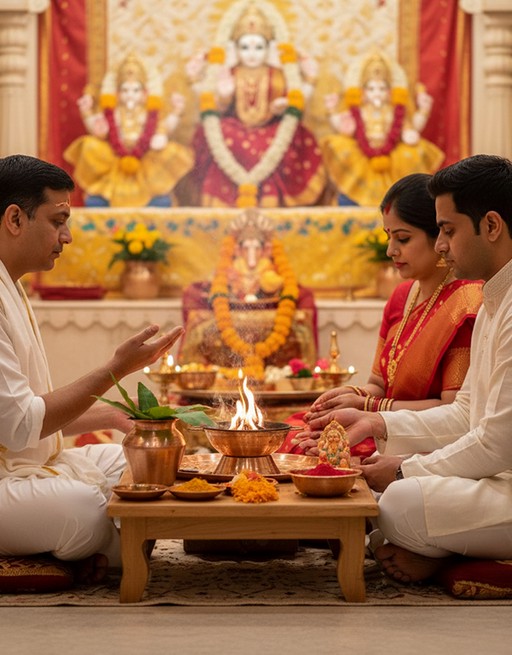
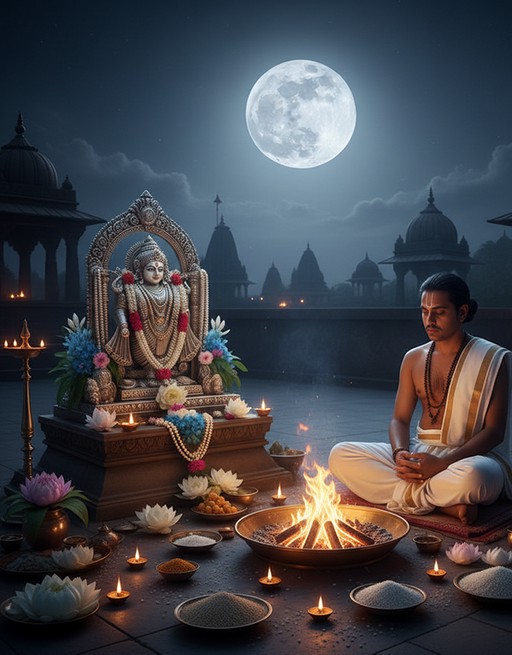
"Shradh Puja is the ritual offering made to honour the ancestors on the lunar anniversary of their passing, or during the sacred fortnight of Pitra Paksha. The bond between the living and the ancestors is unbreakable in Hindu tradition. The family carries the memory, the prayers, and sometimes the unfinished wishes of those who came before. Shradh Puja is the moment the family remembers them with love, feeds them through ritual, and asks for their continued blessings to flow forward to the children and grandchildren still walking the earth."
Sundarkand Path Sangeetmaya
"Sundarkand Path Sangeetmaya is the melodic, musical recitation of the Sundar Kand. The fifth chapter of the Ramcharitmanas. The same chapter where Hanuman crosses the ocean, finds Mata Sita, faces Ravana's court, and burns Lanka. The Sangeetmaya version adds melody, rhythm, and traditional instruments to the recitation. The verses are sung rather than read. The energy that results is different from a quiet path. It fills the home. It lifts the spirits of every listener. Families often book this version for celebrations, for housewarmings, and for the joyful welcome of Hanuman's grace."
Budhwar Vrat and Katha
"Budhwar Vrat is the Wednesday vrat dedicated to Budh Dev. Wednesday itself is ruled by Budh (Mercury), the planet of intellect, communication, and skilled work. The vrat is observed by devotees seeking sharper thinking, better speech, business growth, and family happiness. Lord Ganesha and Lord Krishna are invoked alongside Budh Dev. Ganesha is the deity of intellect itself. Krishna is the master of speech and persuasion. Together with Budh, they form the most powerful combination for everything Mercury governs."
Hanuman Chalisa Path
"The Hanuman Chalisa is the most recited prayer in all of Hindu tradition. Forty verses written by Tulsidas in Awadhi, it tells the story of Hanuman's strength, his devotion to Ram, and his ability to lift any difficulty a devotee places before him. Tradition holds that wherever the Hanuman Chalisa is recited with sincerity, no harm can come. Families recite it before journeys. Students recite it before exams. Devotees recite it daily as a shield against fear. It is the most accessible, most powerful Hanuman prayer in existence."
Shri Suktam 100 Path
"The Shri Suktam 100 Path is the elevated form of the Shri Suktam recitation. The fifteen verses of the Shri Suktam are chanted not once, but one hundred times. Each repetition multiplies the power of the previous one. By the end of the path, the verses have been chanted fifteen hundred times, with the energy of Lakshmi Mata compounding through every round. This is the puja chosen when a family needs not the standard blessing, but the most powerful Lakshmi puja available in the Vedic tradition."
Shree Suktam Puja
"The Shree Suktam Puja is the complete ritual ceremony built around the Shri Suktam hymn. Where the Path focuses on the recitation alone, the Puja adds the full ceremonial framework. Sankalp at the beginning. The formal worship of Lakshmi Mata's idol. The Shri Suktam recitation as the heart of the ritual. The havan to seal the offerings. The aarti to close the vidhi. This is the puja chosen when a family wants the complete Lakshmi ceremony, with every element of the classical tradition observed in full."
Shree Mad Bhagawad Geeta Katha Path
"The Bhagavad Geeta is the most sacred philosophical text in the Hindu tradition. The seven hundred verses spoken by Lord Krishna to Arjuna on the battlefield of Kurukshetra, just before the Mahabharata war began. Arjuna stood frozen, unable to fight against his own kinsmen. Krishna, as his charioteer and guide, taught him the deepest truths of life. The nature of the soul. The path of dharma. The art of action without attachment. The reality beneath the changing world. The Geeta is not just scripture. It is the most complete guide to living that humanity has ever received."
Gau Daan Puja
"Gau Daan means the gift of a cow. The shastras hold it as the greatest of all charity. To give a cow is to give a home to all the gods. Tradition says the cow carries the soul across after death. She helps it cross the river Vaitarani to the next world. This daan washes away the heaviest of old sins. It clears negative karma and the fear of the unknown. It is also the remedy for Nadi Dosh in a match. The gift brings the grace of Lord Krishna upon the giver. Devotees perform it before marriage and on holy days. It is one of the surest paths to moksha."
Holika Puja and Katha
"Holika Puja is performed on the night before Holi. The story behind it is one of the most powerful in Hindu tradition. Holika was the sister of the demon king Hiranyakashipu. She had a boon that fire could not harm her. When her brother ordered her to kill his own son Prahlada, a devoted bhakta of Vishnu, she sat with him in a roaring fire, believing she would survive and the child would burn. But the opposite happened. Holika perished. Prahlada walked out unharmed. The fire that night marks the eternal truth. Where devotion stands, evil cannot. Holika Dahan, the burning of Holika, is observed every year to remember this victory."
Upanayan Sanskar
"Upanayan is the sacred thread ceremony. It is one of the sixteen great sanskars of Hindu life. It marks a boy's start on the path of learning. The word means to lead the child near to the guru. On this day the boy first wears the janeu thread. The thread holds three strands of deep meaning. The rite gives him the sacred Gayatri Mantra. It is seen as a second birth into a learned life. The worship honours the Saptarishi, the seven sages. Vasant Panchami is a favoured day for this rite. Done in Kashi, the sanskar carries the highest merit."
Akshararambh Sanskar Puja
"Akshararambh marks a child's first lesson in letters. It is one of the sixteen sacred sanskars of Hindu life. The word means the start of learning the alphabet. It is the first step into the world of books. The rite seeks the grace of Mata Saraswati. She is the goddess of learning and clear thought. The child writes its first letter under her blessing. Often the letter is traced in rice or on a slate. The worship begins with Ganpati to clear all blocks. Vasant Panchami is a favoured day for this rite. Done in Kashi, the rite carries the highest merit."
Mahalakshmi Hawan
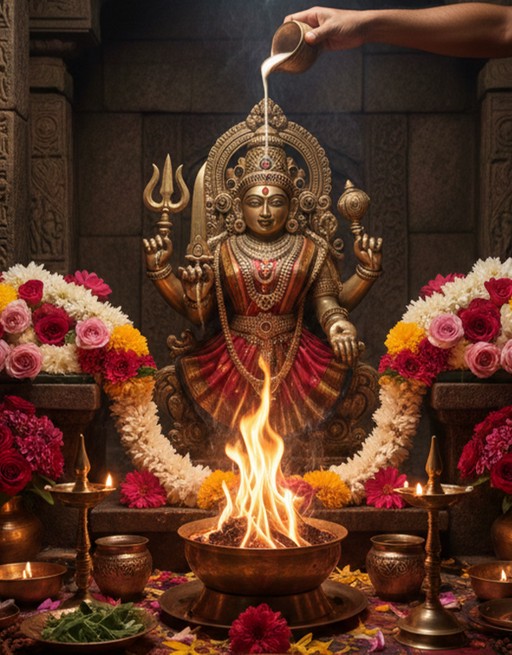
"Mahalakshmi is the supreme form of the goddess of wealth. She is the consort of Lord Vishnu and the mother of plenty. The shastras say she lives where worship and care abide. This hawan is a fire worship in her honour. The sacred fire carries each prayer straight to the Mother. Many earn well but cannot keep their wealth. This hawan works to bring lasting wealth, or sthir Lakshmi. It clears the blocks that let money slip away. Business families seek it for steady growth and plenty. Its best days are Diwali and Dhanteras. These are the days the Mother walks the earth."