Blessings
Brihaspati (Guru) Dosh Nivaran Puja
"Jupiter is the most benefic of all planets in Vedic astrology. The great teacher. The cosmic father. He governs wisdom, righteousness, faith, marriage, and children. When Jupiter shines strong, life expands naturally. Partnerships form. Families grow. Wealth flows. When he is afflicted, the very things he is meant to bring become hard to receive. Marriage delays for no clear reason. Children do not come. Wisdom feels just out of reach when decisions matter most. The devotee senses the door that Jupiter normally opens is somehow shut."
Pitra Dosh Nivaran Puja
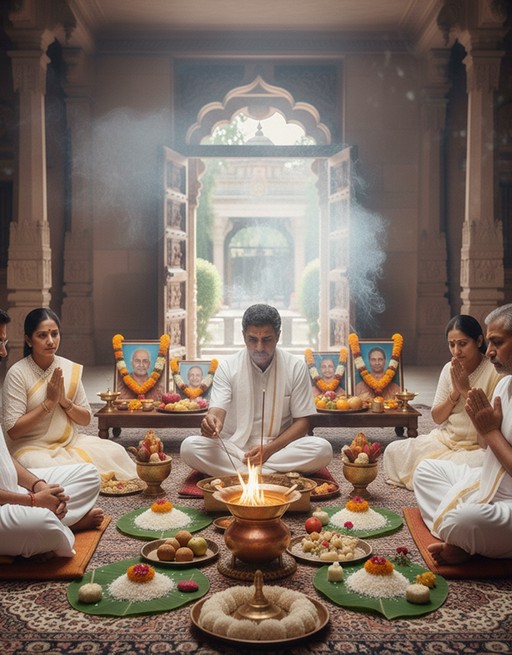
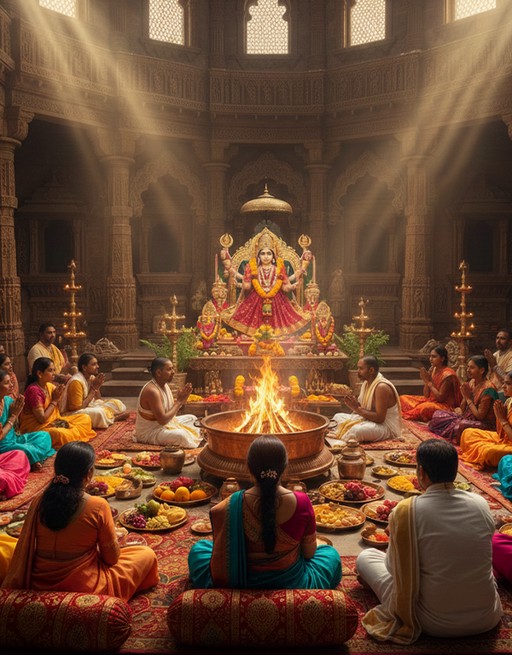
"Pitra Dosh is an affliction passed down through the family lineage. It forms when the souls of departed ancestors have not received the rituals, prayers, or peace they were due. In Hindu tradition, the bond between the living and the ancestors is unbreakable. Every family carries within it the prayers and the unfulfilled wishes of those who came before. Sometimes also their lingering sorrows. When these remain unresolved across generations, they take the form of Pitra Dosh. A quiet shadow over the family's path. It is often felt as repeated obstacles in marriage, conception, education, and career, despite every effort. The dosh is not a curse. It is a calling. The ancestors are gently asking to be remembered, honoured, and finally released into peace."
Tripur Bhairavi Puja and Yajna
"Tripur Bhairavi Mata is the fifth of the ten Mahavidyas. Her name means "the fierce goddess of the three worlds" (Tripur), the worlds of the body, mind, and soul. She rules over the inner fire that burns away sin, ignorance, and accumulated karma. Her form is fierce but her purpose is purification. Where she is invoked, what is impure cannot remain. She is also closely connected to tantric sadhana, and is one of the most powerful goddesses for spiritual transformation."
Chandra Dosh Nivaran Puja Jaap
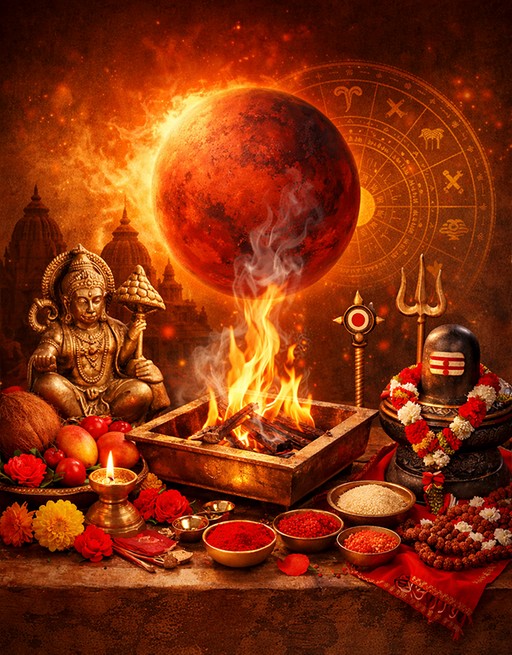
"The Moon governs the mind. He is the planet of feelings, memory, intuition, and the inner self. When Chandra is well placed, the mind is calm. Intuition flows. Sleep is restful. When he is afflicted, the inner weather turns. Moods shift without reason. Sleep grows troubled. Memory feels unreliable. The devotee may feel emotionally fragile in ways they cannot explain. After Chandra was once cursed by Daksha to wane away, he prayed to Lord Shiva. Shiva lifted him onto his matted locks and gave him refuge. Since then, Shiva has been known as Chandrashekhar, the one who wears the moon."
Pradosh Vrat Katha
"Pradosh Vrat is observed on the Trayodashi tithi, the thirteenth lunar day of every fortnight. The word pradosh means "the time at twilight," and refers to the sacred window between sunset and nightfall. Tradition holds that during this window, Lord Shiva dances on Mount Kailash while all the gods watch in devotion. Devotees who observe Pradosh Vrat receive Shiva's grace at his most joyful, most generous moment. The vrat is observed by households across India for the blessing of children, health, and the resolution of long-standing struggles."
Adi Kailash Puja
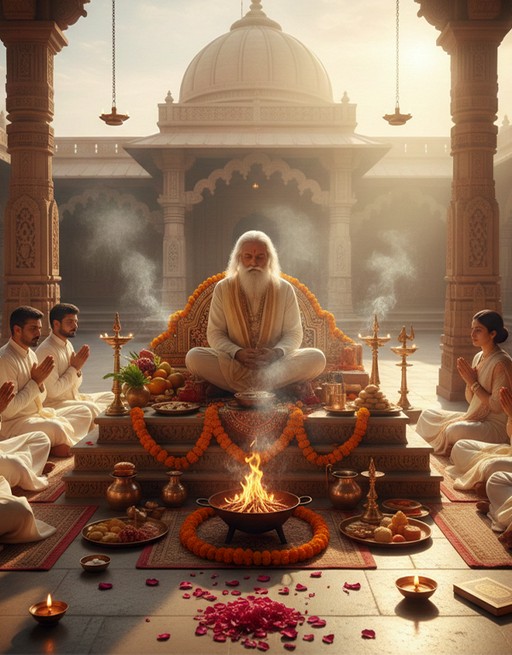
"Adi Kailash is a sacred peak in the Himalayas. It is also known as Chhota Kailash, the lesser Kailash. The shastras hold it as a holy seat of Lord Shiva. Its form is much like the great Mount Kailash. The peak stands above a calm and clear lake. Few reach this far and high to worship there. A puja here is rare and full of merit. This homa is a fire worship of Lord Shiva. The sacred fire carries each prayer to the Lord. It brings health, peace, and a fresh strength for life. Devotees long for this worship at the seat of Shiva."
Saraswati Pujan
"Saraswati Mata is the goddess of all learning. She sits on a white lotus, dressed in pure white. She holds the veena. A book and a rosary rest at her side. Three great goddesses share the work of the universe. Lakshmi gives wealth. Durga gives strength. Saraswati gives the rarest gift of all. The light of true knowledge."
Baglamukhi Mata Puja
"Baglamukhi Mata is the eighth of the ten Mahavidyas. Her name comes from bagla, meaning "the one who silences," and mukhi, meaning "the face." She is the goddess who silences the voice of the enemy. Who paralyses the power to harm. Who freezes negative energy at its source. Her form is fierce, but her purpose is protection. She holds the tongue of her enemy in one hand, and a club in the other. Wherever Baglamukhi rules, no harm can move forward. Yellow is her sacred colour. Yellow flowers, yellow cloth, and turmeric are her offerings."
Ganesh Puja and Abhishekam
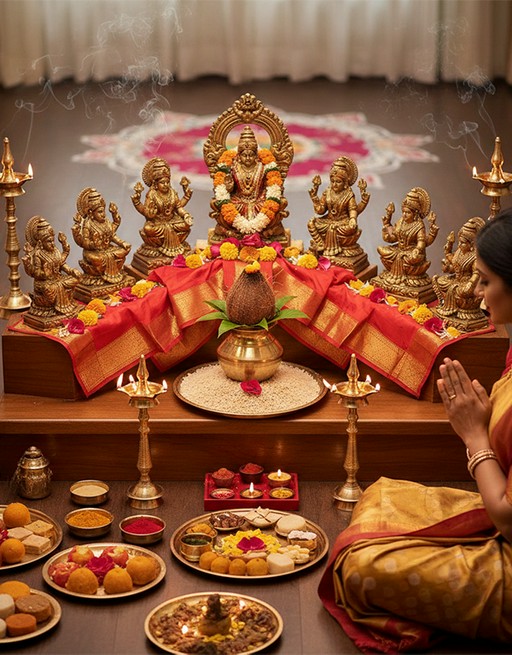
"Ganesh Ji is the first deity worshipped in every Hindu ritual. Families call on him before weddings, new homes, new businesses, and exams. He clears the path. He blesses the work ahead. Tradition says he is easily pleased. Laddus, modaks, and devotion are enough. Once Ganesh Ji is pleased, he also calls on Shree Lakshmi Mata to bless the home with wealth."
Rudrabhishek Group Puja
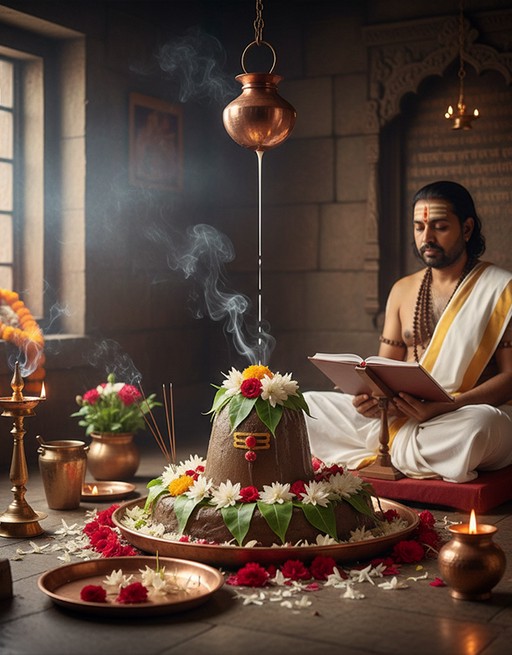
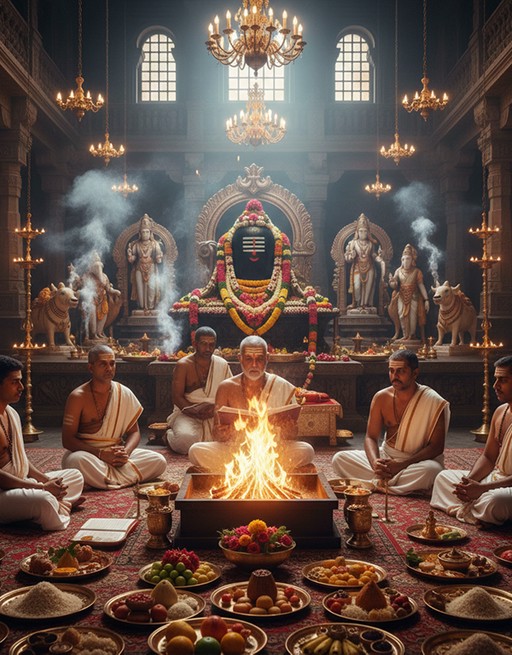
"Rudrabhishek is the sacred bathing of the Shivling. It is one of the most loved of all Shiva worships. Rudra is the fierce and healing form of Lord Shiva. The shastras say this rite pleases him the most. The Shivling is bathed in milk, curd, honey, and water. Each pour is made with the chant of the Rudra mantras. The bath washes away sin and clears all trouble. It brings health, peace, and the grace of Shiva. This group puja joins many devotees in one worship. The shared prayer carries great strength. Devotees seek Shiva's blessing for a calm and full life."
Somvar Vrat Katha
"Somvar Vrat is the Monday fast dedicated to Lord Shiva. Monday itself is the weekday ruled by the Moon, and sacred to Shiva, who wears the crescent moon on his head. The vrat is one of the most loved in the Hindu tradition. Devotees keep the fast through the day, worship the Shivling, and hear the Somvar Vrat Katha in the evening. Unmarried girls keep it to gain a good husband. Married women keep it for the long life of their spouse. Families keep it for health, peace, and the steady grace of Shiva."
Dussehra Puja
"Dussehra, also called Vijayadashami, is the day of victory. The word means "the tenth day of triumph." Tradition holds that on this day, after nine days of fierce battle, the Mother Goddess finally slew the demon Mahishasura and restored peace to the three worlds. The same day also marks Lord Ram's victory over Ravana, the demon king of Lanka. Across India, effigies of Ravana are burnt to mark this triumph of dharma over adharma. On this day the Mother is worshipped in her fiercest form. Mahakali, the one before whom no evil stands. Whatever the form, the meaning is the same. On Dussehra, evil falls. Good rises."

-dosh-nivaran-puja-651eaa3142dc48b9696749c9-92729134-s.jpg&w=3840&q=70)