Siddhi
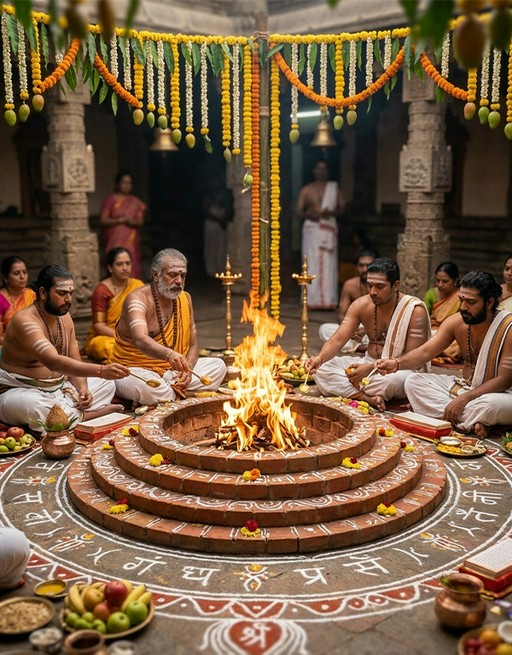
Das Mahavidya Puja and Yajna
"The Das Mahavidya are the ten supreme goddesses of the Tantric tradition. Kali. Tara. Tripura Sundari. Bhuvaneshwari. Tripur Bhairavi. Chhinnamasta. Dhumavati. Baglamukhi. Matangi. Kamala. Each one carries a different power. Each one answers a different prayer. Where individual Mahavidya pujas address one need, the Das Mahavidya Puja honours all ten together. It is the most complete Shakti puja in the entire Tantric tradition."
Tripura Sundari Shodashi Puja and Yajna
"This puja honours Tripura Sundari Mata, the third of the ten Mahavidyas, in her form as Shodashi. While the Shri Vidya path focuses on the deeper sadhana of the goddess, this puja focuses on her grace as a mother who blesses the home. It is the puja chosen by families who want her warmth more than her formal initiation. Tripura Sundari rules over the joy of being alive. The beauty of relationships. The blessing of a home that feels full. To worship her is to invite that fullness into daily life."
Kali Puja and Yajna
"Kali Mata is the first of the ten Mahavidyas. She is the supreme mother in her most powerful form. Dark as the night sky. Wearing a garland of skulls. Holding a sword in one hand and a severed head in the other. Standing on Lord Shiva himself, who lies beneath her in surrender. Kali is time. Kali is death. Kali is the force that destroys what must end so that what is true may rise. Her devotees turn to her not for gentle blessings but for absolute protection."
Tara Devi Puja and Yajna
"Tara Devi is the second of the ten Mahavidyas. Her name means "she who carries across." She is the goddess who carries the soul across the ocean of suffering. Across fear. Across confusion. Across the dark phases of life. She appears with a fierce form, but her energy is deeply maternal. She destroys what threatens her devotees, while holding them close. In some traditions, Tara is also worshipped as a form of Kali Mata. Wherever she is invoked, lost souls find their way home."
Tripur Bhairavi Puja and Yajna
"Tripur Bhairavi Mata is the fifth of the ten Mahavidyas. Her name means "the fierce goddess of the three worlds" (Tripur), the worlds of the body, mind, and soul. She rules over the inner fire that burns away sin, ignorance, and accumulated karma. Her form is fierce but her purpose is purification. Where she is invoked, what is impure cannot remain. She is also closely connected to tantric sadhana, and is one of the most powerful goddesses for spiritual transformation."
Pradosh Vrat Katha
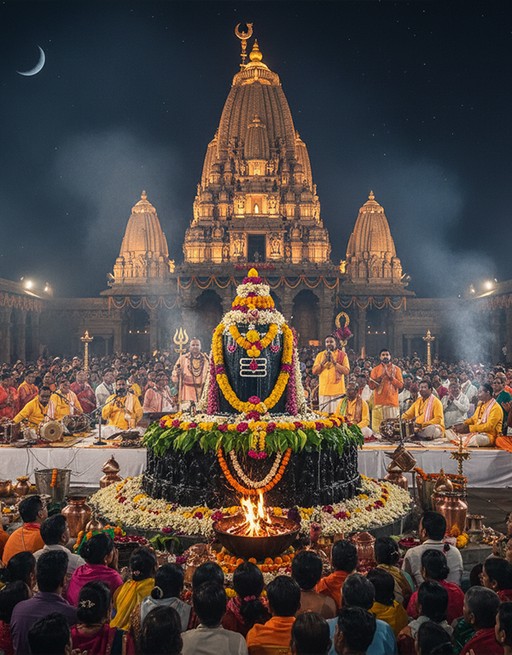
"Pradosh Vrat is observed on the Trayodashi tithi, the thirteenth lunar day of every fortnight. The word pradosh means "the time at twilight," and refers to the sacred window between sunset and nightfall. Tradition holds that during this window, Lord Shiva dances on Mount Kailash while all the gods watch in devotion. Devotees who observe Pradosh Vrat receive Shiva's grace at his most joyful, most generous moment. The vrat is observed by households across India for the blessing of children, health, and the resolution of long-standing struggles."
Adi Kailash Puja
"Adi Kailash is a sacred peak in the Himalayas. It is also known as Chhota Kailash, the lesser Kailash. The shastras hold it as a holy seat of Lord Shiva. Its form is much like the great Mount Kailash. The peak stands above a calm and clear lake. Few reach this far and high to worship there. A puja here is rare and full of merit. This homa is a fire worship of Lord Shiva. The sacred fire carries each prayer to the Lord. It brings health, peace, and a fresh strength for life. Devotees long for this worship at the seat of Shiva."
Saraswati Pujan
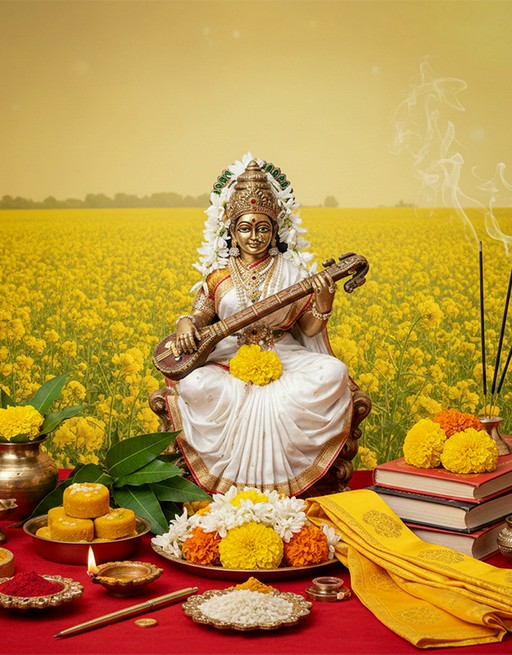
"Saraswati Mata is the goddess of all learning. She sits on a white lotus, dressed in pure white. She holds the veena. A book and a rosary rest at her side. Three great goddesses share the work of the universe. Lakshmi gives wealth. Durga gives strength. Saraswati gives the rarest gift of all. The light of true knowledge."
Baglamukhi Mata Puja
"Baglamukhi Mata is the eighth of the ten Mahavidyas. Her name comes from bagla, meaning "the one who silences," and mukhi, meaning "the face." She is the goddess who silences the voice of the enemy. Who paralyses the power to harm. Who freezes negative energy at its source. Her form is fierce, but her purpose is protection. She holds the tongue of her enemy in one hand, and a club in the other. Wherever Baglamukhi rules, no harm can move forward. Yellow is her sacred colour. Yellow flowers, yellow cloth, and turmeric are her offerings."
Ganesh Puja and Abhishekam
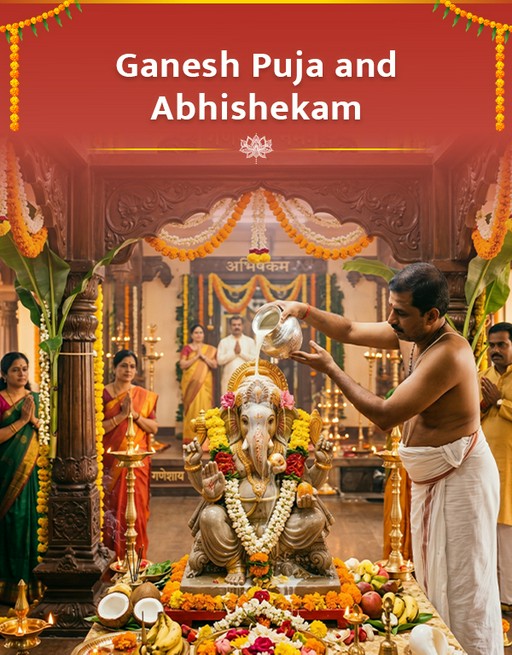
"Ganesh Ji is the first deity worshipped in every Hindu ritual. Families call on him before weddings, new homes, new businesses, and exams. He clears the path. He blesses the work ahead. Tradition says he is easily pleased. Laddus, modaks, and devotion are enough. Once Ganesh Ji is pleased, he also calls on Shree Lakshmi Mata to bless the home with wealth."
Dussehra Puja
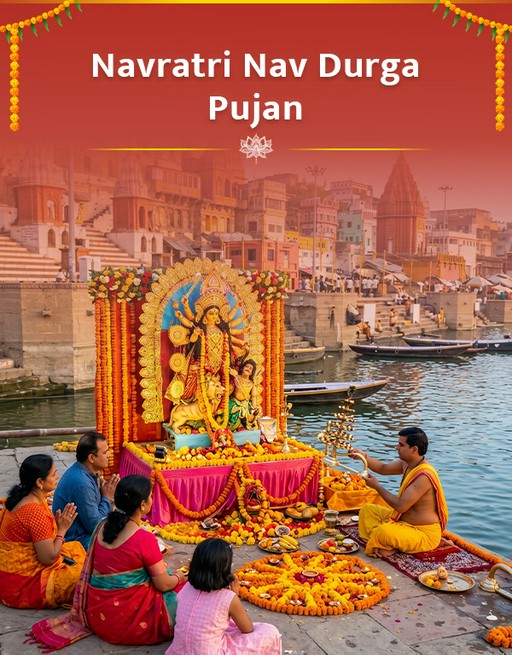
"Dussehra, also called Vijayadashami, is the day of victory. The word means "the tenth day of triumph." Tradition holds that on this day, after nine days of fierce battle, the Mother Goddess finally slew the demon Mahishasura and restored peace to the three worlds. The same day also marks Lord Ram's victory over Ravana, the demon king of Lanka. Across India, effigies of Ravana are burnt to mark this triumph of dharma over adharma. On this day the Mother is worshipped in her fiercest form. Mahakali, the one before whom no evil stands. Whatever the form, the meaning is the same. On Dussehra, evil falls. Good rises."
Rigveda Yajna
"The Rigveda is the oldest scripture in the Hindu tradition. The first of the four Vedas. Composed thousands of years ago, it contains over a thousand hymns dedicated to the gods, with the largest number addressed to Indra (the king of the gods) and Agni (the sacred fire). The Rigveda Yajna is the fire ritual built around these original hymns. It is one of the most powerful and most ancient yajnas in existence. To have it performed is to participate in the same tradition that the earliest sages of India established."