Siddhi
Gudi Padwa Puja
"Gudi Padwa marks the Hindu New Year. The first day of the month of Chaitra in Shukla Paksha. Tradition holds that on this day, Lord Brahma created the universe. It is also the day Lord Ram returned to Ayodhya after defeating Ravana, the day Lord Vishnu manifested as the Satya Yuga, and the day farmers across India begin their new agricultural cycle. Whatever is begun on Gudi Padwa is believed to carry blessings through the entire year ahead. Homes raise the gudi, the bright flag of victory, on this day."
Sudarshan Gayatri Mantra Siddhi Jaap and Yajna
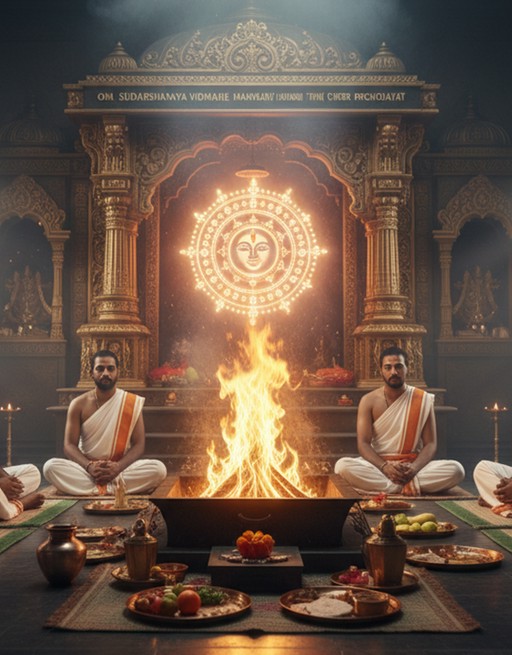
"Sudarshan is the spinning discus held by Lord Vishnu. The weapon of dharma. The destroyer of negativity. Wherever Sudarshan moves, evil cannot stand. The Sudarshan Gayatri Mantra is one of the most powerful mantras in the Vedic tradition. It invokes the protective and destructive power of the discus itself. Devotees turn to this puja when enemies have grown strong, when negative energies have settled, when business is sinking, and when money lost needs to return."
Kanya Pashupata Homam
"Kanya Pashupata Homam is performed for unmarried young women (kanyas) seeking the blessing of marriage and a loving life partner. The puja invokes Shiva in his form as Pashupati, the lord of all beings. In Hindu tradition, Shiva is the ideal husband. He is the husband of Parvati Mata, whose own penance to win him is one of the most beloved stories in scripture. Unmarried young women have, for centuries, prayed to Shiva for a partner blessed with the qualities they seek."
Special Maha Rudra Pujan and Yajna
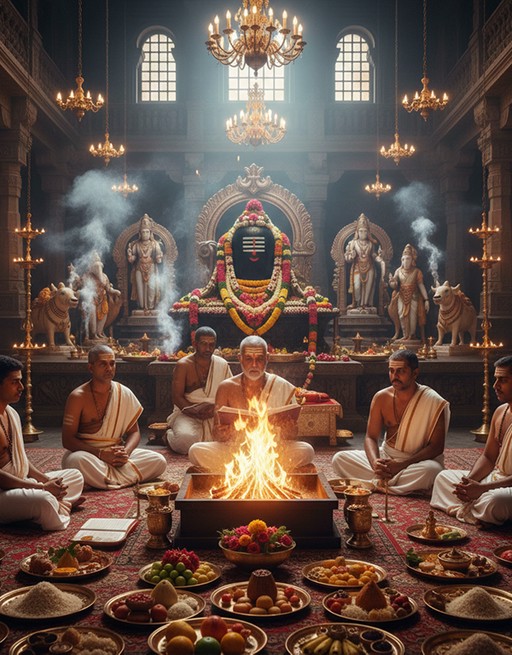
"Maha Rudra is one of the highest forms of Shiva worship in the entire Vedic tradition. It involves the chanting of the Sri Rudram one hundred and twenty-one times. Eleven rounds of Rudram form one Laghu Rudra. Eleven Laghu Rudras together form one Maha Rudra. The power compounds at every level. This is the puja chosen when a community, a region, or a family needs Shiva's grace at the largest possible scale. It is also one of the most powerful pujas for rain, harvest, and the protection of crops."
Matangi Puja and Yajna
"Matangi Mata is the ninth of the ten Mahavidyas. She is the Tantric form of Saraswati Mata. The goddess of knowledge, music, speech, and the arts in their deepest expression. Where ordinary Saraswati blesses students and artists, Matangi blesses those who seek mastery. She gives command over speech, command over learning, command over the inner voice that turns thought into truth. Her devotees include scholars, writers, musicians, artists, and anyone whose work depends on the power of expression."
Dhumawati Puja and Yajna
"Dhumavati Mata is the seventh of the ten Mahavidyas. She is unlike any other goddess in the Hindu tradition. She appears as an old widow, dressed in white, riding a chariot drawn by crows. She holds a winnowing basket in her hand. Where other goddesses give wealth, beauty, and abundance, Dhumavati gives something rarer. She removes what no longer serves the devotee. She destroys what holds them back. She clears away the smoke (dhuma) that hides the soul's true path."
Durga Saptashati Path
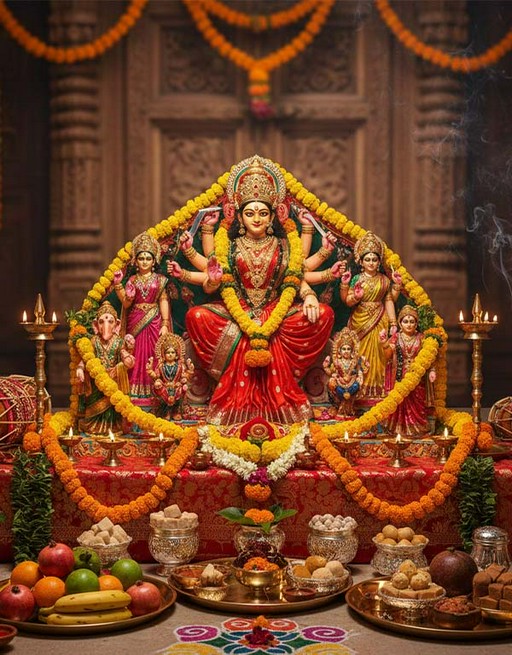
"Durga Saptashati is also known as the Devi Mahatmya. The Glory of the Goddess. The text has seven hundred verses drawn from the Markandeya Purana. They recount the great stories of Maa Durga's victories. Her birth from the combined energies of the gods. Her epic battle against Mahishasura. Her defeat of Shumbha and Nishumbha. For over fifteen centuries, devotees across India have recited it during Navratri and at every moment of crisis. The very chanting of its verses summons the goddess into the room. Each chapter is itself an invocation."
Hanuman Chalisa Path
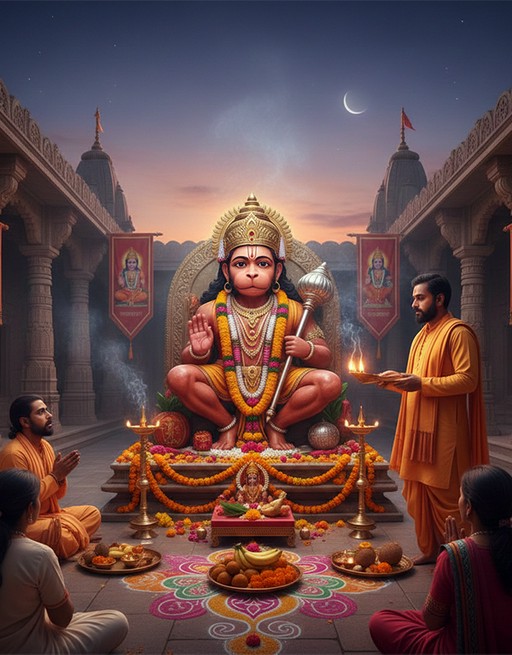
"The Hanuman Chalisa is the most recited prayer in all of Hindu tradition. Forty verses written by Tulsidas in Awadhi, it tells the story of Hanuman's strength, his devotion to Ram, and his ability to lift any difficulty a devotee places before him. Tradition holds that wherever the Hanuman Chalisa is recited with sincerity, no harm can come. Families recite it before journeys. Students recite it before exams. Devotees recite it daily as a shield against fear. It is the most accessible, most powerful Hanuman prayer in existence."
Mahalakshmi Hawan
"Mahalakshmi is the supreme form of the goddess of wealth. She is the consort of Lord Vishnu and the mother of plenty. The shastras say she lives where worship and care abide. This hawan is a fire worship in her honour. The sacred fire carries each prayer straight to the Mother. Many earn well but cannot keep their wealth. This hawan works to bring lasting wealth, or sthir Lakshmi. It clears the blocks that let money slip away. Business families seek it for steady growth and plenty. Its best days are Diwali and Dhanteras. These are the days the Mother walks the earth."
Navchandi Path and Yajna
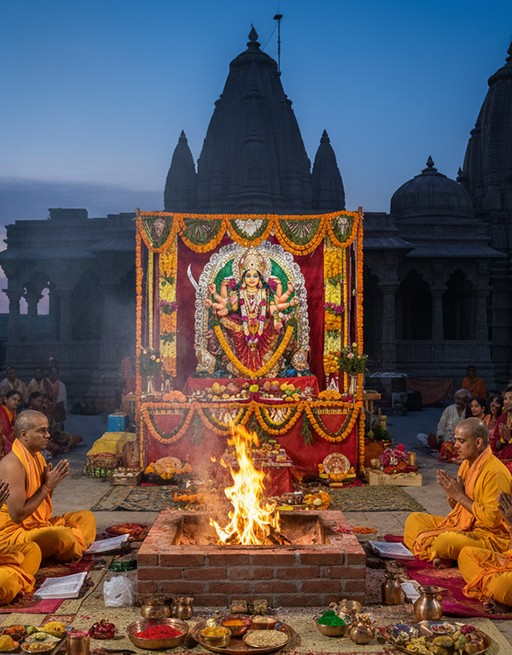
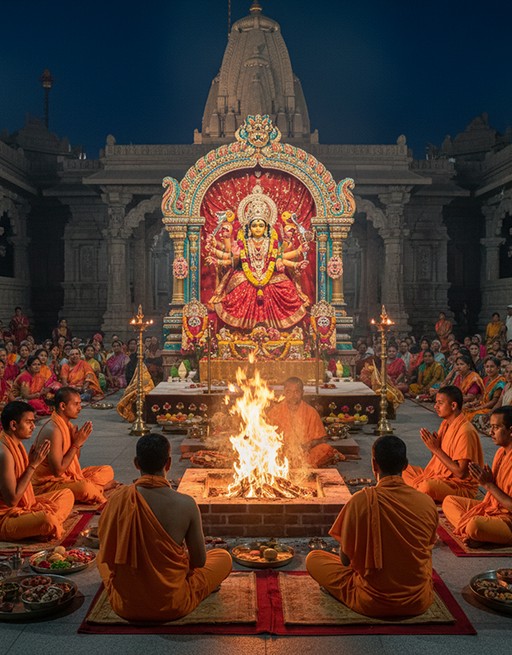
"Navchandi Path & Yajna is one of the most elevated forms of Durga worship in the Vedic tradition. It combines the recitation of the Chandi Path (the seven hundred verses of the Devi Mahatmya) with the energy of a sacred Yajna. The Chandi Path alone is powerful. Performed with a Yajna, its force is multiplied. Each verse becomes an offering into the fire. Each offering rises directly to Maa Durga in all her nine forms."
Chhinnamasta Puja and Yajna
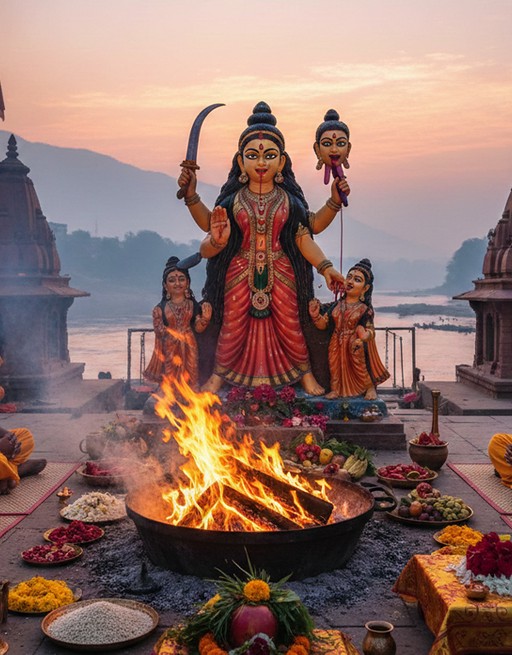
"Chhinnamasta Mata is the sixth of the ten Mahavidyas. Her image is one of the most powerful in all of Hindu tradition. She holds her own severed head in one hand, and a sword in the other. Three streams of blood flow from her neck. One nourishes her own head. Two nourish her companions. She is the goddess of supreme sacrifice and supreme freedom. Devotees turn to her when life calls for letting go of what is comfortable, when courage must overcome fear, and when ordinary protection is not enough."
Kemdrum Yog Shanti Puja
"Kemdrum Yoga forms when the Moon stands alone in the birth chart, with no planets in the houses on either side of him. The Moon, who governs the mind and the emotions, becomes a lonely traveller. Devotees shaped by Kemdrum often feel a particular kind of solitude. Not the loneliness of having no one around. A deeper sense of moving through life without feeling supported. Financial stability comes and goes in waves. Decisions feel as though they must be made alone, without the natural backing one sees in others' lives."