Longer Life Life Threat
Tripura Sundari Shodashi Puja and Yajna
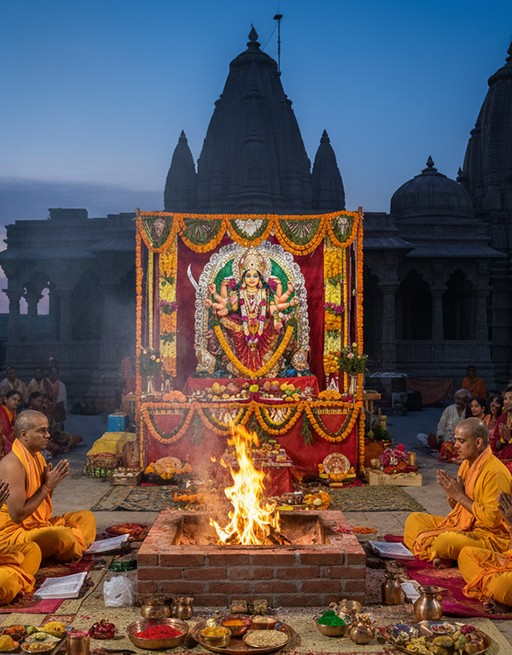
"This puja honours Tripura Sundari Mata, the third of the ten Mahavidyas, in her form as Shodashi. While the Shri Vidya path focuses on the deeper sadhana of the goddess, this puja focuses on her grace as a mother who blesses the home. It is the puja chosen by families who want her warmth more than her formal initiation. Tripura Sundari rules over the joy of being alive. The beauty of relationships. The blessing of a home that feels full. To worship her is to invite that fullness into daily life."
Tara Devi Puja and Yajna
"Tara Devi is the second of the ten Mahavidyas. Her name means "she who carries across." She is the goddess who carries the soul across the ocean of suffering. Across fear. Across confusion. Across the dark phases of life. She appears with a fierce form, but her energy is deeply maternal. She destroys what threatens her devotees, while holding them close. In some traditions, Tara is also worshipped as a form of Kali Mata. Wherever she is invoked, lost souls find their way home."
Shasthi Abda Poorti Puja
"Shasthi Abda Poorti is the ceremony performed when a person completes sixty years of life. The number sixty holds deep meaning in the Vedic calendar. It marks the completion of one full cycle of cosmic time. The person has lived through every combination of the five elements, the nine planets, and the lunar cycles. The ceremony honours this milestone. It is a moment of gratitude for the years lived, and a fresh blessing for the years ahead."
Guru Chandal Dosh Puja
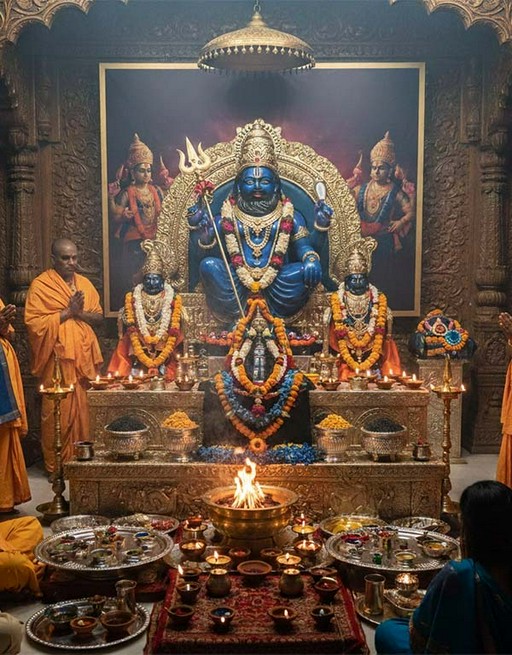
"Guru Chandal Yog forms when Jupiter (Brihaspati, the cosmic teacher of wisdom) and Rahu (the shadow planet of confusion and craving) come together in the same house. The name carries the meaning. The noble teacher seated beside the unruly outcast. It is not cruel. It describes the inner tension this combination creates. Jupiter offers wisdom. Rahu offers temptation. The devotee's life becomes the battleground. Wisdom is heard but not heeded. Addictions take root despite intelligence. Friendships form with people who drag the devotee away from their better self."
Gandmool Dosh Shanti Puja
"This puja is performed for newborn children born with one of two related afflictions. Mool Dosh and Gandant Dosh. Both come from where the Moon was placed at the moment of birth. Mool Dosh is identified when a child is born under one of the six Gandmool Nakshatras. Ashwini, Ashlesha, Magha, Jyeshtha, Mool, or Revati. Gandant Dosh is identified when a child is born at the precise junction between a water sign and a fire sign in the Moon's position. Cancer to Leo. Scorpio to Sagittarius. Pisces to Aries. These are the knots of the cosmos."
Pradosh Vrat Katha
"Pradosh Vrat is observed on the Trayodashi tithi, the thirteenth lunar day of every fortnight. The word pradosh means "the time at twilight," and refers to the sacred window between sunset and nightfall. Tradition holds that during this window, Lord Shiva dances on Mount Kailash while all the gods watch in devotion. Devotees who observe Pradosh Vrat receive Shiva's grace at his most joyful, most generous moment. The vrat is observed by households across India for the blessing of children, health, and the resolution of long-standing struggles."
Adi Kailash Puja
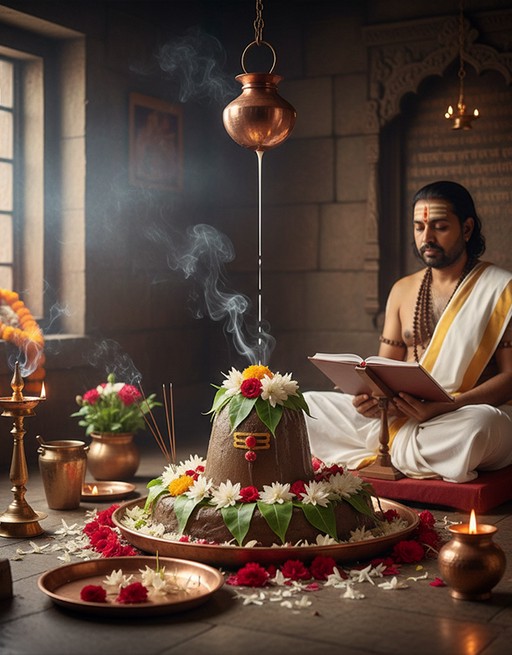
"Adi Kailash is a sacred peak in the Himalayas. It is also known as Chhota Kailash, the lesser Kailash. The shastras hold it as a holy seat of Lord Shiva. Its form is much like the great Mount Kailash. The peak stands above a calm and clear lake. Few reach this far and high to worship there. A puja here is rare and full of merit. This homa is a fire worship of Lord Shiva. The sacred fire carries each prayer to the Lord. It brings health, peace, and a fresh strength for life. Devotees long for this worship at the seat of Shiva."
Baglamukhi Mata Puja
"Baglamukhi Mata is the eighth of the ten Mahavidyas. Her name comes from bagla, meaning "the one who silences," and mukhi, meaning "the face." She is the goddess who silences the voice of the enemy. Who paralyses the power to harm. Who freezes negative energy at its source. Her form is fierce, but her purpose is protection. She holds the tongue of her enemy in one hand, and a club in the other. Wherever Baglamukhi rules, no harm can move forward. Yellow is her sacred colour. Yellow flowers, yellow cloth, and turmeric are her offerings."
Rigveda Yajna
"The Rigveda is the oldest scripture in the Hindu tradition. The first of the four Vedas. Composed thousands of years ago, it contains over a thousand hymns dedicated to the gods, with the largest number addressed to Indra (the king of the gods) and Agni (the sacred fire). The Rigveda Yajna is the fire ritual built around these original hymns. It is one of the most powerful and most ancient yajnas in existence. To have it performed is to participate in the same tradition that the earliest sages of India established."
Kanya Pashupata Homam
"Kanya Pashupata Homam is performed for unmarried young women (kanyas) seeking the blessing of marriage and a loving life partner. The puja invokes Shiva in his form as Pashupati, the lord of all beings. In Hindu tradition, Shiva is the ideal husband. He is the husband of Parvati Mata, whose own penance to win him is one of the most beloved stories in scripture. Unmarried young women have, for centuries, prayed to Shiva for a partner blessed with the qualities they seek."
Special Maha Rudra Pujan and Yajna
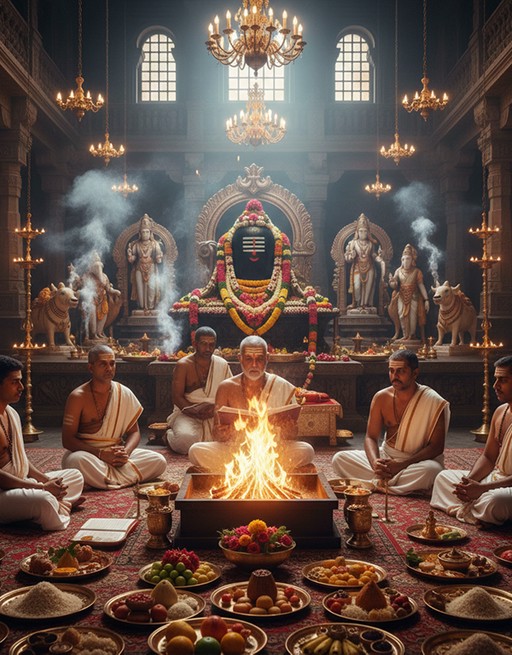
"Maha Rudra is one of the highest forms of Shiva worship in the entire Vedic tradition. It involves the chanting of the Sri Rudram one hundred and twenty-one times. Eleven rounds of Rudram form one Laghu Rudra. Eleven Laghu Rudras together form one Maha Rudra. The power compounds at every level. This is the puja chosen when a community, a region, or a family needs Shiva's grace at the largest possible scale. It is also one of the most powerful pujas for rain, harvest, and the protection of crops."
Dhumawati Puja and Yajna
"Dhumavati Mata is the seventh of the ten Mahavidyas. She is unlike any other goddess in the Hindu tradition. She appears as an old widow, dressed in white, riding a chariot drawn by crows. She holds a winnowing basket in her hand. Where other goddesses give wealth, beauty, and abundance, Dhumavati gives something rarer. She removes what no longer serves the devotee. She destroys what holds them back. She clears away the smoke (dhuma) that hides the soul's true path."