Longevity & Life Protection
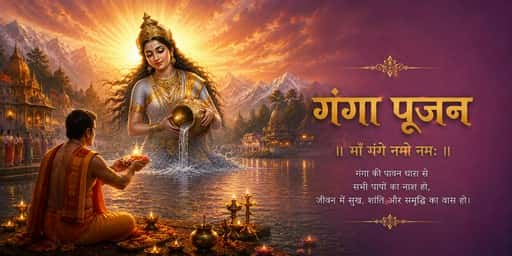
Ganga Pujan
"Ganga did not always flow on earth. Sage Bhagiratha did years of penance to bring her down, so her waters could free the souls of his ancestors. But her descent was so powerful, it would have shattered the earth. Lord Shiva caught her in his matted locks and let her flow gently onto the Himalayas. Since then, Ganga has been more than a river. She is the mother who takes away the sins of those who touch her waters."
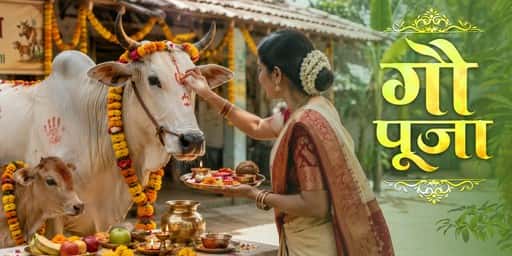
Gau Pujan (Gau Grass Feeding)
"Kamdhenu is the divine cow of Hindu tradition. The wish-fulfilling cow who emerged from the cosmic ocean during the great churning. Her name means "the cow of desires." Tradition holds that whoever worships Kamdhenu receives whatever they ask for, because she carries within her body all the gods, all the sacred rivers, and all the elements of the cosmos. She is also called Surabhi, "the fragrant one," and is the divine mother of all cows on earth. To worship Kamdhenu is to ask the most generous mother of the universe for her blessing."
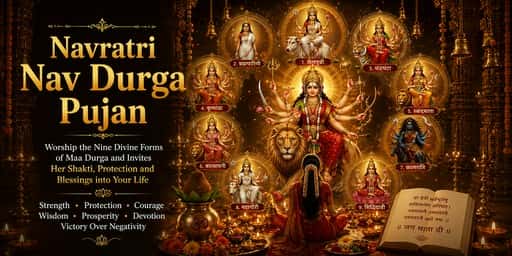
Navratri Nav Durga Pujan
"Navratri is nine nights of devotion to Maa Durga. Each night honours one of her nine forms. Shailputri, Brahmacharini, Chandraghanta, Kushmanda, Skandamata, Katyayani, Kaalratri, Mahagauri, and Siddhidatri. The first three days bring strength. The next three bring prosperity. The final three bring wisdom. By the ninth night, the devotee has been blessed by every form of the Mother."
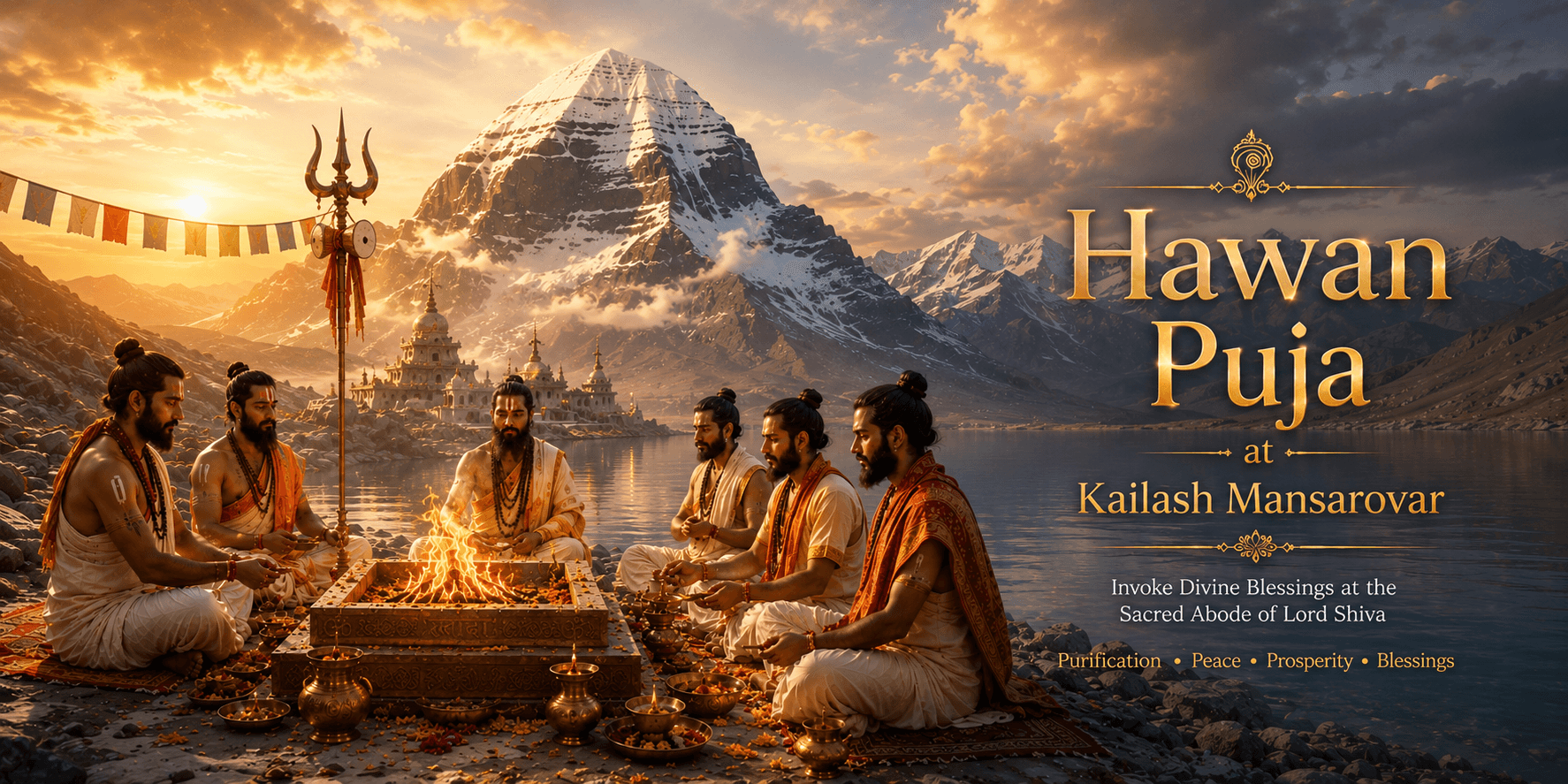
Hawan Puja at Kailash Mansarovar
"Kailash is not a temple built by human hands. It is the home Shiva chose for himself. The mountain has never been climbed, out of pure reverence, and pilgrims circle it instead in the sacred kora. At its feet lies Mansarovar, the lake born, tradition says, from the mind of Brahma himself. The shastras hold that the devtas descend to bathe in its waters at Brahma Muhurta, before dawn. A hawan performed on this ground is the rarest fire offering a devotee can make. Most devotees will never reach this altitude in their lifetime. This group hawan carries their names there."
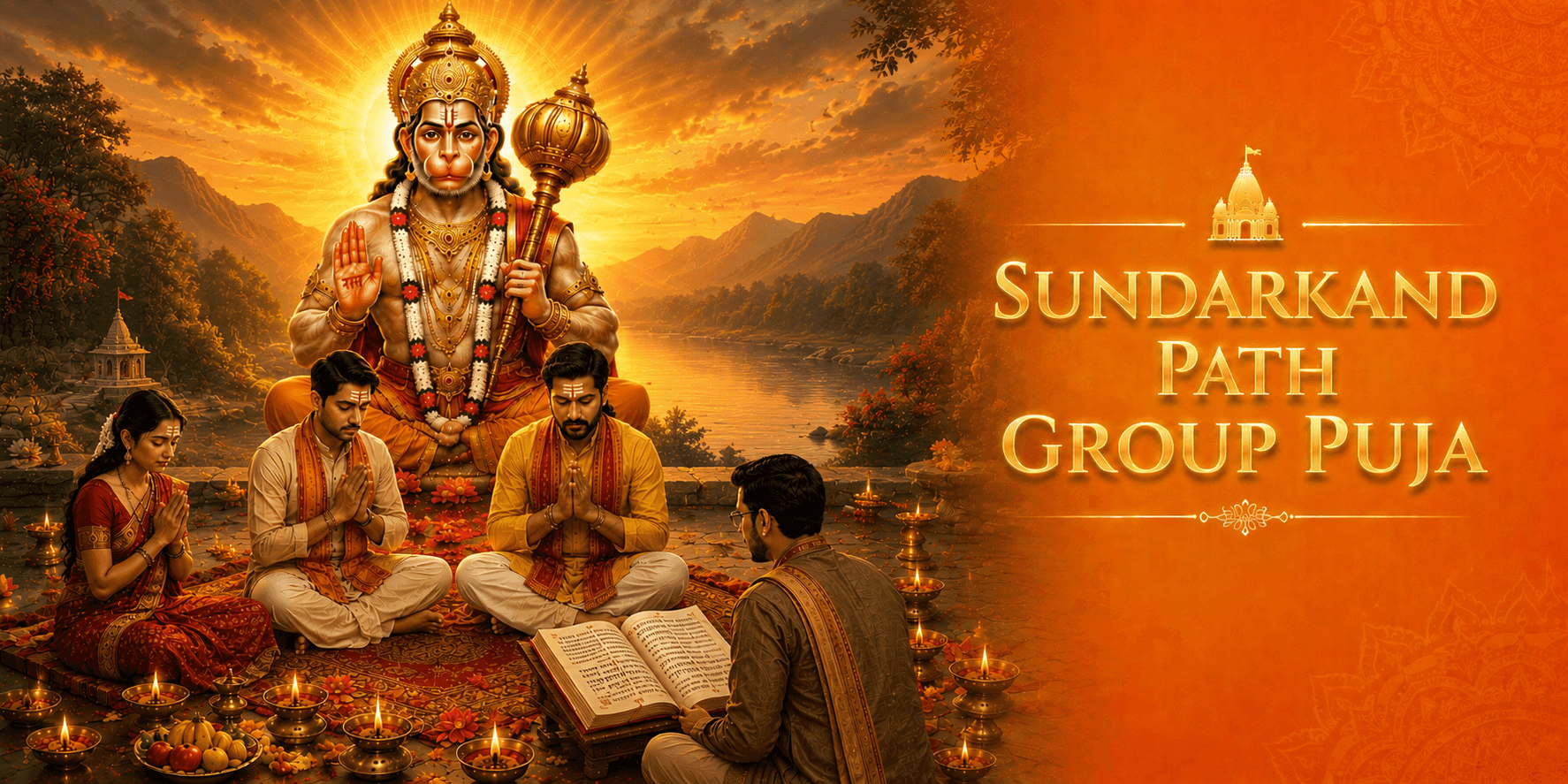
Sundarkand Path Group Puja
"Sundarkand is the most loved part of the Ramayan. Its name means the beautiful chapter. It tells of Hanuman's leap across the sea to Lanka. He went to find Mata Sita, held by Ravana. He crossed the ocean, found her, and gave her Ram's ring. He then burned Lanka and returned with hope. The whole chapter sings of his courage and faith. Of all the Ramayan, this part holds the most power. Its path is said to clear trouble and fear. It brings strength, wisdom, and the grace of Hanuman. Devotees recite it to defeat enemies and gain peace."
Tripura Sundari Shodashi Puja and Yajna
"This puja honours Tripura Sundari Mata, the third of the ten Mahavidyas, in her form as Shodashi. While the Shri Vidya path focuses on the deeper sadhana of the goddess, this puja focuses on her grace as a mother who blesses the home. It is the puja chosen by families who want her warmth more than her formal initiation. Tripura Sundari rules over the joy of being alive. The beauty of relationships. The blessing of a home that feels full. To worship her is to invite that fullness into daily life."
-group-puja-6527e18f5ccc5711cd862203-54243791.png&w=3840&q=60)
Deepawali (Diwali) Group Puja
"Deepawali is the biggest festival in the Hindu year. It marks the return of Lord Ram to Ayodhya. People light rows of lamps to welcome him home. The night is sacred to Lakshmi, the goddess of wealth. She walks the earth and enters homes that wait for her. The puja begins with Ganesh, who clears all blocks. It then turns to Lakshmi for wealth and plenty. This group puja joins many devotees in one worship. The shared prayer carries great strength on this night. It brings lasting wealth, fame, and growth in business. Devotees keep their homes clean and bright to receive the Mother."
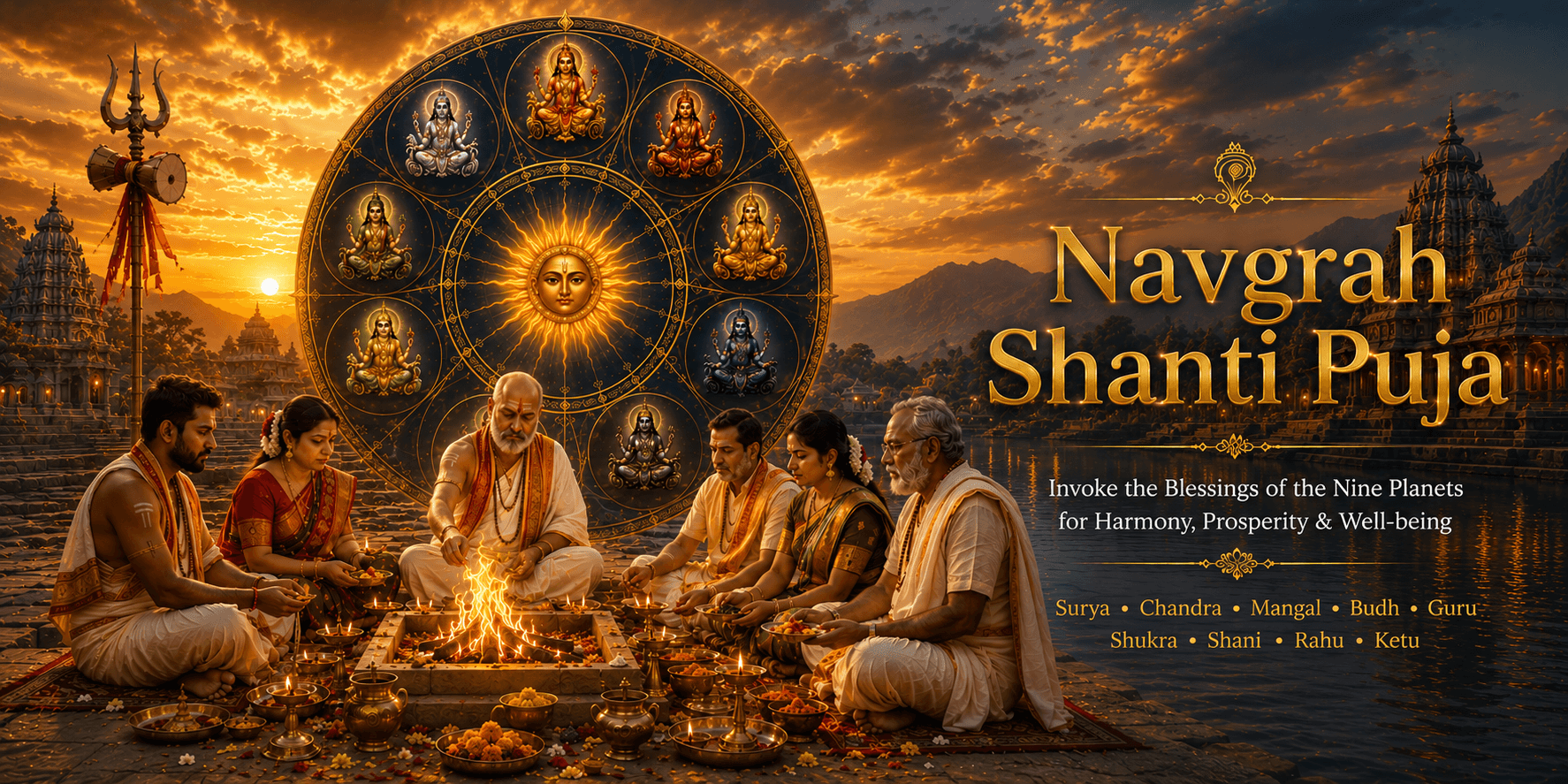
Navgrah Shanti Puja
"Every life is shaped by nine celestial forces. Surya, Chandra, Mangal, Budh, Guru, Shukra, Shani, Rahu, and Ketu. These are not distant stars. In Vedic tradition, they are living divine forces. At the moment of birth, their position imprints itself on the soul. That imprint is the birth chart. When the planets are favourably placed, life flows. When they fall into difficult positions, the devotee senses something is out of sync."
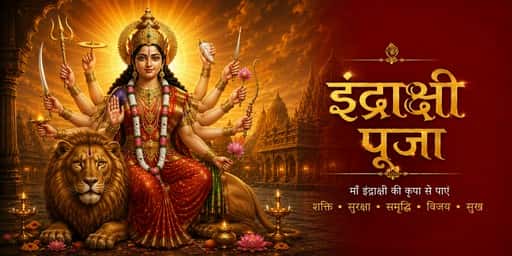
Indrakshi Puja
"Indrakshi Mata is one of the most powerful protective goddesses in the Vedic tradition. Her name means "she with the eyes of Indra." The Indrakshi Stotra was first taught by Lord Indra himself to sage Brihaspati. It is recited for protection from disease, from enemies, and from the unseen forces that can harm a devotee. For centuries, families have turned to this puja during prolonged illness, mysterious afflictions, and times when conventional remedies have not worked."
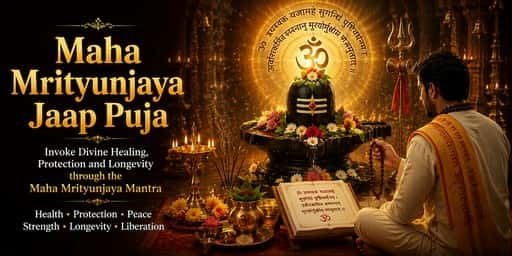
Maha Mrityunjaya Jaap Puja
"The Maha Mrityunjaya Mantra is one of the oldest prayers in the Rigveda. It is called the great death-conquering mantra. Sage Markandeya was the first to chant it. He prayed to Shiva and was saved from death itself. Devotees have chanted it ever since for healing, for safety, and for long life."
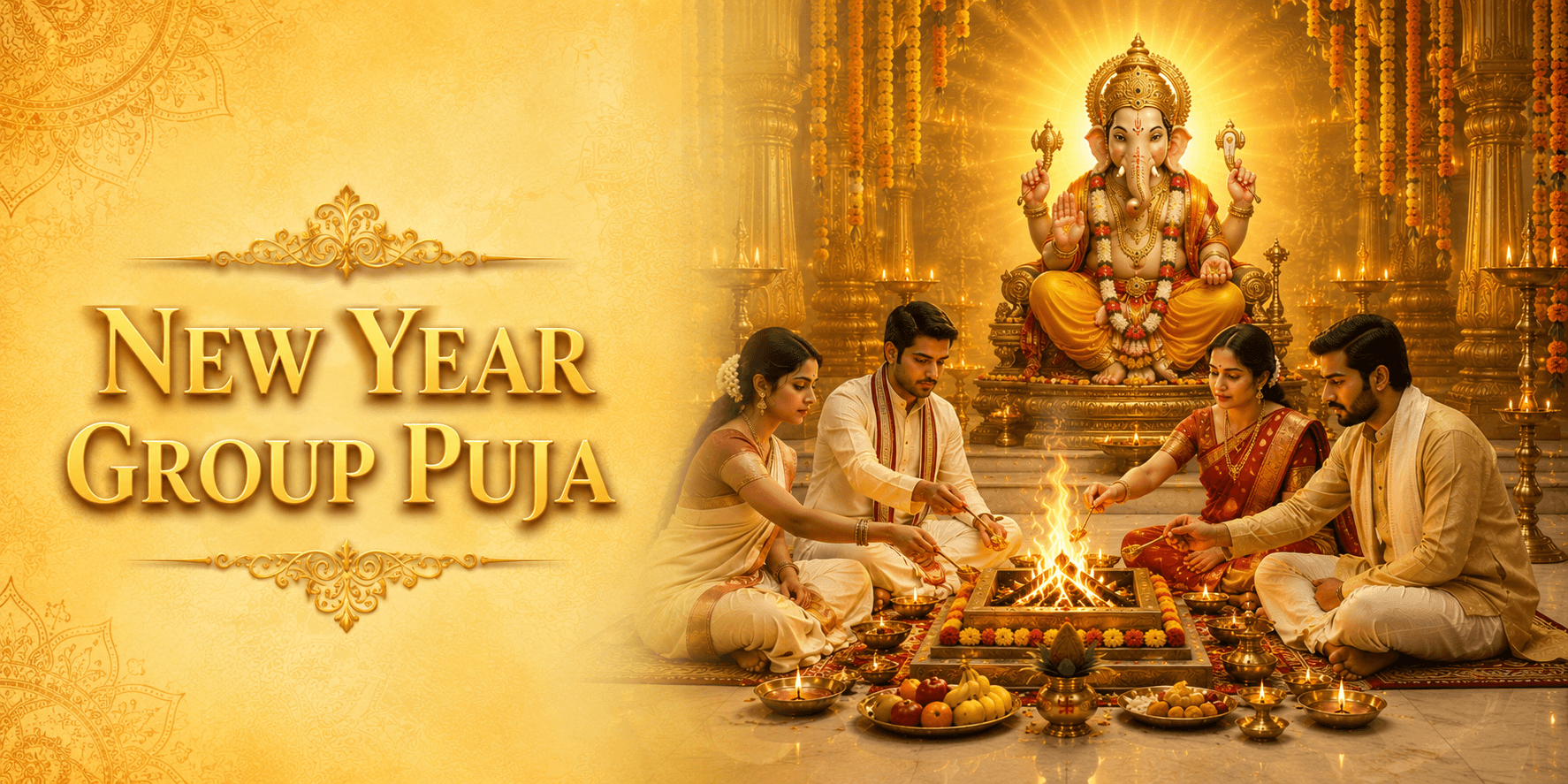
New Year Group Puja
"The Vedic tradition never begins anything important without a sankalp, and no sankalp is larger than a whole year. This group puja takes that sankalp on the first day of the year, in Kashi. Ganesh Ji is worshipped first, as he must be, to clear the path of the twelve months ahead. Vishnu Ji is invoked to preserve and carry every undertaking. Lakshmi Mata is invoked for prosperity through the year. The Navagraha are pacified so that no planetary period turns a good year sour. The worship closes with the Panch Devta, the five deities of the Panchayatana tradition, Ganesh, Vishnu, Shiva, Devi, and Surya, whose combined presence leaves no direction unguarded."