Divine Collection
Intelligence
Chaitra Navratra Puja
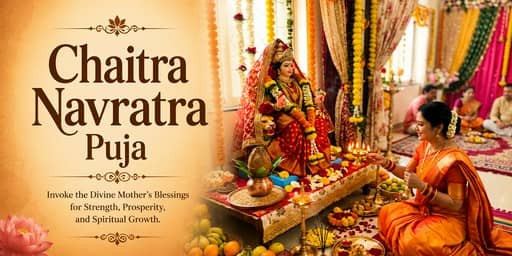
"Chaitra Navratri brings the nine sacred nights of the Goddess. They fall at the start of the Hindu new year, in the month of Chaitra. These are among the holiest days in the whole calendar. Devotees worship the nine forms of Durga, one for each day. The first day honours Shailputri and the last honours Siddhidatri. Each form grants a different blessing to the seeker. Many keep fasts and light the akhand jyoti through all nine days. The Mother is said to walk close to her devotees at this time. She gives strength to the weak and wealth to the deserving. People pray to her for safety, courage, and a fresh start."

Gau Beej Mantra Jaap Vidhan Puja
"Hindu tradition holds the cow as the most sacred of all animals. Sanatan Dharma sees Gau Mata as the home of all gods and goddesses. It is said that thirty-three crore devtas reside within her body. To serve the cow is to serve the whole of creation. Her worship is believed to lead the soul toward freedom. This puja honours Gau Mata through the chanting of her seed mantra. The Gau Beej Mantra carries the power to cleanse old karma. It brings peace to the soul and lifts the weight of ancestral dosha. Devotees have turned to this worship for generations."

Shaligram Puja
"The Shaligram is a black, round stone found in the Gandaki river in Nepal. People have worshipped it for ages as a living form of Lord Vishnu. It needs no carving and no pran pratishtha. Tradition holds that Vishnu himself resides inside the stone. Each Shaligram carries marks and lines that point to a different form of the Lord. Some show Krishna, some show Narasimha, some show Vaman. Where the Shaligram is worshipped with love, Mata Lakshmi stays close by. She brings wealth, peace, and unity to that home. For this reason families keep it as the heart of their daily worship."
Mundan Sanskar Puja
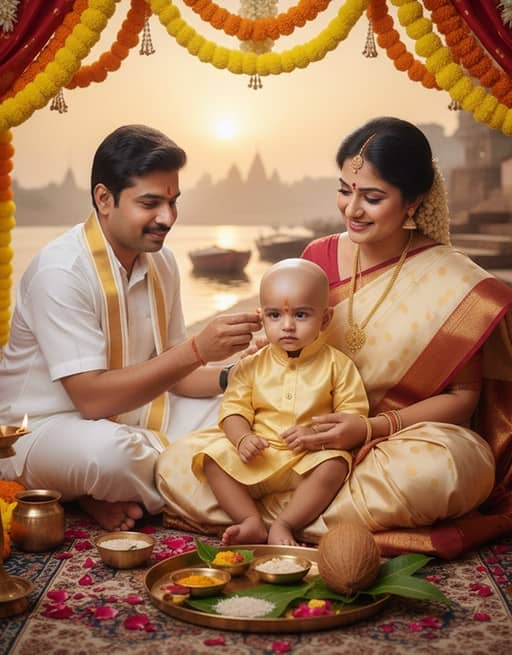
"Mundan is the first haircut of a child. It is one of the sixteen sacred sanskars of Hindu life. The shastras say the hair from birth carries past karma. Shaving it clears that load and starts the child fresh. The rite is done in the first or third year of life. It is said to cool the head and aid the child's growth. It also brings long life and a sharp mind. The worship begins with Ganpati to clear all blocks. The Panchang Dev and Vishnu are honoured for grace. Families gather to bless the child on this day. Done in Kashi, the rite carries the highest merit."
Naamkaran Sanskar Puja
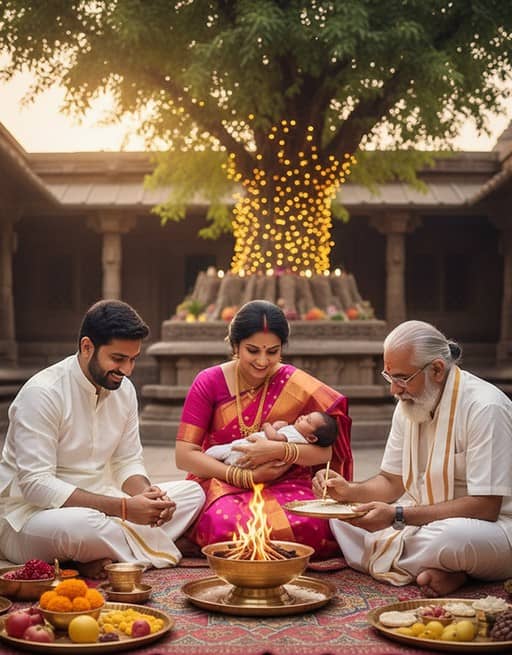
"Naamkaran is the naming of a newborn child. It is one of the sixteen sacred sanskars of Hindu life. The rite is done in the first weeks after birth. The shastras lay down how the name should be chosen. The birth star and the Panchang guide the right sound. A good name is said to shape the child's path. The rite seeks blessings for the child's whole life. The worship begins with Ganpati to clear all blocks. The Panchang Dev and the Ishta Devta are honoured for grace. Family and elders gather to bless the new name. Done in Kashi, the rite carries the highest merit."
Karnavedha Sanskaar Puja
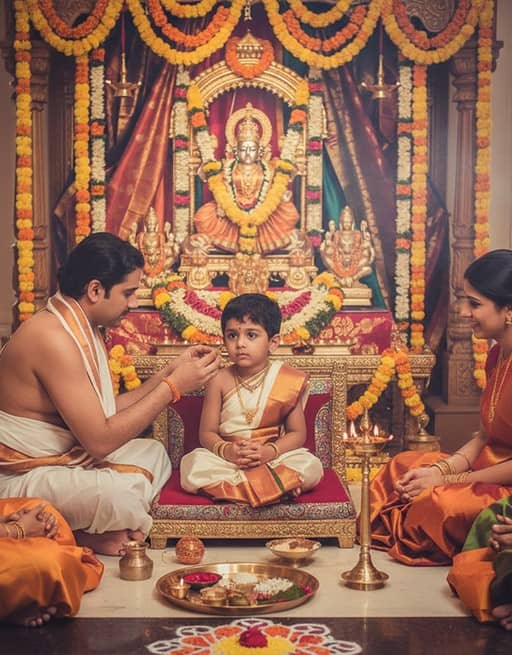
"Karnavedha is the piercing of a child's ears. It is one of the sixteen sacred sanskars of Hindu life. The rite is far older than mere custom or style. Ayurveda holds that the ear point aids health and mind. The shastras say it opens the child to sacred sound. It guards against illness and sharpens the senses. The rite is done in the early years of life. The worship begins with Ganpati to clear all blocks. Vishnu and the Ishta Devta are honoured for grace. Families gather to bless the child on this day. Done in Kashi, the rite carries the highest merit."

Ganapati Atharvashirsha Puja
"The Ganapati Atharvashirsha Puja is the full ceremonial form of the Atharvashirsha tradition. Where the Path focuses on the recitation alone, the Puja adds the complete ritual framework. Sankalp at the beginning. The formal worship of Ganesha's idol. The Atharvashirsha recitation as the heart of the ritual. The havan to seal the offerings. The aarti to close the vidhi. The Atharvashirsha itself is unique. Drawn from the Atharva Veda, it declares Ganesha not just as a deity but as the supreme cosmic principle, the source of all reality."
Upanayan Sanskar
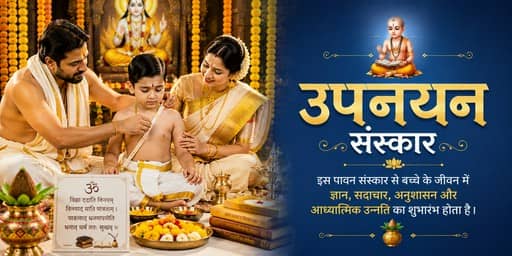
"Upanayan is the sacred thread ceremony. It is one of the sixteen great sanskars of Hindu life. It marks a boy's start on the path of learning. The word means to lead the child near to the guru. On this day the boy first wears the janeu thread. The thread holds three strands of deep meaning. The rite gives him the sacred Gayatri Mantra. It is seen as a second birth into a learned life. The worship honours the Saptarishi, the seven sages. Vasant Panchami is a favoured day for this rite. Done in Kashi, the sanskar carries the highest merit."
Vishnu Yajna and Purash Sukta Path
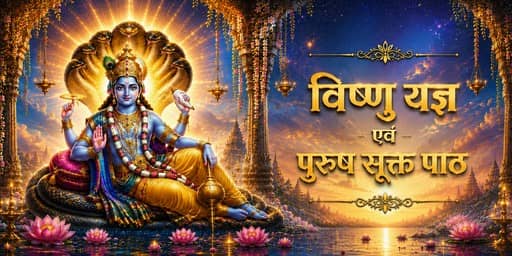
"This is a combined puja that brings together the Purusha Sukta hymn (the Rigvedic prayer to the cosmic being) and a full Vishnu Yajna. The Purusha Sukta is one of the oldest and most sacred Vedic hymns, describing the cosmic Purusha from whom the universe emerges. When it is recited alongside a Vishnu Yajna, the energy is multiplied. The cosmic prayer is anchored in the sacred fire. The offerings reach Vishnu directly through the flames. This is one of the most powerful Vishnu pujas in the entire Vedic tradition."
Sankata Mata Puja
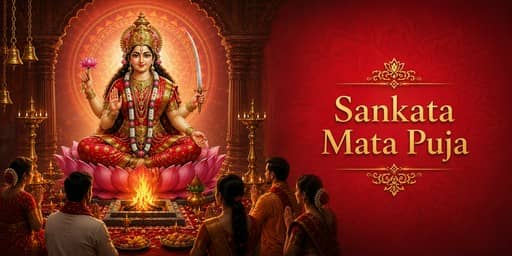
"Sankata Mata's name means "the goddess who removes difficulties." She is a beloved form of the Divine Mother in Kashi, with her own ancient temple in the city. Devotees turn to her when life feels heavy with sankat, a Sanskrit word that means crisis, difficulty, or trouble. Where ordinary remedies have not worked, where the way forward feels closed, Sankata Mata answers. Tradition holds that those who pray to her with sincerity feel their burdens lift, even when the outer circumstances have not yet changed. Students, brides-to-be, and families facing chronic difficulty are her most devoted seekers."
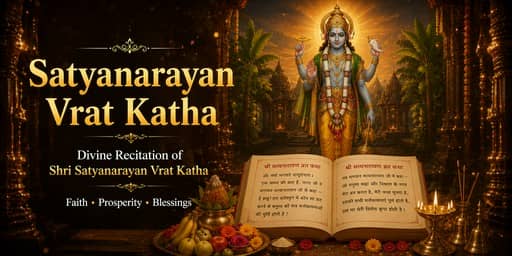
Satyanarayan Vrat Katha
"Satyanarayan Vrat is one of the most beloved household pujas in the Hindu tradition. The word satya means "truth," and Narayan is another name for Vishnu. To worship Satya Narayan is to align the family's life with the truth that Vishnu represents. The vrat is performed at home, often after a new beginning. A new home. A wedding. A child's birth. A successful business deal. The completion of a long-held goal. Tradition holds that those who keep this vrat with sincerity see their family flourish across every dimension of life."
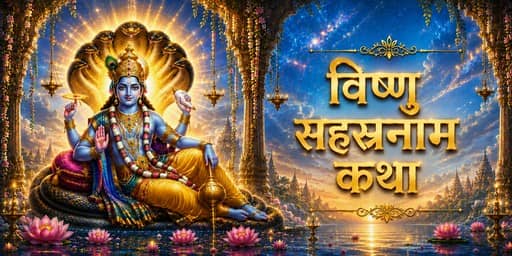
Vishnu Sahasranam Katha
"The Vishnu Sahasranamam is the thousand names of Lord Vishnu. Drawn from the Anushasana Parva of the Mahabharata, it was first recited by Bhishma Pitamah as he lay on his bed of arrows after the great war. Yudhishthira asked him for guidance on dharma. Bhishma's answer was the thousand names of Vishnu. The text is one of the most beloved prayers in the entire Hindu tradition. Each name carries a specific power. Each name is a doorway to a different aspect of Vishnu's grace. To recite the Vishnu Sahasranamam is to walk through all thousand doorways at once."