
Happy Life
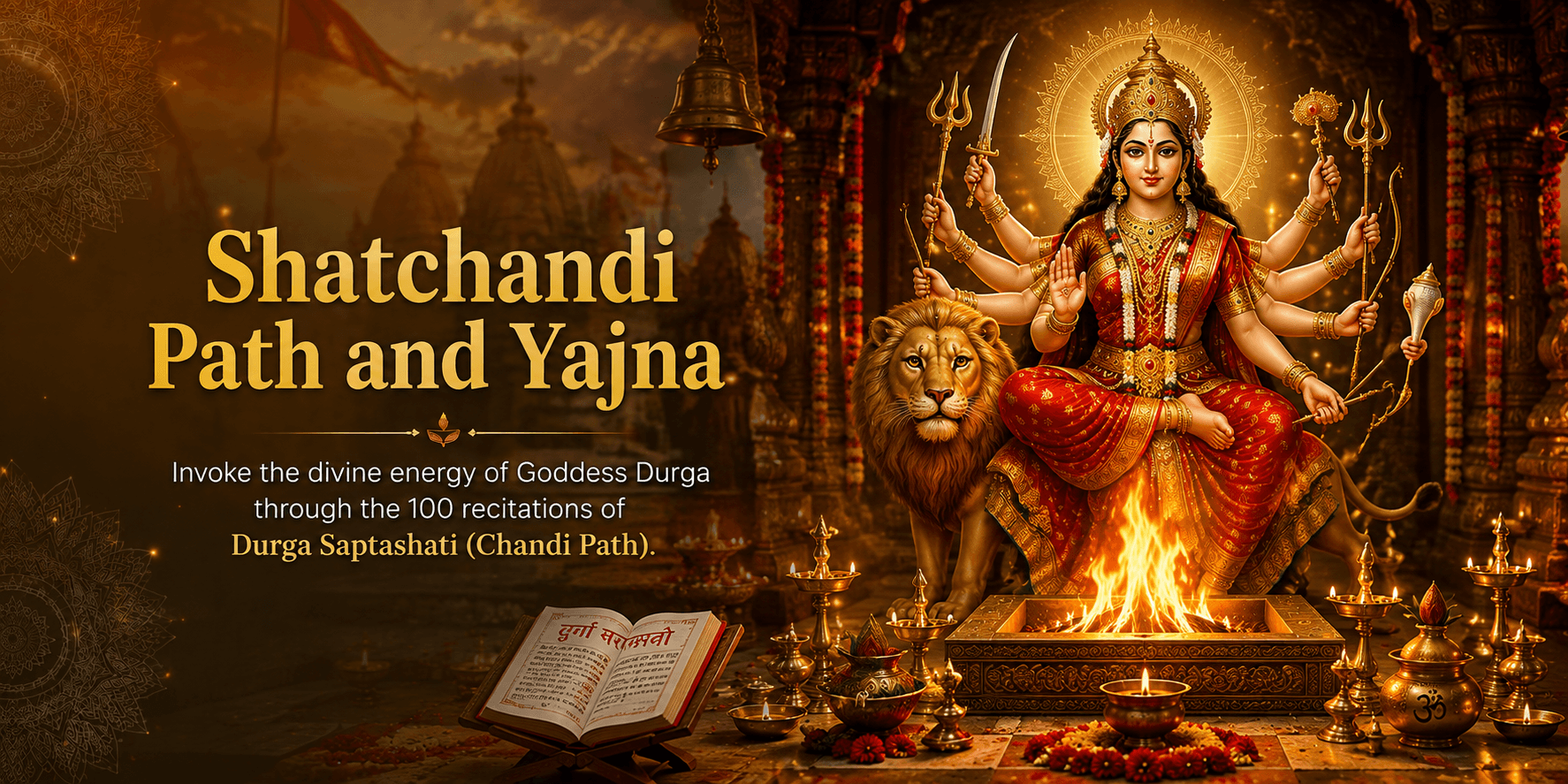
Shatchandi Path and Yajna
"Shatchandi Path is one of the most elevated forms of Durga worship. It involves the recitation of the Durga Saptashati not once, but one hundred times. Each repetition multiplies the power of the previous one. By the end of the path, the seven hundred verses have been chanted seventy thousand times. The Yajna runs alongside, with offerings made into the sacred fire for every section. This is the most comprehensive Durga puja in the Vedic tradition, performed when the family needs the Mother's full grace at the highest possible scale."
Indrakshi Puja
"Indrakshi Mata is one of the most powerful protective goddesses in the Vedic tradition. Her name means "she with the eyes of Indra." The Indrakshi Stotra was first taught by Lord Indra himself to sage Brihaspati. It is recited for protection from disease, from enemies, and from the unseen forces that can harm a devotee. For centuries, families have turned to this puja during prolonged illness, mysterious afflictions, and times when conventional remedies have not worked."
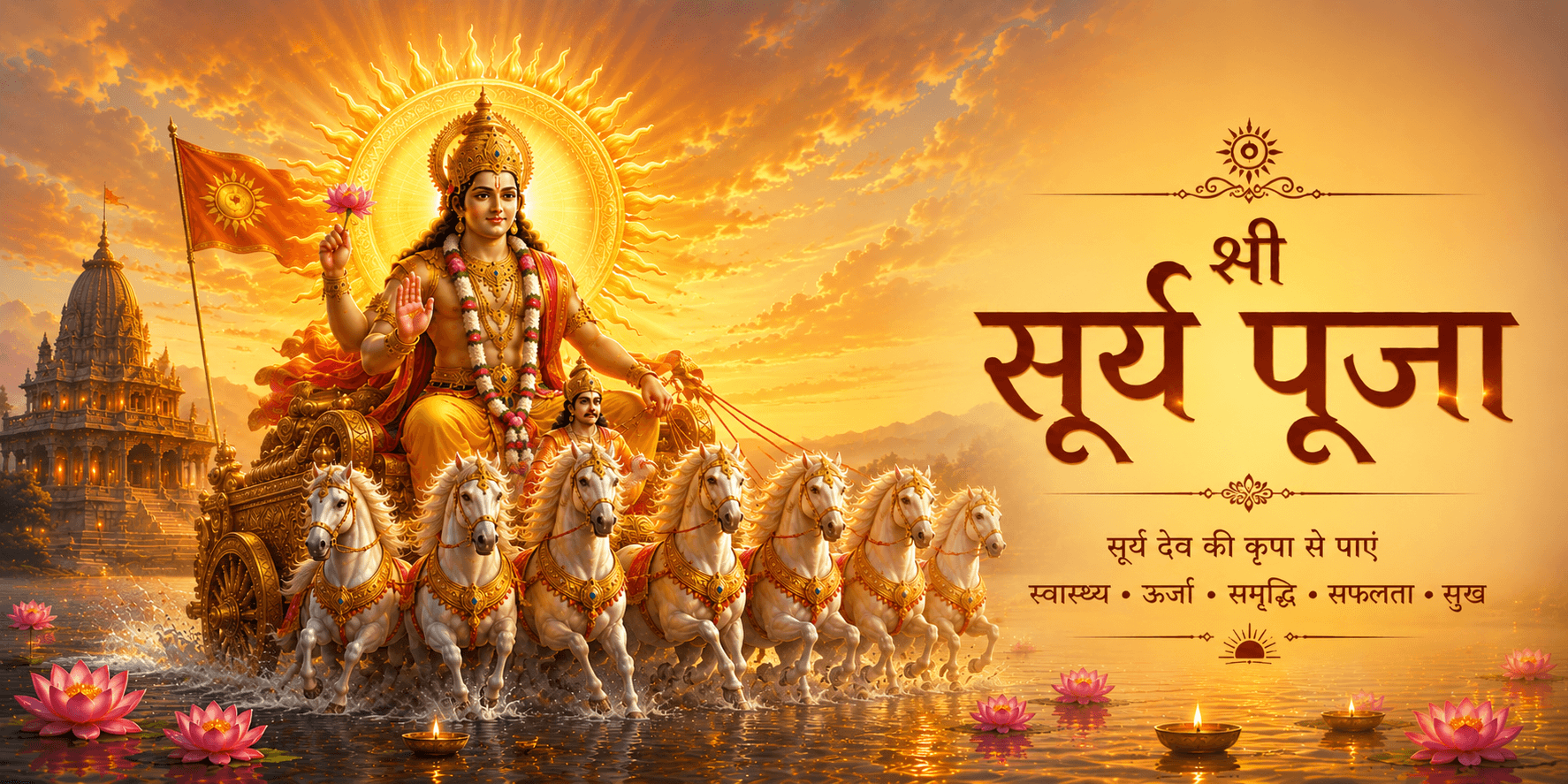
Surya Puja
"Surya is the one deity every devotee can see with their own eyes, every day. He is not a symbol. He is the visible god, the giver of life. The Vedas describe him riding his golden chariot, drawn by seven horses across the sky. In a birth chart, Surya governs the soul. He governs confidence, leadership, recognition, and the relationship with one's father. When he shines strong, the devotee is seen, heard, and respected."
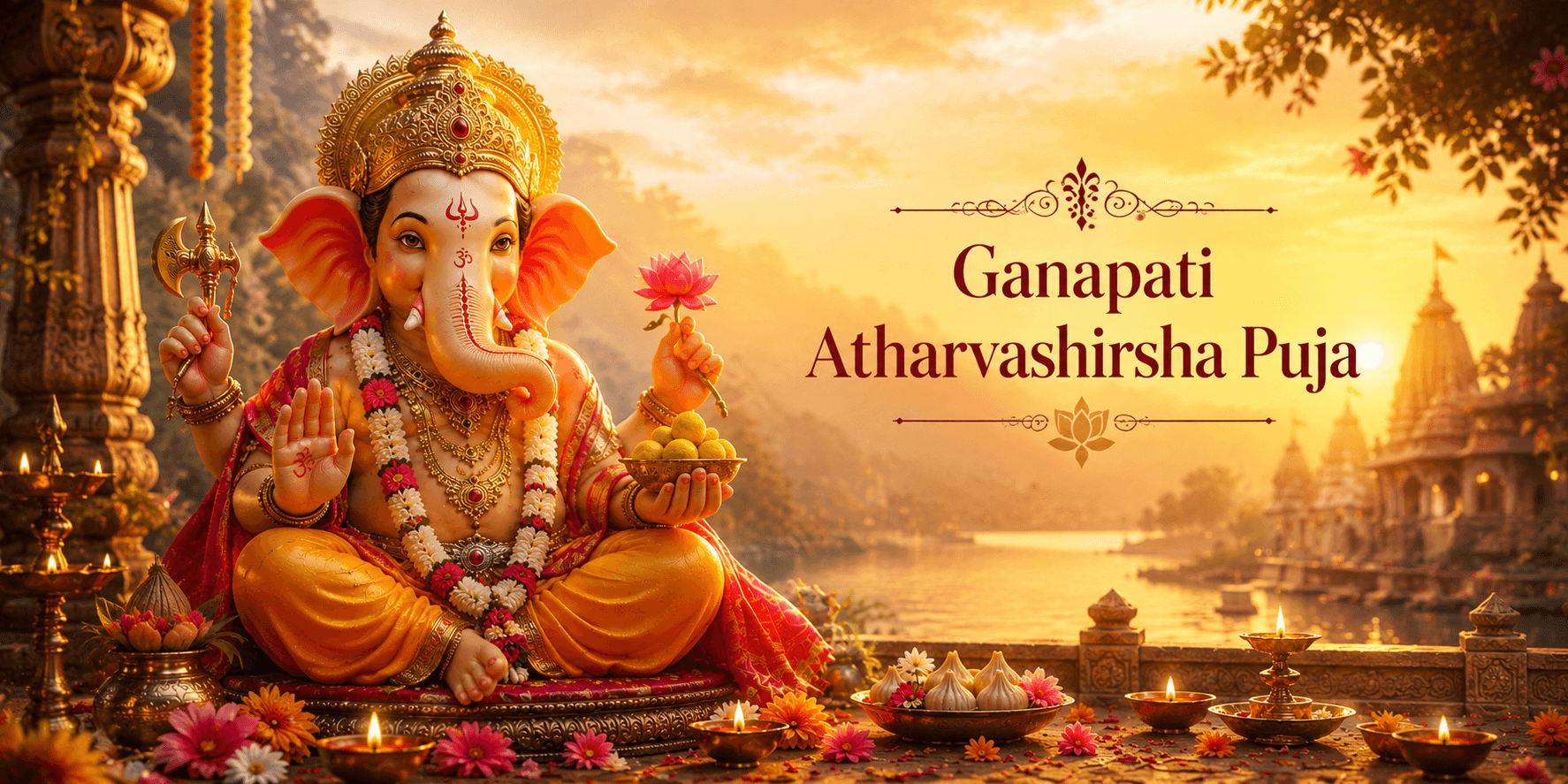
Ganapati Atharvashirsha Puja
"The Ganapati Atharvashirsha Puja is the full ceremonial form of the Atharvashirsha tradition. Where the Path focuses on the recitation alone, the Puja adds the complete ritual framework. Sankalp at the beginning. The formal worship of Ganesha's idol. The Atharvashirsha recitation as the heart of the ritual. The havan to seal the offerings. The aarti to close the vidhi. The Atharvashirsha itself is unique. Drawn from the Atharva Veda, it declares Ganesha not just as a deity but as the supreme cosmic principle, the source of all reality."
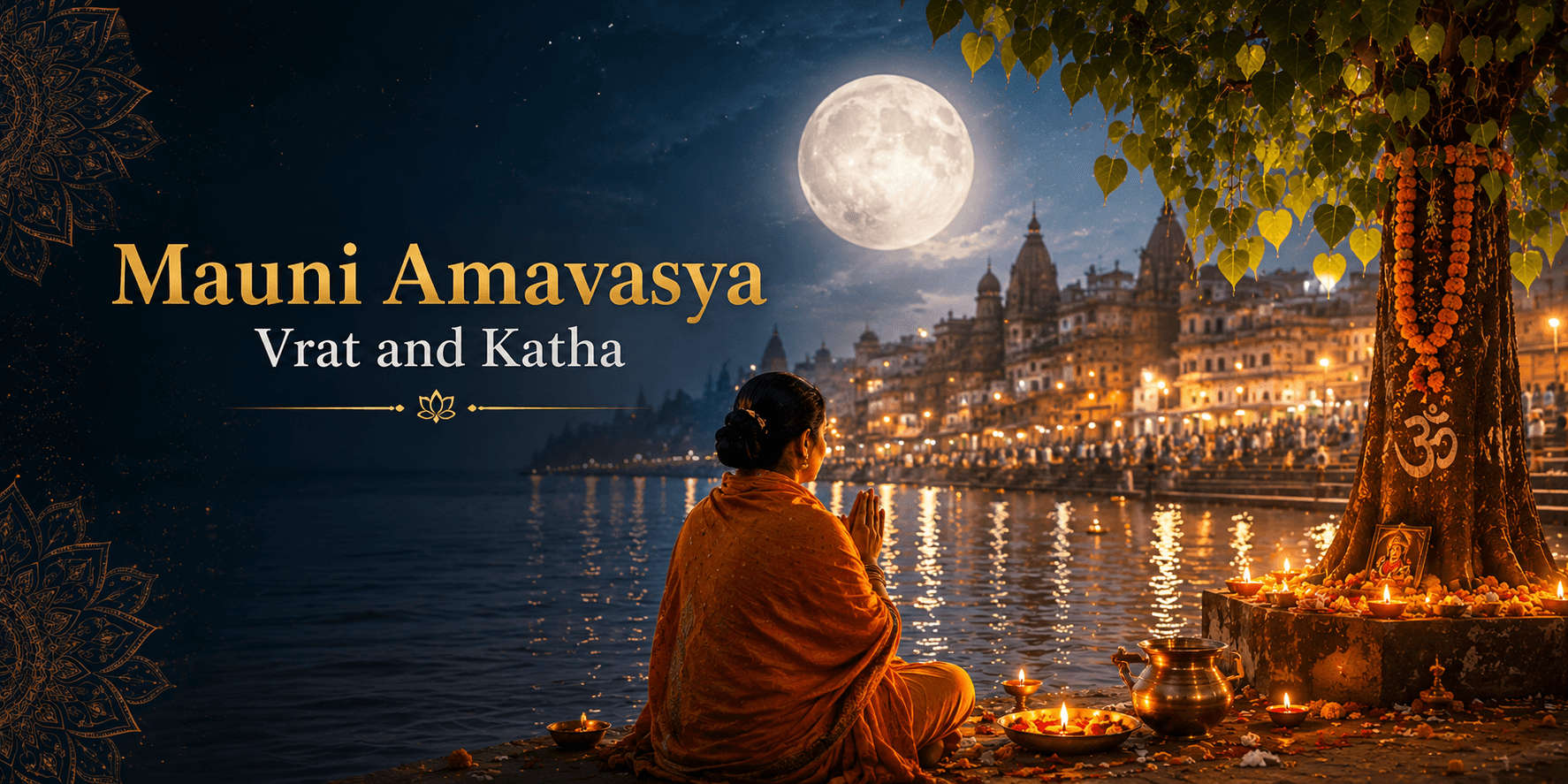
Mauni Amavasya Vrat and Katha
"Mauni Amavasya is the new moon of the month of Magha. The word mauni means "the one who keeps silence." On this day, devotees observe a sacred fast, refrain from speech, and meditate in silence by the Ganga. Tradition holds that on this day, the sage Manu was born, the first ancestor of humanity. The day also falls during the holiest stretch of Magha Mela. Devotees bathe in the Ganga, worship the Pipal tree, and silently pray for the cleansing of every sin from this life and from past lives."
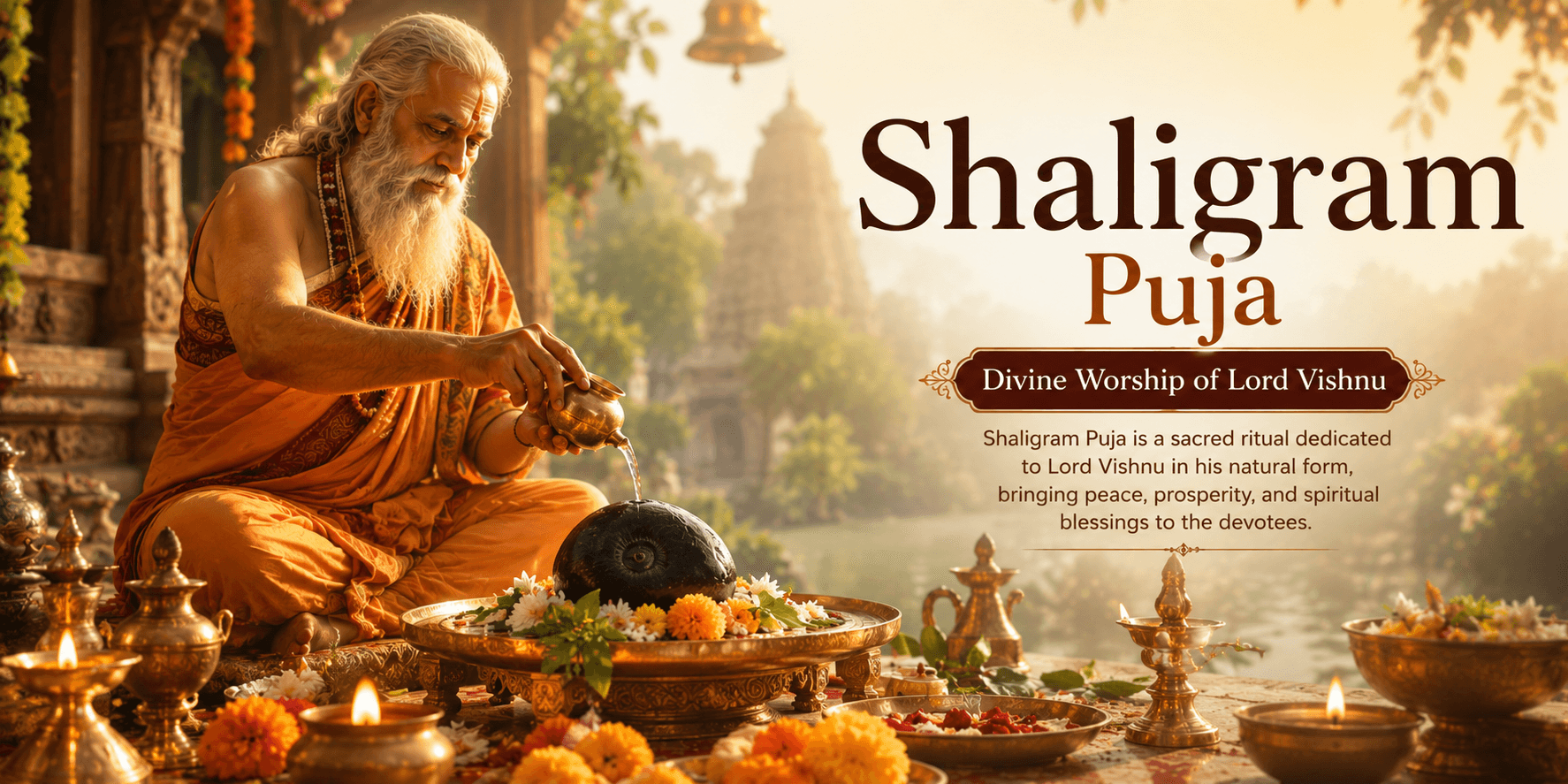
Shaligram Puja
"The Shaligram is a black, round stone found in the Gandaki river in Nepal. People have worshipped it for ages as a living form of Lord Vishnu. It needs no carving and no pran pratishtha. Tradition holds that Vishnu himself resides inside the stone. Each Shaligram carries marks and lines that point to a different form of the Lord. Some show Krishna, some show Narasimha, some show Vaman. Where the Shaligram is worshipped with love, Mata Lakshmi stays close by. She brings wealth, peace, and unity to that home. For this reason families keep it as the heart of their daily worship."
Maha Mrityunjaya Jaap Puja
"The Maha Mrityunjaya Mantra is one of the oldest prayers in the Rigveda. It is called the great death-conquering mantra. Sage Markandeya was the first to chant it. He prayed to Shiva and was saved from death itself. Devotees have chanted it ever since for healing, for safety, and for long life."
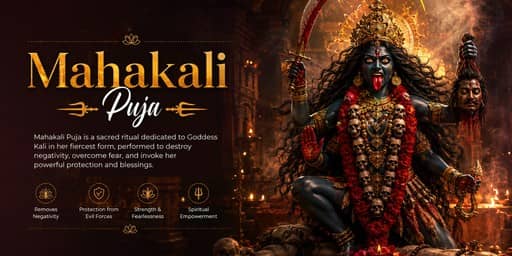
Mahakali Puja
"Mahakali is the supreme form of Kali Mata. Where Kali is the destroyer of evil, Mahakali is the destroyer of time itself. She is the goddess from whom even time emerges. Dark as the night sky. Wearing a garland of skulls. Standing on Lord Shiva who lies beneath her in surrender. Her tongue extended in fierce intensity. Mahakali is not gentle. She is not approachable in the way other forms of the Mother are. But for those who turn to her with absolute devotion, she gives the kind of protection that no other deity gives."
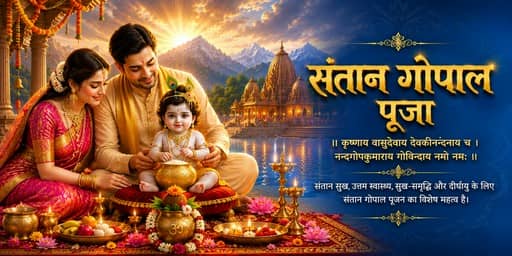
Santaan Gopal Puja
"This puja is dedicated to Krishna in his childhood form. The mischievous, butter-stealing child of Gokul. The toddler whom Yashoda Mata raised with so much love. Krishna in this form is believed to choose loving homes to be born into. Couples praying for a child have turned to this puja for centuries. The Santaan Gopal Mantra comes from the Brahma Vaivarta Purana."
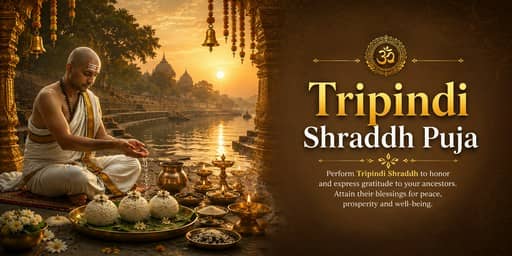
Tripindi Shraddh Puja
"Tripindi Shraddh is a special rite from the shastras. It is meant for ancestors whose last rites were left undone. When a death goes without proper shraddh, the soul stays restless. This unrest can carry on for three generations. It then shows as Pitra Dosha in the family line. The dosha blocks marriage, children, health, and growth. Tripindi Shraddh settles the debt of all three generations at once. The word tripindi points to these three layers of ancestors. The rite gives them rest and lifts their grace upon the family. Kashi is held the best place on earth for this puja."
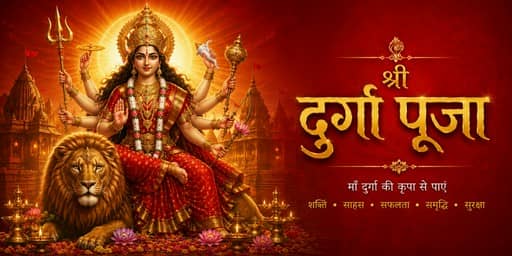
Durga Puja
"Maa Durga rides a lion. She holds eighteen weapons in her many arms. Each weapon is a gift from a different god. Her gaze is the gaze of a mother who will let nothing harm her children. The demon Mahishasura had a boon. No man, no god could kill him. He defeated even Indra. The gods released their combined energies. From that fire, Maa Durga emerged. After nine days of battle, on the tenth day, she slew Mahishasura. That day is Vijayadashami."
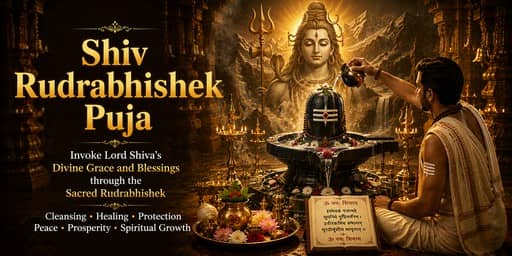
Shiv Rudrabhishek Puja
"Shiv Rudrabhishek is one of the oldest forms of Shiva worship. The Shivling is bathed with eleven sacred substances. Milk for purity. Honey for sweetness. Curd for prosperity. Ganga jal to clear past karma. Then ghee, sugar, rose water, sandalwood paste, panchamrit, coconut water, and bhasma. Each one carries its own meaning."