
Happy Life
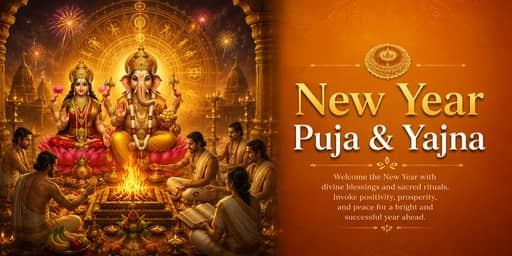
New Year Puja and Yajna
"The Hindu New Year begins in the month of Chaitra. Its first day is known as Gudi Padwa or Ugadi. Tradition holds that Lord Brahma made the world on this day. It is one of the most blessed starts in the whole calendar. This puja calls on Lord Vishnu, the keeper of the world. It seeks his grace for the whole year ahead. A good start is said to shape the whole year. The yajna carries the prayer for plenty and peace through fire. Families begin the year with worship and not with worry. They ask for success in every task of the coming months."
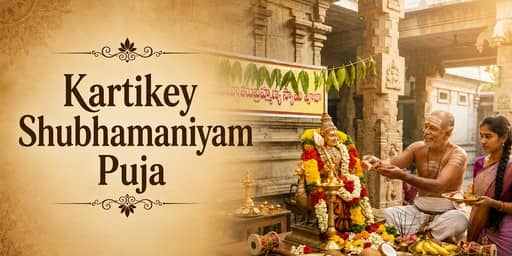
Kartikey Shubhramanya Puja
"Lord Kartikeya is the elder son of Shiva and Parvati. He is the chief of the divine army and the slayer of the demon Tarakasura. The South knows him as Murugan, Subramanya, and Shubhramanya Swami. He rides a peacock and carries the holy vel, his spear of light. Devotees worship him for courage, sharp wisdom, and a righteous path. His grace is said to come swift and sure to the seeker. He clears fear and gives the mind clear sight. He guides the lost back to the right road in life. This puja calls on his strength for those who seek success with honour."
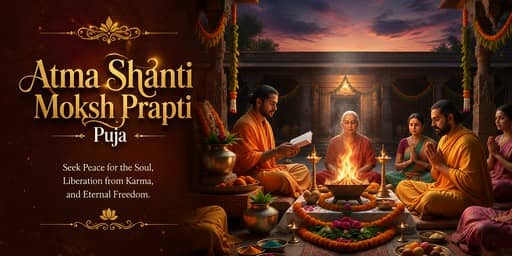
Atma Shanti Moksh Prapti Puja (Soul Peace Salvation Attainment Puja)
"Kashi is the city that grants moksha. Hindu tradition holds that a soul which leaves the body here breaks free from rebirth. Lord Shiva himself is said to whisper the taraka mantra in the ear of the dying. This puja seeks that same peace for a departed soul. It calls on Vishnu, Durga, and Shiva, the three great powers, together. Vishnu protects the soul, Durga gives it strength, and Shiva sets it free. The rite eases the soul out of the cycle of birth and death. It also brings calm to the family that grieves. The sacred ghats of Kashi carry this prayer best."
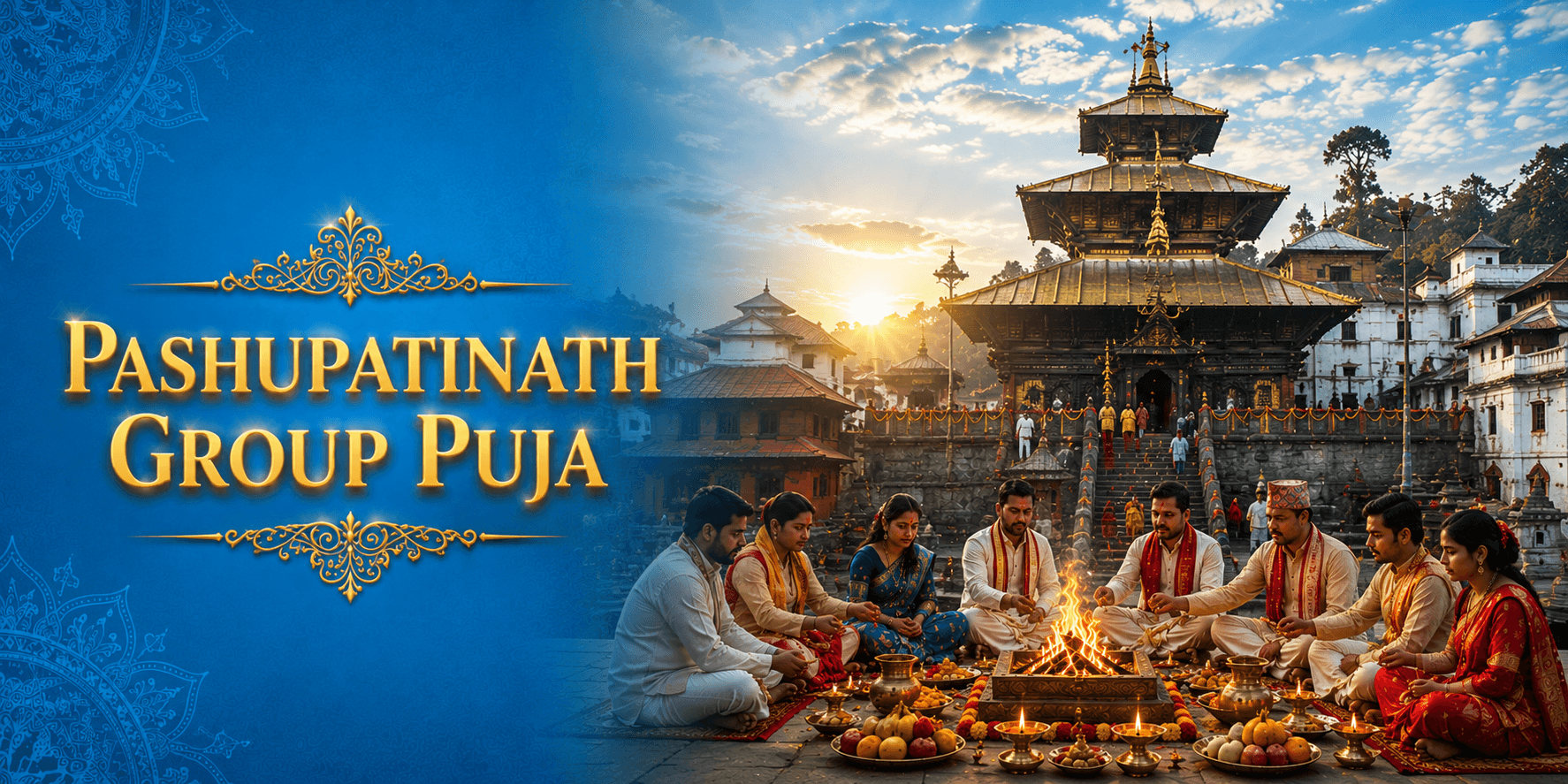
Pashupatinath Group Puja At Kathmandu
"Pashupati means the lord of every pashu, every bound soul that breathes. His temple stands on the banks of the Bagmati in Kathmandu, and it is the guardian deity of Nepal itself. The lingam here is unlike any other. A mukhalinga with five faces, four looking to the four directions and the fifth, Ishana, gazing skyward. Tradition ties this shrine directly to Kedarnath. When Shiva took the form of a bull and dove into the earth, his hump remained at Kedarnath, and his head emerged here, at Pashupatinath. Darshan of both is held to complete the worship. Tradition also holds that the grace of Pashupatinath frees the soul from rebirth in lower forms."

Navgrah Shanti Puja
"Every life is shaped by nine celestial forces. Surya, Chandra, Mangal, Budh, Guru, Shukra, Shani, Rahu, and Ketu. These are not distant stars. In Vedic tradition, they are living divine forces. At the moment of birth, their position imprints itself on the soul. That imprint is the birth chart. When the planets are favourably placed, life flows. When they fall into difficult positions, the devotee senses something is out of sync."
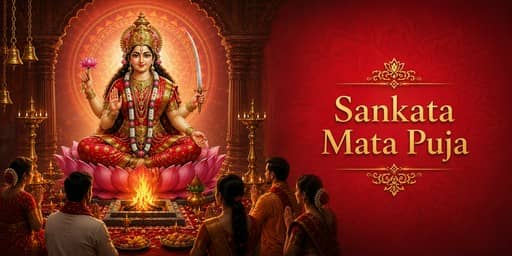
Sankata Mata Puja
"Sankata Mata's name means "the goddess who removes difficulties." She is a beloved form of the Divine Mother in Kashi, with her own ancient temple in the city. Devotees turn to her when life feels heavy with sankat, a Sanskrit word that means crisis, difficulty, or trouble. Where ordinary remedies have not worked, where the way forward feels closed, Sankata Mata answers. Tradition holds that those who pray to her with sincerity feel their burdens lift, even when the outer circumstances have not yet changed. Students, brides-to-be, and families facing chronic difficulty are her most devoted seekers."
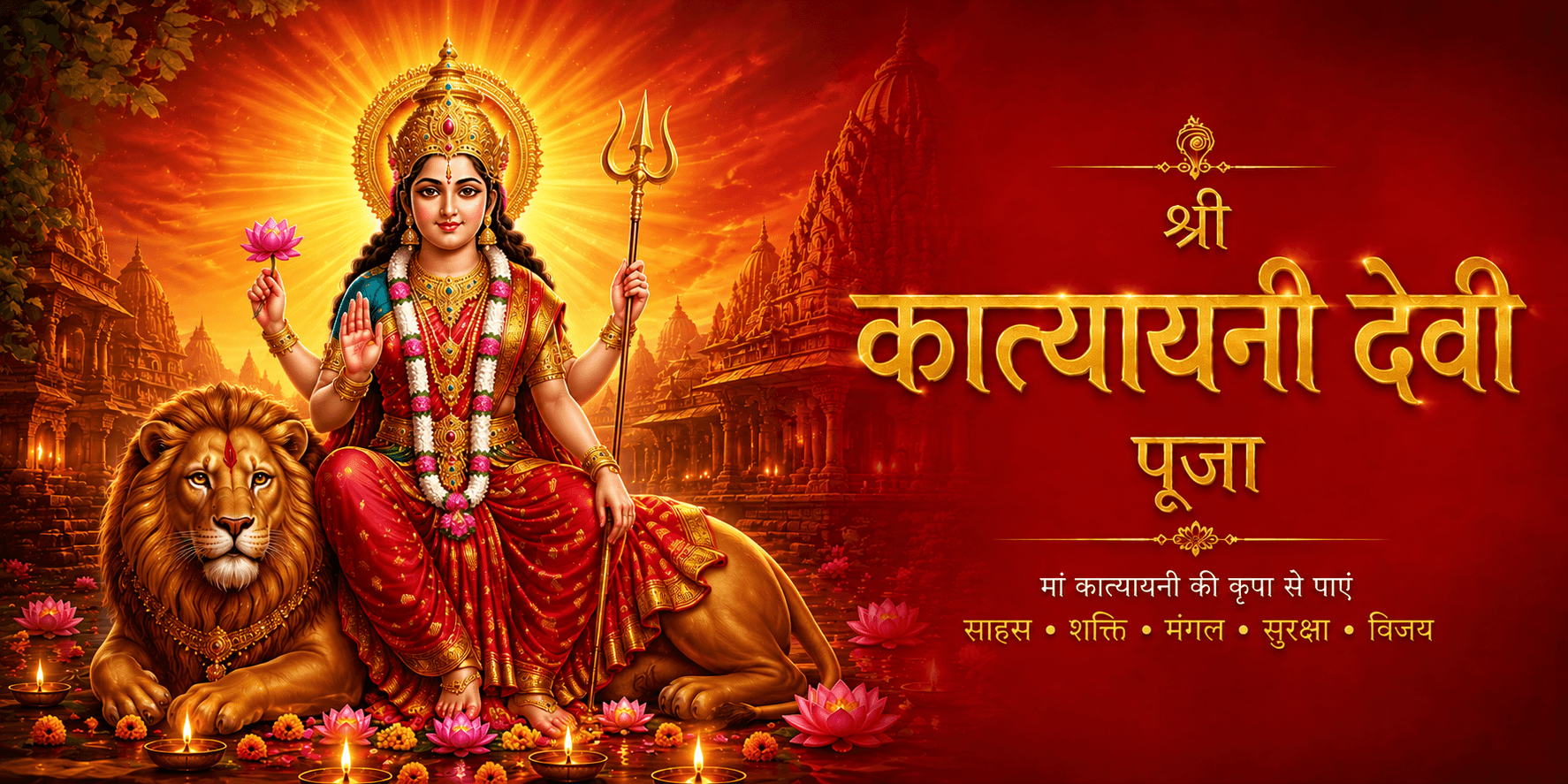
Katyayani Devi Puja
"Katyayani Mata is the sixth of the nine forms of Maa Durga. She was born to the sage Katyayana, after years of his penance, with the combined energy of Brahma, Vishnu, and Mahesh. She emerged to slay the demon Mahishasura. But her warrior origins are not why most devotees come to her. For centuries, she has been known as the granter of soulmates. The unmarried gopis of Vrindavan once prayed to her for Lord Krishna himself as their husband. She answered them."
-652d33c2fe2819957a877ae7-11100136-s.jpg&w=3840&q=70)
Mangal Dosh Nivaran Puja
"Mars is the warrior of the cosmos. The planet of fire, courage, and ambition. When Mangal is well placed in a chart, he gives the devotee strength and drive. But when he falls into the 1st, 4th, 7th, 8th, or 12th house, the same energy turns sharp. This is Mangal Dosh. Or being Manglik, as families call it. The dosh shows up most often during kundli milan, the matching of horoscopes before marriage. Hindu families have looked for it carefully for generations. A strong Mangal Dosh in either partner can bring friction, sudden quarrels, and unrest in married life. But Mars is not an enemy. He is a teacher. His lessons are simply too sharp for the unprepared. This puja softens his edge."
Shanivar Vrat Katha
"Shanivar Vrat is the Saturday vrat dedicated to Shani Dev. Saturday itself is the weekday ruled by Saturn, the cosmic disciplinarian. The vrat is observed by devotees passing through difficult Shani periods. Sade Sati. Dhaiya. Shani Mahadasha. It is also observed by those seeking sharper intellect, protection from negative energy, and freedom from the misfortunes that Shani's harder phases bring. Tradition holds that those who observe Shanivar Vrat with devotion see Shani Dev's anger soften into his blessing."
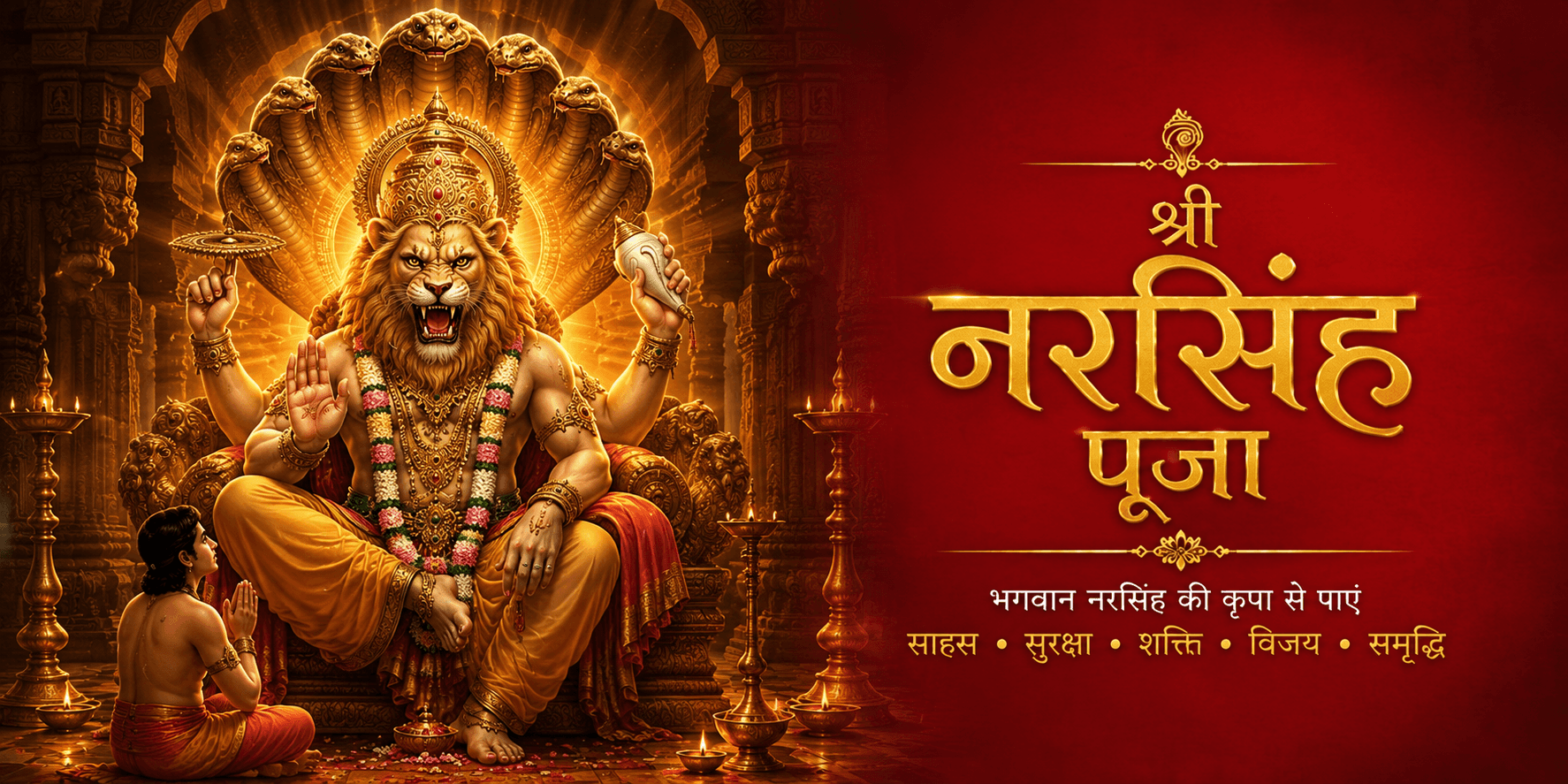
Lord Narasimha Puja
"The story of Narasimha is one of the most loved in Hindu scripture. The demon king Hiranyakashipu had earned a boon. No one could kill him. Not by man or beast. Not by day or night. Not indoors or outdoors. Not by any weapon. He tormented his own son Prahlada, a devoted bhakta of Vishnu. When he struck a pillar at twilight, Vishnu burst forth as Narasimha. Neither man nor beast. At the threshold between day and night. And he tore the demon apart."
Shreenath Ji Puja
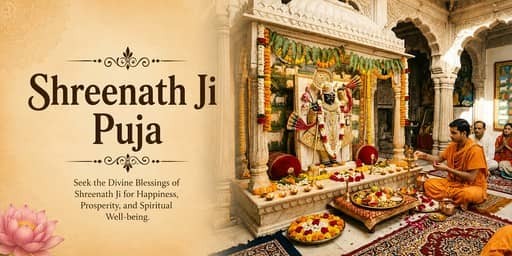
"Shreenathji is the beloved child form of Lord Krishna. He shows the Lord as a boy of seven years. The famous murti lifts Mount Govardhan on one raised finger. Krishna lifted that hill to shield the village from heavy rain. The Pushti Marg, founded by Shri Vallabhacharya, worships him with deep love. Devotees treat him as a living child, not a stone idol. They wake him, bathe him, feed him, and rest him each day. His worship is full of song, colour, and bhog. He grants growing wealth and lasting joy to the home. Families turn to him for grace, comfort, and a happy household."