
Divine Collection
For Good Helth Relief From Illness
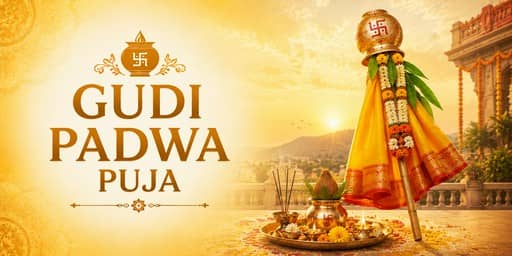
Gudi Padwa Puja
"Gudi Padwa marks the Hindu New Year. The first day of the month of Chaitra in Shukla Paksha. Tradition holds that on this day, Lord Brahma created the universe. It is also the day Lord Ram returned to Ayodhya after defeating Ravana, the day Lord Vishnu manifested as the Satya Yuga, and the day farmers across India begin their new agricultural cycle. Whatever is begun on Gudi Padwa is believed to carry blessings through the entire year ahead. Homes raise the gudi, the bright flag of victory, on this day."
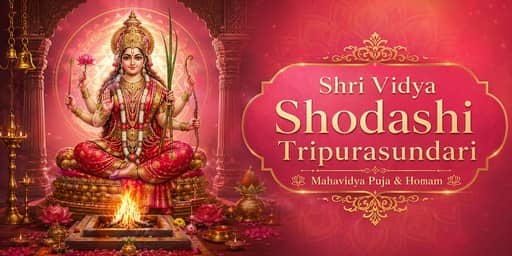
Shri Vidya Shodashi Tripurasundari Mahavidya Puja and Homam
"Tripura Sundari is the third of the ten Mahavidyas. She is also known as Shodashi, "the goddess of sixteen," and Lalita, "the playful one." Of all the Mahavidyas, she is the most beautiful. The most beloved. The most associated with abundance and grace. The tradition that honours her is called Shri Vidya, one of the most refined Tantric paths in the Hindu tradition. It is said that to please Tripura Sundari is to receive everything a devotee could want. Wealth. Beauty. Intellect. Property. The full grace of the divine feminine."
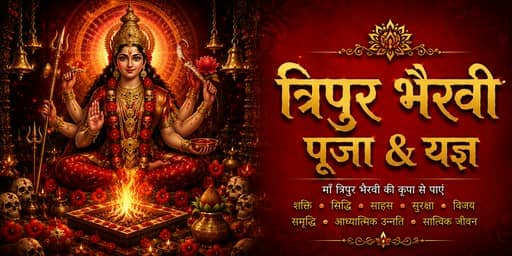
Tripur Bhairavi Puja and Yajna
"Tripur Bhairavi Mata is the fifth of the ten Mahavidyas. Her name means "the fierce goddess of the three worlds" (Tripur), the worlds of the body, mind, and soul. She rules over the inner fire that burns away sin, ignorance, and accumulated karma. Her form is fierce but her purpose is purification. Where she is invoked, what is impure cannot remain. She is also closely connected to tantric sadhana, and is one of the most powerful goddesses for spiritual transformation."
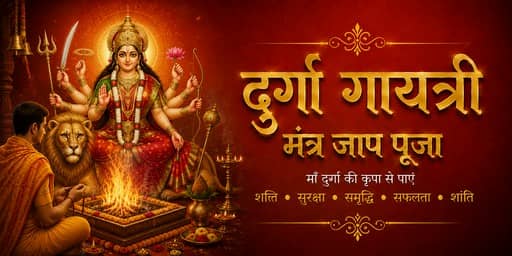
Durga Gayatri Mantra Jaap Puja
"The Durga Gayatri is a special mantra dedicated to Maa Durga. It combines two of the most powerful prayer traditions in Hinduism. The energy of the original Gayatri Mantra, the mother of all Vedic mantras, and the protective grace of Maa Durga herself. Where the original Gayatri invokes the light of wisdom, the Durga Gayatri invokes the strength of the warrior mother. It is the mantra chosen when a devotee needs both inner clarity and outer protection at the same time."
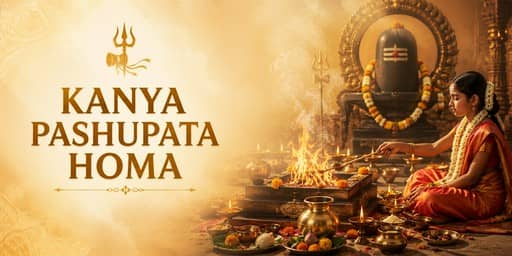
Kanya Pashupata Homam
"Kanya Pashupata Homam is performed for unmarried young women (kanyas) seeking the blessing of marriage and a loving life partner. The puja invokes Shiva in his form as Pashupati, the lord of all beings. In Hindu tradition, Shiva is the ideal husband. He is the husband of Parvati Mata, whose own penance to win him is one of the most beloved stories in scripture. Unmarried young women have, for centuries, prayed to Shiva for a partner blessed with the qualities they seek."
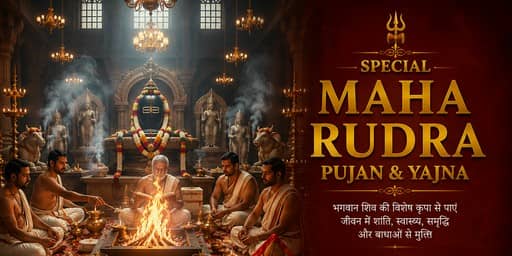
Special Maha Rudra Pujan and Yajna
"Maha Rudra is one of the highest forms of Shiva worship in the entire Vedic tradition. It involves the chanting of the Sri Rudram one hundred and twenty-one times. Eleven rounds of Rudram form one Laghu Rudra. Eleven Laghu Rudras together form one Maha Rudra. The power compounds at every level. This is the puja chosen when a community, a region, or a family needs Shiva's grace at the largest possible scale. It is also one of the most powerful pujas for rain, harvest, and the protection of crops."
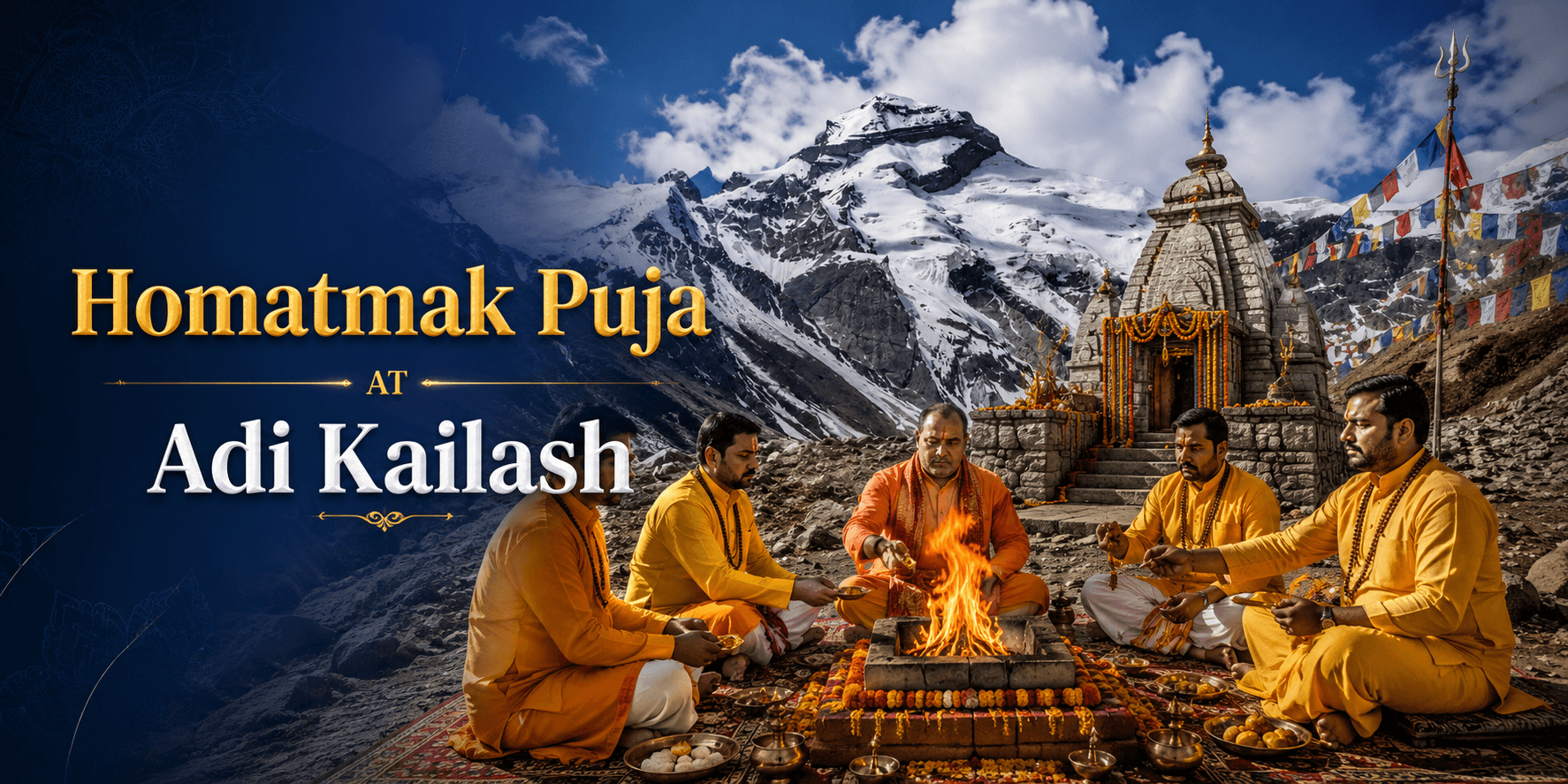
Adi Kailash Puja
"Adi Kailash is a sacred peak in the Himalayas. It is also known as Chhota Kailash, the lesser Kailash. The shastras hold it as a holy seat of Lord Shiva. Its form is much like the great Mount Kailash. The peak stands above a calm and clear lake. Few reach this far and high to worship there. A puja here is rare and full of merit. This homa is a fire worship of Lord Shiva. The sacred fire carries each prayer to the Lord. It brings health, peace, and a fresh strength for life. Devotees long for this worship at the seat of Shiva."
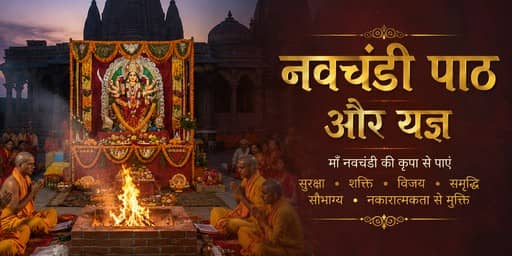
Navchandi Path and Yajna
"Navchandi Path & Yajna is one of the most elevated forms of Durga worship in the Vedic tradition. It combines the recitation of the Chandi Path (the seven hundred verses of the Devi Mahatmya) with the energy of a sacred Yajna. The Chandi Path alone is powerful. Performed with a Yajna, its force is multiplied. Each verse becomes an offering into the fire. Each offering rises directly to Maa Durga in all her nine forms."
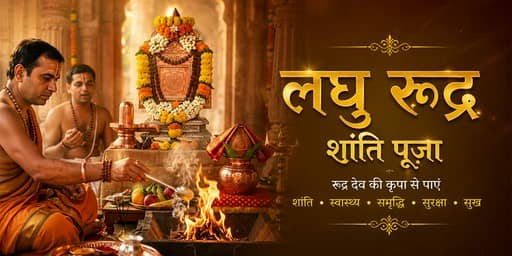
Laghu Rudra Shanti Puja
"Laghu Rudra is one of the most powerful Shiva pujas in the entire Vedic tradition. It involves the chanting of the Sri Rudram eleven times, alongside the Chamakam, the companion hymn that follows the Rudram. This is the puja chosen when a devotee needs the full force of Shiva's grace. When obstacles have grown beyond ordinary remedies. When health, property, or family matters need divine intervention at the highest level. The eleven rounds of Rudram together form one Laghu Rudra, the foundation of all higher Shiva yajnas."
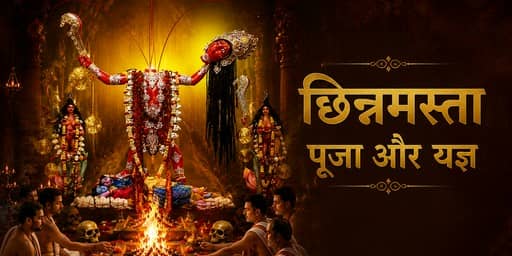
Chhinnamasta Puja and Yajna
"Chhinnamasta Mata is the sixth of the ten Mahavidyas. Her image is one of the most powerful in all of Hindu tradition. She holds her own severed head in one hand, and a sword in the other. Three streams of blood flow from her neck. One nourishes her own head. Two nourish her companions. She is the goddess of supreme sacrifice and supreme freedom. Devotees turn to her when life calls for letting go of what is comfortable, when courage must overcome fear, and when ordinary protection is not enough."
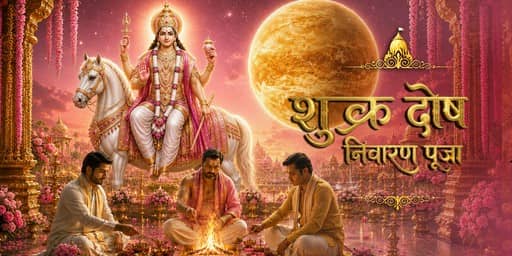
Shukra Dosh Nivaran Puja
"Shukra is the planet of love, beauty, comfort, art, and marital harmony. He is the divine connoisseur, the deity who teaches the soul to enjoy creation and share love generously. When Shukra shines strong, relationships flow. The home is graced with warmth. Marital life feels tender. Financial comforts arrive with ease. When his energy is afflicted, the softness withdraws. Relationships grow distant or conflicted. The beauty seems to drain from familiar things. Women in the family may face health concerns. Life loses its sweetness even when nothing outwardly seems wrong."
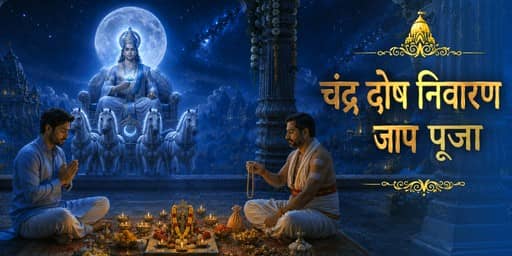
Chandra Dosh Nivaran Puja Jaap
"The Moon governs the mind. He is the planet of feelings, memory, intuition, and the inner self. When Chandra is well placed, the mind is calm. Intuition flows. Sleep is restful. When he is afflicted, the inner weather turns. Moods shift without reason. Sleep grows troubled. Memory feels unreliable. The devotee may feel emotionally fragile in ways they cannot explain. After Chandra was once cursed by Daksha to wane away, he prayed to Lord Shiva. Shiva lifted him onto his matted locks and gave him refuge. Since then, Shiva has been known as Chandrashekhar, the one who wears the moon."