
All Puja
Mahakali Puja
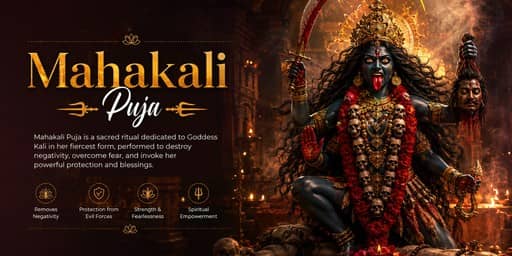
"Mahakali is the supreme form of Kali Mata. Where Kali is the destroyer of evil, Mahakali is the destroyer of time itself. She is the goddess from whom even time emerges. Dark as the night sky. Wearing a garland of skulls. Standing on Lord Shiva who lies beneath her in surrender. Her tongue extended in fierce intensity. Mahakali is not gentle. She is not approachable in the way other forms of the Mother are. But for those who turn to her with absolute devotion, she gives the kind of protection that no other deity gives."
Shani Sadhe Sati Mantra Jaap Puja
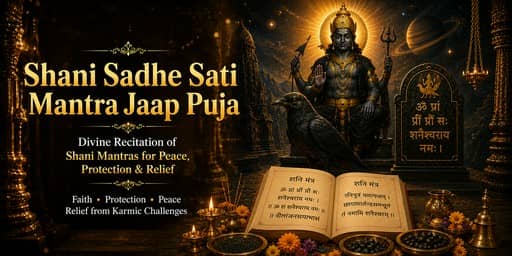
"Sadhe Sati is the seven-and-a-half-year transit of Saturn across the Moon sign. It is the most discussed and most feared Shani period in Vedic astrology. During Sadhe Sati, life often feels relentlessly slow. Every effort takes years to bear fruit. Patience itself begins to feel exhausted. But Sadhe Sati is not punishment. Shani is the cosmic disciplinarian, slow and absolutely just. Those who walk through this transit with devotion emerge stronger, wiser, and aligned with their real purpose."
Hanuman Jayanti Puja
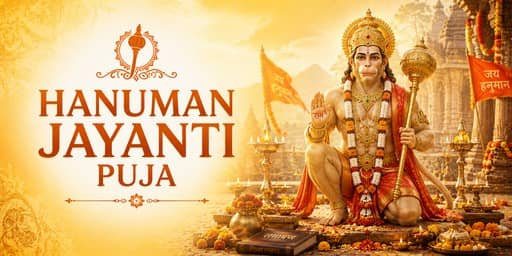
"Hanuman Jayanti is the birth anniversary of Lord Hanuman. The single most powerful day of the year for any Hanuman puja. Tradition holds that on this day, Hanuman was born to Anjana Mata and Kesari, with the blessing of Vayu Dev, the wind god. As a child, he leapt towards the sun thinking it was a fruit. His childhood mischief gave way to a lifetime of devotion to Lord Ram. To worship Hanuman on this day is to invoke the strongest possible form of his protective grace."
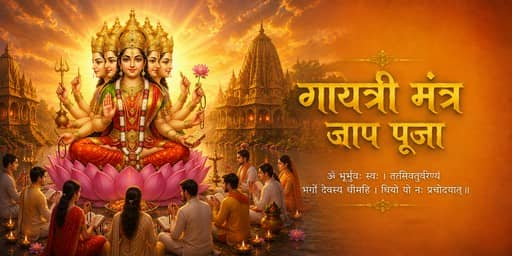
Gayatri Mantra Jaap Puja
"The Gayatri Mantra is called the mother of all Vedic mantras. Sage Vishwamitra first revealed it in the Rigveda. It is a prayer to Savitr, the divine source of light. It asks for one thing only. That our intellect be lit, and our path guided by wisdom."
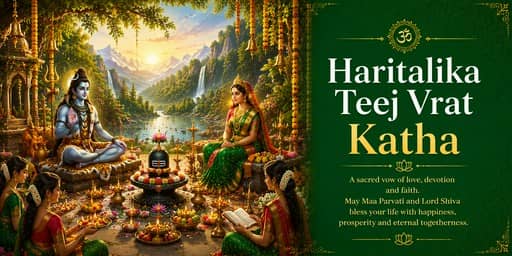
Haritalika Teej Vrat Katha
"Haritalika Teej is a sacred fast for women. It honours the union of Lord Shiva and Mata Parvati. The shastras tell how Parvati won Shiva as her husband. She did fierce penance to gain his hand. Her friend took her to the forest to help her resolve. The word Haritalika comes from that very tale. Married women keep this fast for the long life of their husband. Unmarried girls keep it to gain a good groom. They fast without food or water through the day. They worship Shiva and Parvati and hear the sacred katha. The vrat brings married joy and good fortune."
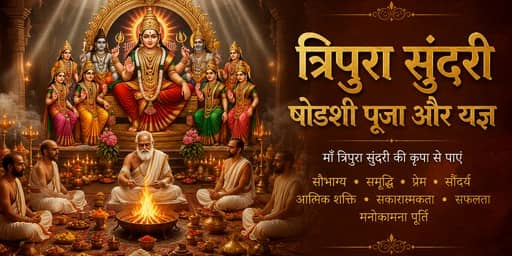
Tripura Sundari Shodashi Puja and Yajna
"This puja honours Tripura Sundari Mata, the third of the ten Mahavidyas, in her form as Shodashi. While the Shri Vidya path focuses on the deeper sadhana of the goddess, this puja focuses on her grace as a mother who blesses the home. It is the puja chosen by families who want her warmth more than her formal initiation. Tripura Sundari rules over the joy of being alive. The beauty of relationships. The blessing of a home that feels full. To worship her is to invite that fullness into daily life."
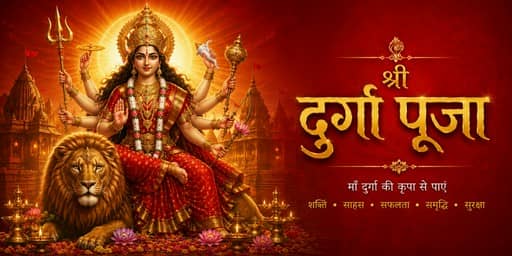
Durga Puja
"Maa Durga rides a lion. She holds eighteen weapons in her many arms. Each weapon is a gift from a different god. Her gaze is the gaze of a mother who will let nothing harm her children. The demon Mahishasura had a boon. No man, no god could kill him. He defeated even Indra. The gods released their combined energies. From that fire, Maa Durga emerged. After nine days of battle, on the tenth day, she slew Mahishasura. That day is Vijayadashami."
Tara Devi Puja and Yajna
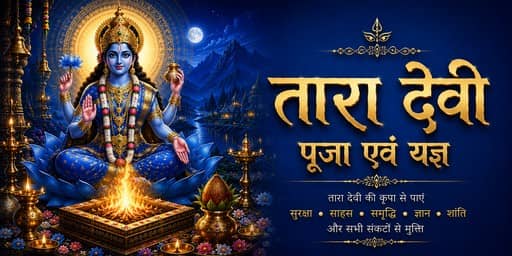
"Tara Devi is the second of the ten Mahavidyas. Her name means "she who carries across." She is the goddess who carries the soul across the ocean of suffering. Across fear. Across confusion. Across the dark phases of life. She appears with a fierce form, but her energy is deeply maternal. She destroys what threatens her devotees, while holding them close. In some traditions, Tara is also worshipped as a form of Kali Mata. Wherever she is invoked, lost souls find their way home."
Lord Narasimha Puja
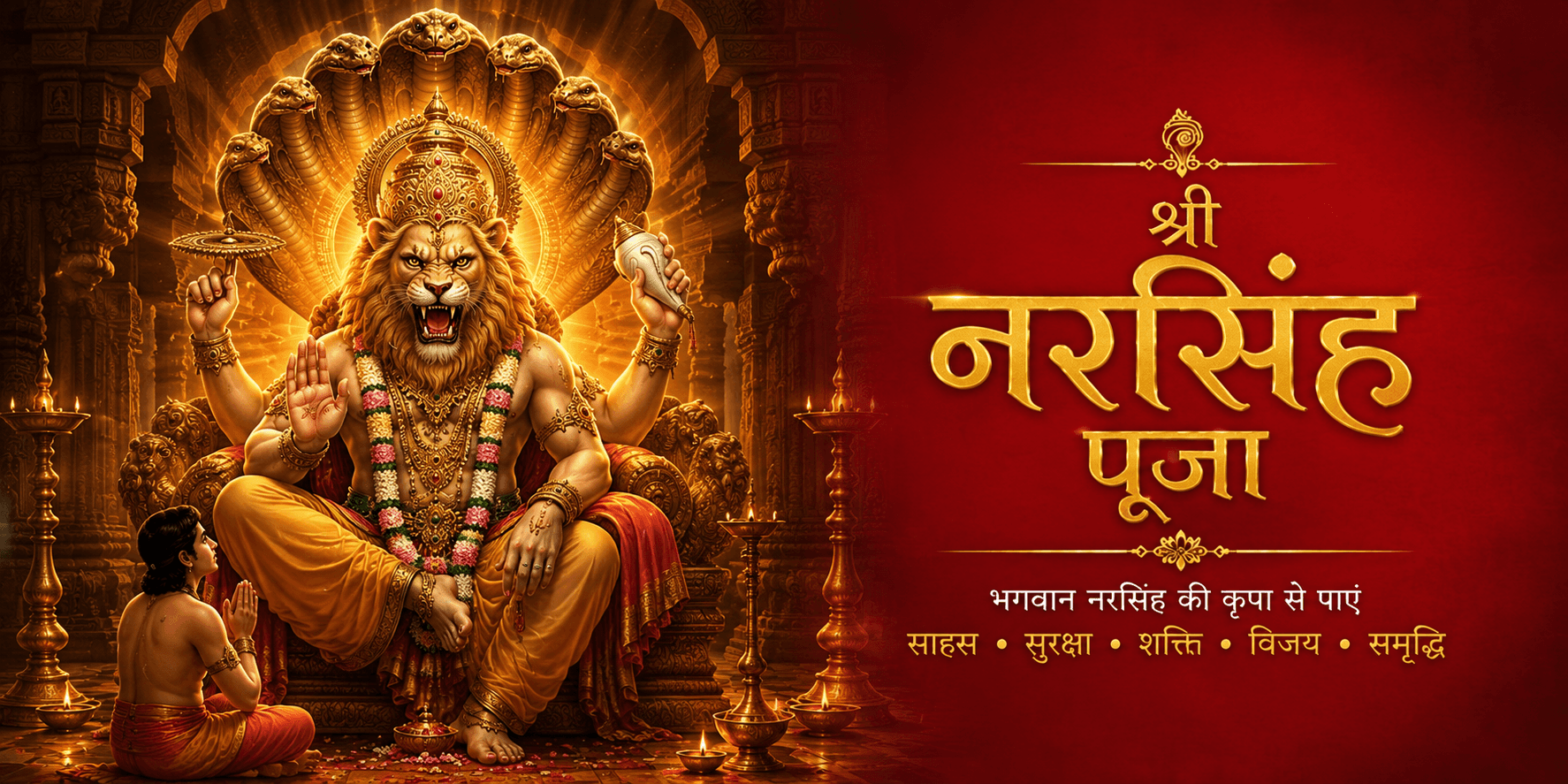
"The story of Narasimha is one of the most loved in Hindu scripture. The demon king Hiranyakashipu had earned a boon. No one could kill him. Not by man or beast. Not by day or night. Not indoors or outdoors. Not by any weapon. He tormented his own son Prahlada, a devoted bhakta of Vishnu. When he struck a pillar at twilight, Vishnu burst forth as Narasimha. Neither man nor beast. At the threshold between day and night. And he tore the demon apart."
Visha Yog Dosh Nivaran Puja
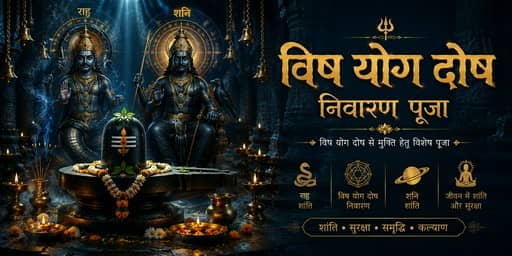
"Visha Yog forms when the Moon and Saturn come together in the same house. Ancient sages named it Visha, meaning poison. When the gentle, emotional energy of the Moon merges with the cold, restrictive energy of Saturn, the blend behaves like a slow-acting poison. Quiet. Persistent. Hard to identify. The mind feels weighed down. Emotional life feels muted. Health takes a slow downward turn, often in ways that resist clear diagnosis. Income flows are restricted. Sleep becomes difficult. The devotee senses they are walking slightly out of sync with their own happiness."
Kuber Puja
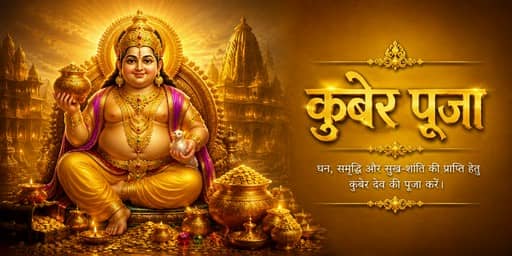
"Kuber is the treasurer of the gods. The keeper of all wealth in the universe. He once did severe penance to Lord Shiva and was rewarded with the duty of guarding the treasures of the cosmos. He lives in Alaka, the legendary city of gold in the Himalayas. Lakshmi Mata brings wealth into a home. Kuber makes sure it stays. This is the puja for stable, protected, lasting wealth."