Divine Collection
Wealth Prosperity
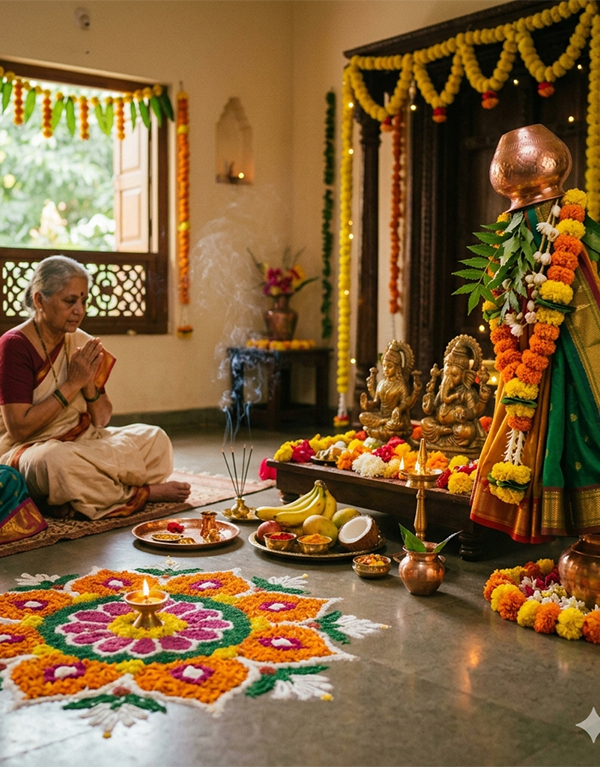
Lakshmi Ganesh Saraswati Puja
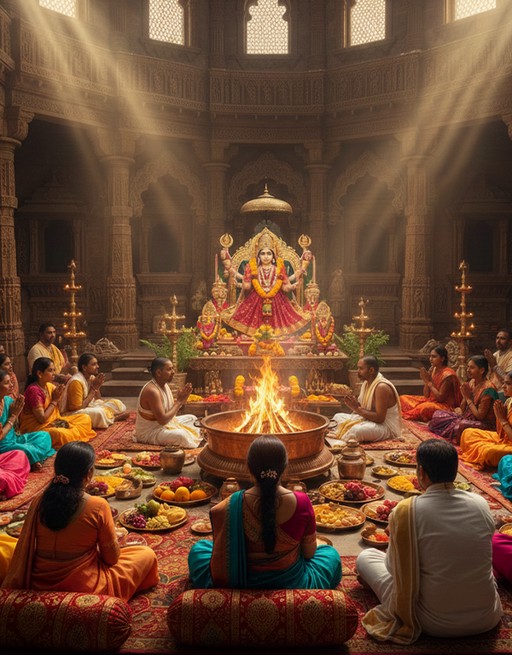
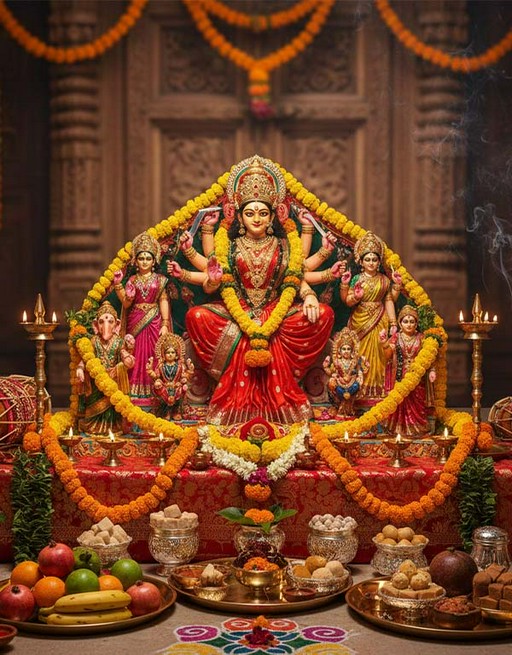
"This puja brings together three great powers in one worship. Lord Ganesh is the remover of all obstacles. People worship him first before any new start. Mata Lakshmi is the giver of wealth and plenty. Mata Saraswati is the goddess of learning and clear thought. Together they grant a life that is rich, wise, and smooth. Ganesh clears the path, Lakshmi fills it, and Saraswati guides it. This is why families choose this puja before a fresh start. A new shop, a new job, or a new study term all suit it well. The three blessings work as one for the seeker."
Vaibhav Lakshmi Puja
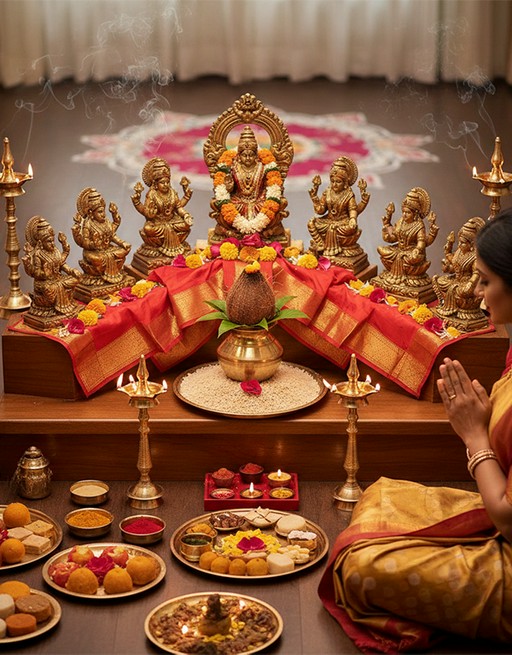
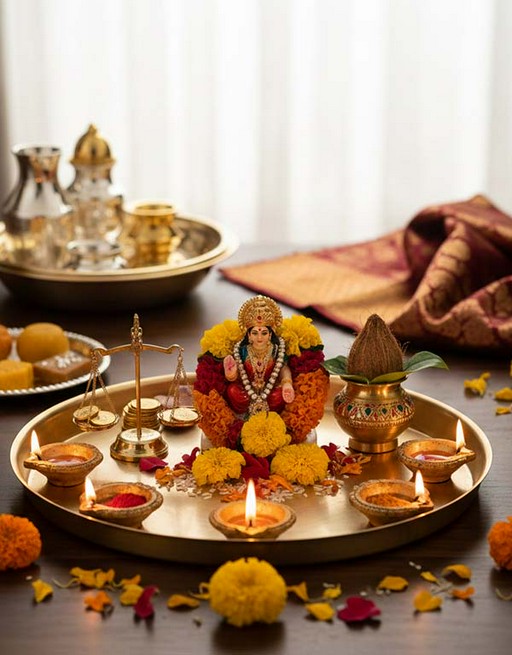
"Vaibhav Lakshmi is the form of Lakshmi that grants riches. The word vaibhav means grandeur, glory, and plenty. She blesses the home with wealth that lasts. Many earn well but cannot hold their money. This puja works to bring lasting wealth, or sthir Lakshmi. It clears the blocks that let money slip away. The Mother fills the home with comfort and grace. Business families seek her for steady growth. Her worship is most loved at Diwali and Dhanteras. These are the days when Lakshmi walks the earth. Devotees keep their homes clean and bright to receive her."
Dashavatar Vishnu Puja
"Lord Vishnu is the protector of the whole universe. Whenever evil rises on earth, he takes birth to set things right. The shastras name his ten great avatars as the Dashavatar. They are Matsya the fish and Kurma the tortoise. Then come Varaha the boar and Narasimha the man-lion. After them come Vaman, Parshuram, Ram, and Krishna. The last two are Buddha and Kalki, who is yet to come. Each form saved dharma at its own hour of need. This puja honours all ten together in one worship."
Shreenath Ji Puja
"Shreenathji is the beloved child form of Lord Krishna. He shows the Lord as a boy of seven years. The famous murti lifts Mount Govardhan on one raised finger. Krishna lifted that hill to shield the village from heavy rain. The Pushti Marg, founded by Shri Vallabhacharya, worships him with deep love. Devotees treat him as a living child, not a stone idol. They wake him, bathe him, feed him, and rest him each day. His worship is full of song, colour, and bhog. He grants growing wealth and lasting joy to the home. Families turn to him for grace, comfort, and a happy household."
Annapurna Puja
"Annapurna is the Mother who feeds the whole world. Her name means the one who is full of food and plenty. She is a form of Mata Parvati and the queen of Kashi. Tradition tells that Lord Shiva himself begged food from her hands. She holds a golden ladle and a bowl that never runs empty. People say no one in her city of Kashi goes hungry. Her worship brings plenty to the home and steady work to its people. It removes the fear of want and the worry of empty days. Devotees seek her for a life that is full and secure. Her grace keeps the kitchen warm and the family fed."
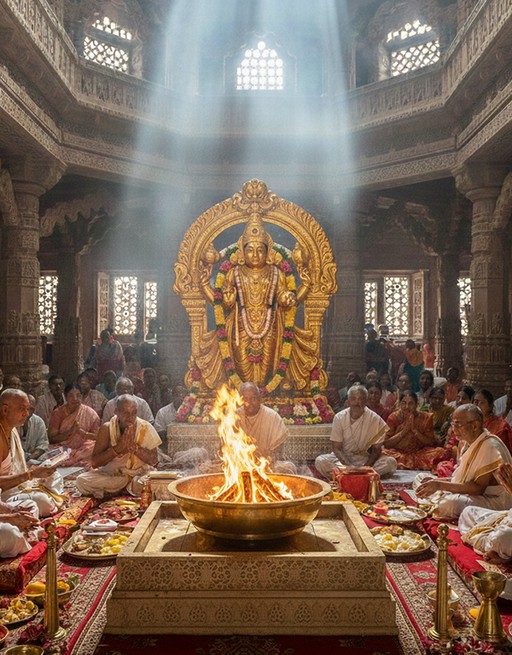
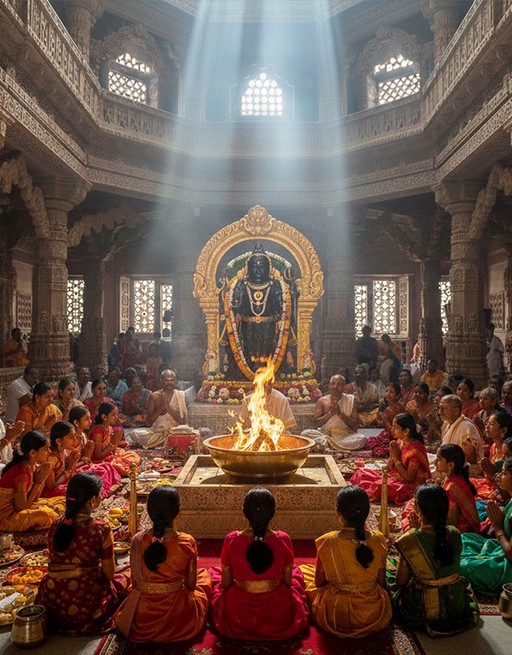
Mahalakshmi Hawan
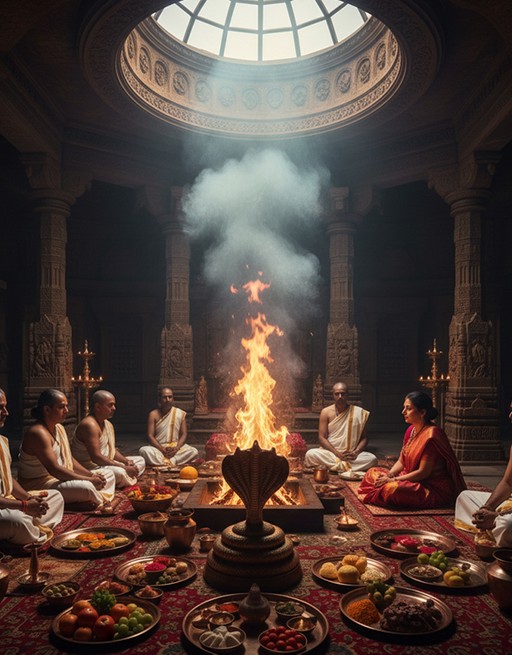
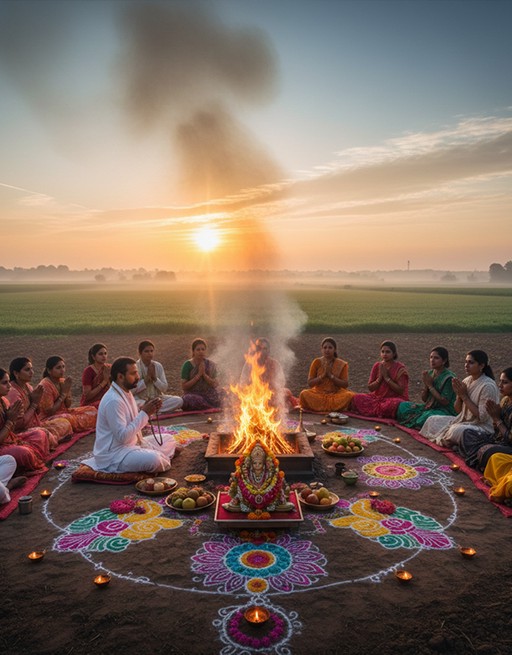
"Mahalakshmi is the supreme form of the goddess of wealth. She is the consort of Lord Vishnu and the mother of plenty. The shastras say she lives where worship and care abide. This hawan is a fire worship in her honour. The sacred fire carries each prayer straight to the Mother. Many earn well but cannot keep their wealth. This hawan works to bring lasting wealth, or sthir Lakshmi. It clears the blocks that let money slip away. Business families seek it for steady growth and plenty. Its best days are Diwali and Dhanteras. These are the days the Mother walks the earth."
Lord Vitthal Puja
"Lord Vitthal is a beloved form of Lord Krishna. The people of Maharashtra know him as Vithoba and Panduranga. He stands at Pandharpur with his hands on his hips. Rukmini, his consort, stands by his side. The story tells how he waited for his devotee Pundalik. Millions walk to Pandharpur each year to see him. The Warkari saints sang of his love for ages. He grants peace, plenty, and a happy home. This puja calls on Vitthal and Rukmini together. It seeks their grace for wealth, fame, and family joy. Devotees worship him with deep love and song."
Shaligram Puja
"The Shaligram is a black, round stone found in the Gandaki river in Nepal. People have worshipped it for ages as a living form of Lord Vishnu. It needs no carving and no pran pratishtha. Tradition holds that Vishnu himself resides inside the stone. Each Shaligram carries marks and lines that point to a different form of the Lord. Some show Krishna, some show Narasimha, some show Vaman. Where the Shaligram is worshipped with love, Mata Lakshmi stays close by. She brings wealth, peace, and unity to that home. For this reason families keep it as the heart of their daily worship."
Pipal Tree Puja
"The Pipal tree is the most sacred tree in Hindu tradition. The Bhagavad Geeta calls it the Ashwattha, the tree under which Lord Krishna himself stands. Tradition holds that the gods reside in different parts of the Pipal. Lord Vishnu lives in its trunk. Lord Brahma lives in its roots. Lord Shiva lives in its leaves. The tree is also the form in which Shani Dev is said to be most easily worshipped. Devotees circumambulate the Pipal seven times, tie sacred threads, and offer water at its roots. The tree is one of the few in the world that releases oxygen even at night. Hindu tradition has worshipped it for thousands of years."
Mahakali Puja
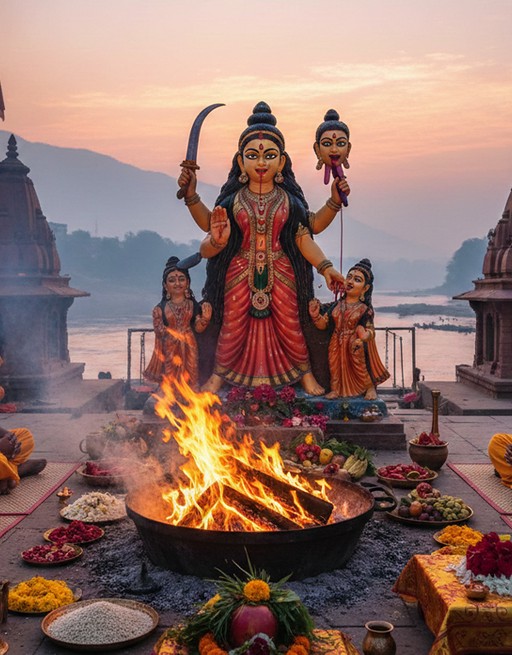
"Mahakali is the supreme form of Kali Mata. Where Kali is the destroyer of evil, Mahakali is the destroyer of time itself. She is the goddess from whom even time emerges. Dark as the night sky. Wearing a garland of skulls. Standing on Lord Shiva who lies beneath her in surrender. Her tongue extended in fierce intensity. Mahakali is not gentle. She is not approachable in the way other forms of the Mother are. But for those who turn to her with absolute devotion, she gives the kind of protection that no other deity gives."
Ganapati Atharvashirsha Puja
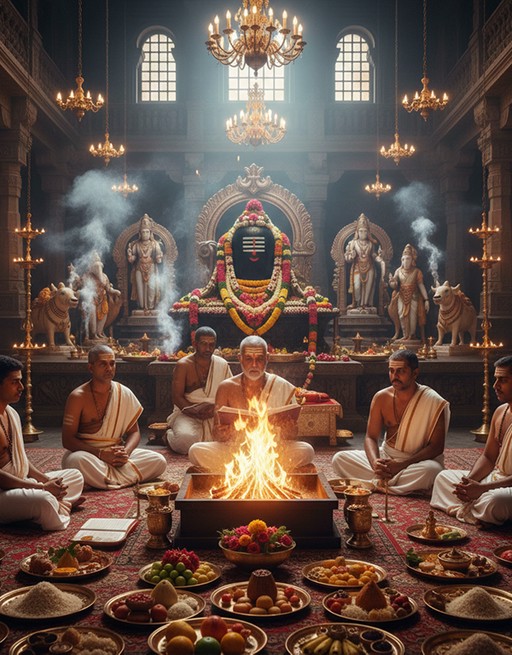
"The Ganapati Atharvashirsha Puja is the full ceremonial form of the Atharvashirsha tradition. Where the Path focuses on the recitation alone, the Puja adds the complete ritual framework. Sankalp at the beginning. The formal worship of Ganesha's idol. The Atharvashirsha recitation as the heart of the ritual. The havan to seal the offerings. The aarti to close the vidhi. The Atharvashirsha itself is unique. Drawn from the Atharva Veda, it declares Ganesha not just as a deity but as the supreme cosmic principle, the source of all reality."