Unknown Threat Victory
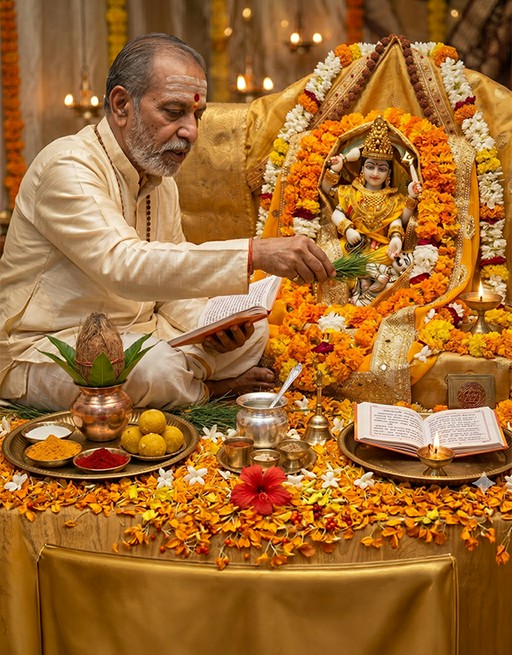
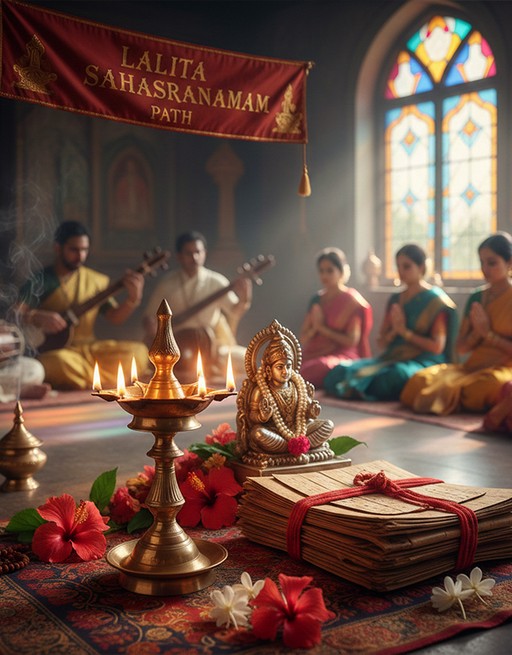
Vishnu Sahasranam Katha
"The Vishnu Sahasranamam is the thousand names of Lord Vishnu. Drawn from the Anushasana Parva of the Mahabharata, it was first recited by Bhishma Pitamah as he lay on his bed of arrows after the great war. Yudhishthira asked him for guidance on dharma. Bhishma's answer was the thousand names of Vishnu. The text is one of the most beloved prayers in the entire Hindu tradition. Each name carries a specific power. Each name is a doorway to a different aspect of Vishnu's grace. To recite the Vishnu Sahasranamam is to walk through all thousand doorways at once."
Shani Sadhe Sati Mantra Jaap Puja
"Sadhe Sati is the seven-and-a-half-year transit of Saturn across the Moon sign. It is the most discussed and most feared Shani period in Vedic astrology. During Sadhe Sati, life often feels relentlessly slow. Every effort takes years to bear fruit. Patience itself begins to feel exhausted. But Sadhe Sati is not punishment. Shani is the cosmic disciplinarian, slow and absolutely just. Those who walk through this transit with devotion emerge stronger, wiser, and aligned with their real purpose."
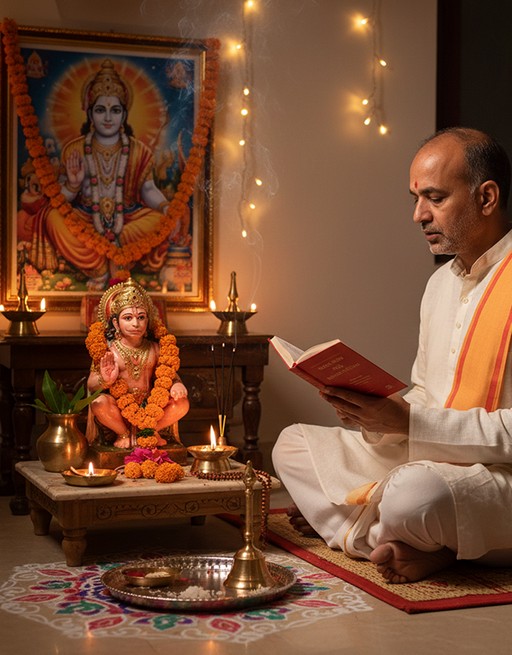
Hanuman Jayanti Puja
"Hanuman Jayanti is the birth anniversary of Lord Hanuman. The single most powerful day of the year for any Hanuman puja. Tradition holds that on this day, Hanuman was born to Anjana Mata and Kesari, with the blessing of Vayu Dev, the wind god. As a child, he leapt towards the sun thinking it was a fruit. His childhood mischief gave way to a lifetime of devotion to Lord Ram. To worship Hanuman on this day is to invoke the strongest possible form of his protective grace."
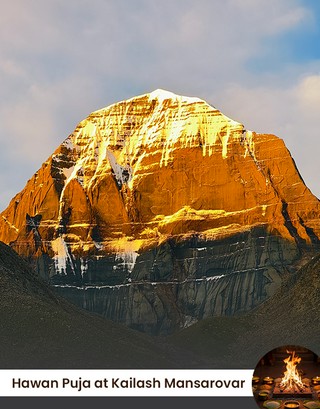
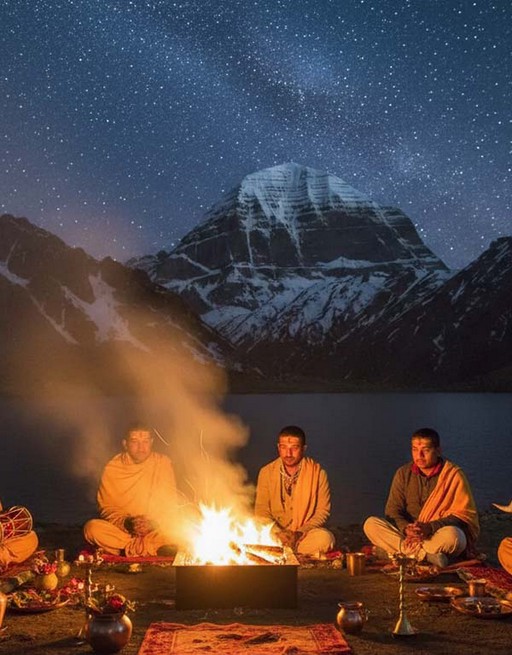
Rudra Homatmak Puja At Kailash Mansarovar
"Kailash Mansarovar is the holiest seat of Lord Shiva. Mount Kailash rises in the far Himalayas as the eternal abode of Shiva and Parvati. Below it lies Mansarovar, the sacred lake formed in the mind of Brahma. The shastras hold this as the most powerful place on earth for Shiva worship. Few reach this far and high to worship there. A puja at this seat is rare and full of merit. This homa is a fire worship of Lord Shiva in his Rudra form. The sacred fire carries each prayer to the Lord. It brings health, peace, and a fresh strength for life. Devotees long for this worship at the very throne of Shiva."
Kaal Sarp Dosh Nivaran Puja
"Kaal Sarp Dosh is one of the most discussed afflictions in Vedic astrology. It forms when all seven classical planets in the birth chart fall between Rahu and Ketu. The two shadow planets are visualised as the head and the tail of the cosmic serpent. When this alignment is present, life often feels as if it moves against an invisible current. Effort brings delayed results. Marriage, career growth, and the blessing of children appear blocked. The devotee senses a force beyond ordinary understanding holding them back. Ancient sages understood this as the karmic weight of past lives. Held in place by the serpent's coil around the soul's destiny. But the tradition has always carried hope alongside the diagnosis. Lord Shiva himself wears the serpent Vasuki as a garland around his neck. The same being who binds the soul can, with Shiva's grace, become an ornament of protection."
Indrakshi Puja
"Indrakshi Mata is one of the most powerful protective goddesses in the Vedic tradition. Her name means "she with the eyes of Indra." The Indrakshi Stotra was first taught by Lord Indra himself to sage Brihaspati. It is recited for protection from disease, from enemies, and from the unseen forces that can harm a devotee. For centuries, families have turned to this puja during prolonged illness, mysterious afflictions, and times when conventional remedies have not worked."
Durga Puja
"Maa Durga rides a lion. She holds eighteen weapons in her many arms. Each weapon is a gift from a different god. Her gaze is the gaze of a mother who will let nothing harm her children. The demon Mahishasura had a boon. No man, no god could kill him. He defeated even Indra. The gods released their combined energies. From that fire, Maa Durga emerged. After nine days of battle, on the tenth day, she slew Mahishasura. That day is Vijayadashami."
Shanivar Vrat Katha
"Shanivar Vrat is the Saturday vrat dedicated to Shani Dev. Saturday itself is the weekday ruled by Saturn, the cosmic disciplinarian. The vrat is observed by devotees passing through difficult Shani periods. Sade Sati. Dhaiya. Shani Mahadasha. It is also observed by those seeking sharper intellect, protection from negative energy, and freedom from the misfortunes that Shani's harder phases bring. Tradition holds that those who observe Shanivar Vrat with devotion see Shani Dev's anger soften into his blessing."
Lord Narasimha Puja
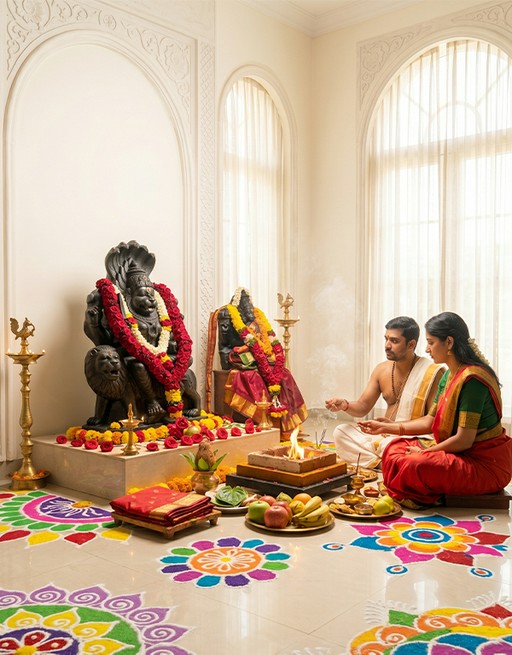
"The story of Narasimha is one of the most loved in Hindu scripture. The demon king Hiranyakashipu had earned a boon. No one could kill him. Not by man or beast. Not by day or night. Not indoors or outdoors. Not by any weapon. He tormented his own son Prahlada, a devoted bhakta of Vishnu. When he struck a pillar at twilight, Vishnu burst forth as Narasimha. Neither man nor beast. At the threshold between day and night. And he tore the demon apart."
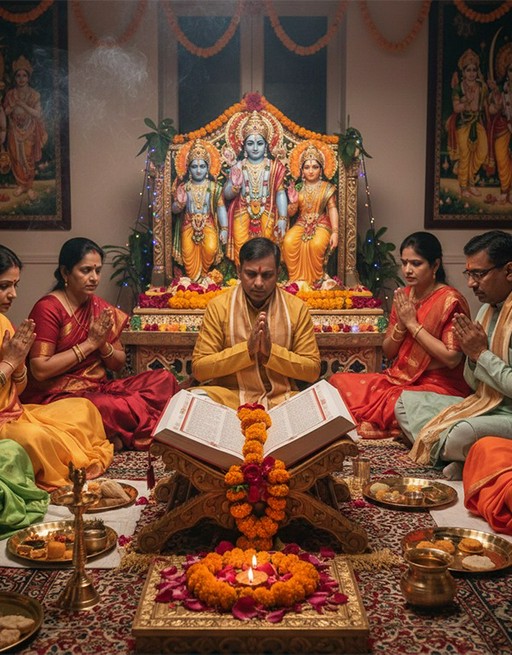
Deepawali (Diwali) Group Puja
"Deepawali is the biggest festival in the Hindu year. It marks the return of Lord Ram to Ayodhya. People light rows of lamps to welcome him home. The night is sacred to Lakshmi, the goddess of wealth. She walks the earth and enters homes that wait for her. The puja begins with Ganesh, who clears all blocks. It then turns to Lakshmi for wealth and plenty. This group puja joins many devotees in one worship. The shared prayer carries great strength on this night. It brings lasting wealth, fame, and growth in business. Devotees keep their homes clean and bright to receive the Mother."
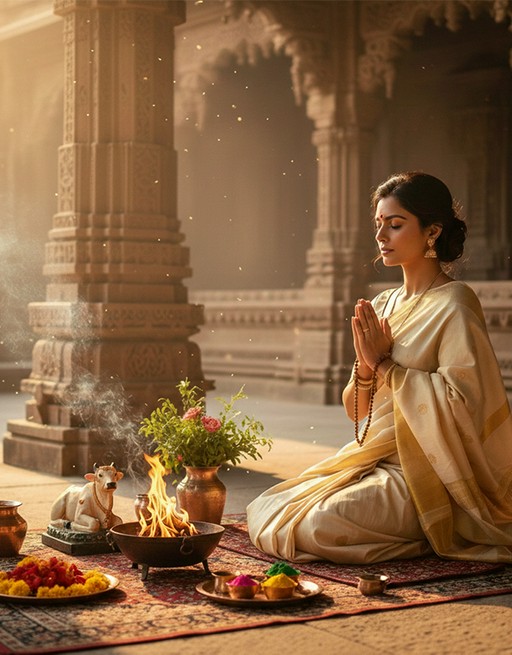
Gayatri Mantra Jaap Puja
"The Gayatri Mantra is called the mother of all Vedic mantras. Sage Vishwamitra first revealed it in the Rigveda. It is a prayer to Savitr, the divine source of light. It asks for one thing only. That our intellect be lit, and our path guided by wisdom."
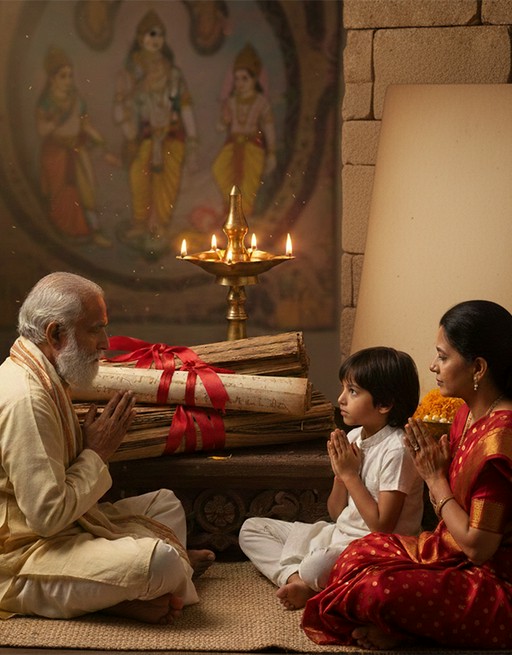
Gau Bhagavad Katha
"Hindu tradition holds the cow as the most sacred of all beings. Sanatan Dharma sees Gau Mata as the home of all the gods. It is said that crores of devtas reside within her body. To serve the cow is to serve the whole of creation. This katha tells the sacred stories of the holy cow. It sings of her place in dharma and her power to cleanse. Listening to it is said to wash away old sin. It brings peace to the soul and rest to the ancestors. The katha also lifts the weight of Pitra Dosha. Devotees gather to hear it with deep faith."


-651e59fc42dc48b969674951-59962914-s.jpg&w=3840&q=70)


-group-puja-6527e18f5ccc5711cd862203-54243791.png&w=3840&q=70)