Longer Life Life Threat
Shiv Rudrabhishek Puja
"Shiv Rudrabhishek is one of the oldest forms of Shiva worship. The Shivling is bathed with eleven sacred substances. Milk for purity. Honey for sweetness. Curd for prosperity. Ganga jal to clear past karma. Then ghee, sugar, rose water, sandalwood paste, panchamrit, coconut water, and bhasma. Each one carries its own meaning."
New Year Puja and Yajna
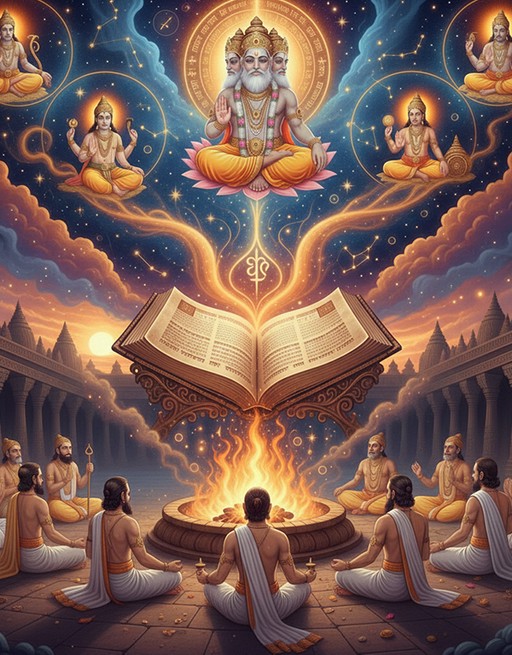
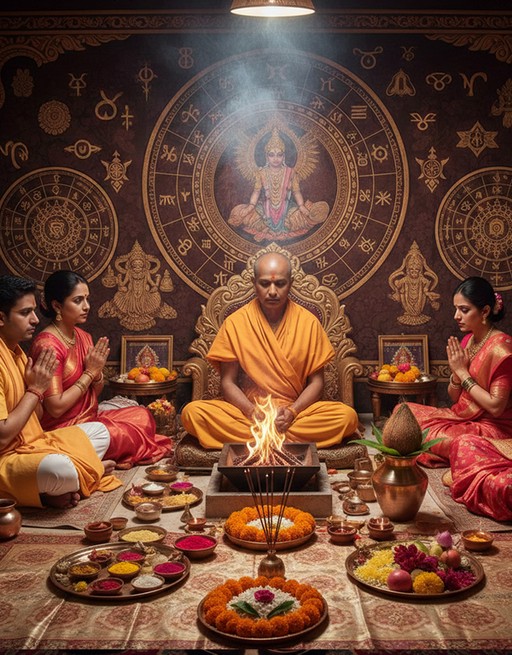
"The Hindu New Year begins in the month of Chaitra. Its first day is known as Gudi Padwa or Ugadi. Tradition holds that Lord Brahma made the world on this day. It is one of the most blessed starts in the whole calendar. This puja calls on Lord Vishnu, the keeper of the world. It seeks his grace for the whole year ahead. A good start is said to shape the whole year. The yajna carries the prayer for plenty and peace through fire. Families begin the year with worship and not with worry. They ask for success in every task of the coming months."
Pashupatinath Group Puja At Kathmandu
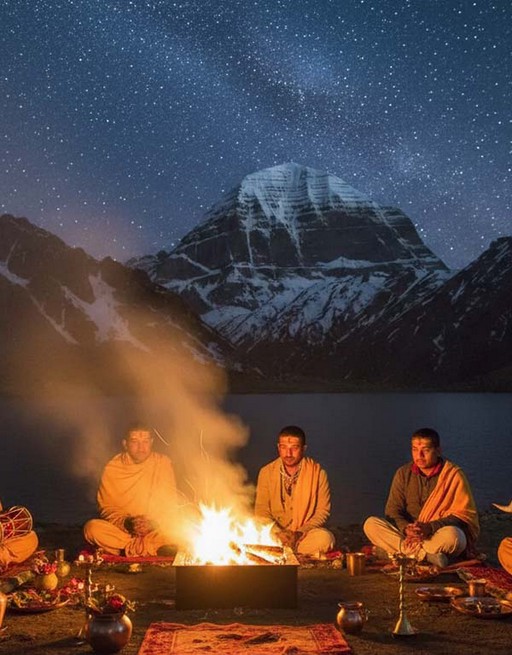
"Pashupati means the lord of every pashu, every bound soul that breathes. His temple stands on the banks of the Bagmati in Kathmandu, and it is the guardian deity of Nepal itself. The lingam here is unlike any other. A mukhalinga with five faces, four looking to the four directions and the fifth, Ishana, gazing skyward. Tradition ties this shrine directly to Kedarnath. When Shiva took the form of a bull and dove into the earth, his hump remained at Kedarnath, and his head emerged here, at Pashupatinath. Darshan of both is held to complete the worship. Tradition also holds that the grace of Pashupatinath frees the soul from rebirth in lower forms."
Navgrah Shanti Puja
"Every life is shaped by nine celestial forces. Surya, Chandra, Mangal, Budh, Guru, Shukra, Shani, Rahu, and Ketu. These are not distant stars. In Vedic tradition, they are living divine forces. At the moment of birth, their position imprints itself on the soul. That imprint is the birth chart. When the planets are favourably placed, life flows. When they fall into difficult positions, the devotee senses something is out of sync."
Shanivar Vrat Katha
"Shanivar Vrat is the Saturday vrat dedicated to Shani Dev. Saturday itself is the weekday ruled by Saturn, the cosmic disciplinarian. The vrat is observed by devotees passing through difficult Shani periods. Sade Sati. Dhaiya. Shani Mahadasha. It is also observed by those seeking sharper intellect, protection from negative energy, and freedom from the misfortunes that Shani's harder phases bring. Tradition holds that those who observe Shanivar Vrat with devotion see Shani Dev's anger soften into his blessing."
Rajyog Bhang Nivaran Puja
"A horoscope can carry strong Raj Yogas at birth. These yogas promise power, wealth, and high standing in life. They form when the right planets sit in the right houses. But the same chart can also break or block these yogas. A malefic planet in a wrong house can cut off the good result. Then the promise of the chart never reaches the person. Success comes close and slips away again and again. This puja finds the planet that causes the harm. It calms that planet and works to mend the broken yoga. Once mended, the blessings of the Raj Yoga can flow once more."
Shani Dosh Nivaran Puja
"Shani is unlike any other deity. He is the son of Surya Dev. The cosmic disciplinarian. Slow, deliberate, and absolutely just. Where other planets bless quickly, Shani measures every action of every lifetime. He has often been misunderstood as a deity to fear. The truth is gentler. Shani is the teacher who refuses to let his students stay unchanged. His difficult phases, Sade Sati, Dhaiya, and natal Shani Dosh, are not punishments. They are rigorous spiritual education."
Deepawali (Diwali) Group Puja
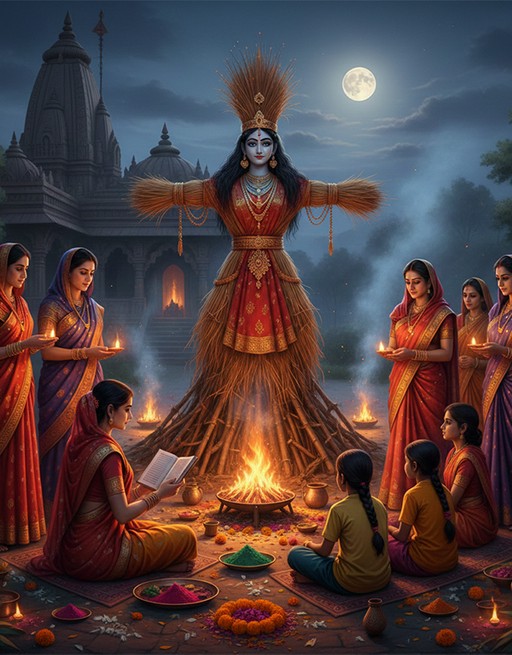
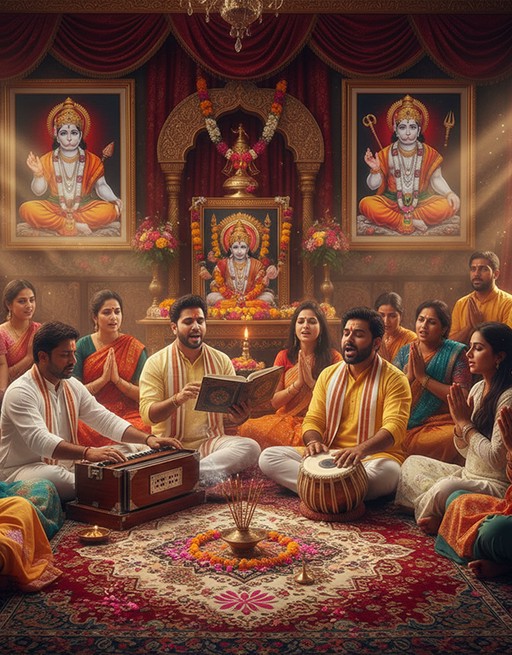
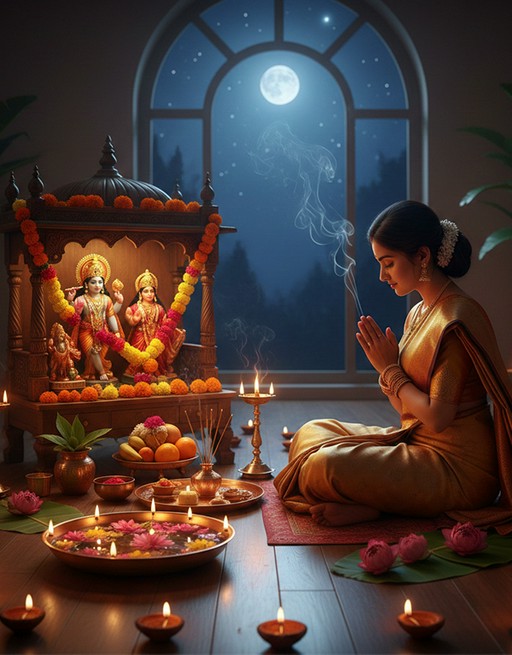
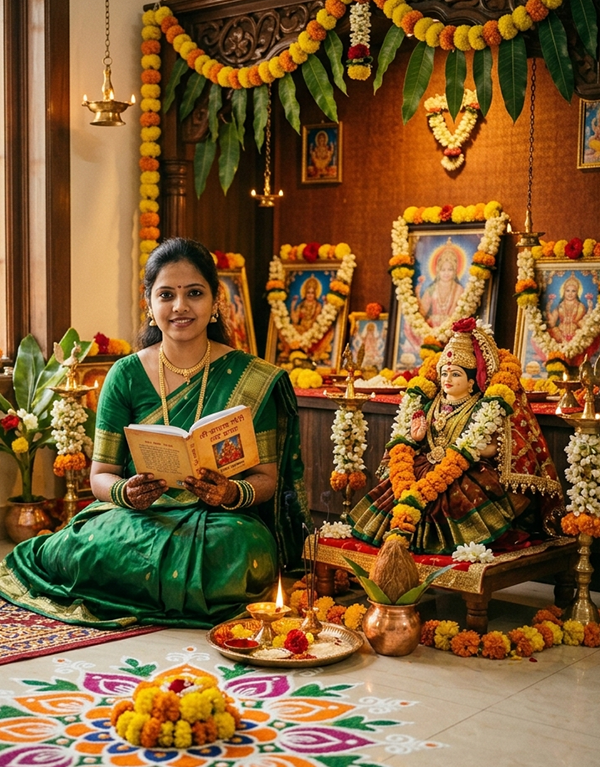
"Deepawali is the biggest festival in the Hindu year. It marks the return of Lord Ram to Ayodhya. People light rows of lamps to welcome him home. The night is sacred to Lakshmi, the goddess of wealth. She walks the earth and enters homes that wait for her. The puja begins with Ganesh, who clears all blocks. It then turns to Lakshmi for wealth and plenty. This group puja joins many devotees in one worship. The shared prayer carries great strength on this night. It brings lasting wealth, fame, and growth in business. Devotees keep their homes clean and bright to receive the Mother."
Ayushya Hawan
"Ayushya Hawan is a fire worship for long life. Its deity is Rishi Markandeya, the boy who conquered death. The shastras tell how Yama came to take his life. The boy held the Shivling and Shiva saved him from death. He was then blessed to stay forever young. This hawan calls on his grace for health and long years. The sacred fire carries the prayer for a full life. It guards the body and lifts the fear of early death. Families perform it on birthdays and other special days. It is a blessing for old and young alike."
Rog Nivarak Rog Nashak Puja
"Long illness often has roots beyond the body. Hindu tradition links chronic disease to planets and karma. When medicine alone does not heal, faith steps in to help. This puja works to lift the unseen cause of disease. It calls on the favoured god of the seeker's chart. The right deity is chosen from the horoscope itself. The worship seeks healing for body and mind together. It clears the karma that feeds the illness. It brings strength back to the weak and calm to the worried. Devotees turn to this puja in their hardest days of sickness."
80th Birth Puja
"The 80th year of life is a rare and blessed mark. The shastras honour it with a special rite of thanks. By this age a person has seen a full thousand full moons. Tradition calls this sacred moment Sahasra Chandra Darshan. It is a day to thank the gods for a long life. This puja blesses the elder for the years still to come. It calls on Lord Ganesh and Rishi Markandeya, the sage of long life. Their grace brings health, strength, and a calm old age. The whole family gathers to honour their elder. It is a moment of deep joy and gratitude."
Anniversary Puja
"A wedding anniversary marks a sacred bond. It is the day two lives joined as one before the gods. This puja blesses the couple for the years ahead. It calls on Lord Ganesh to clear the path of the new year. It joins Rishi Markandeya, the sage of long life. The shastras tell how Shiva saved him from death itself. His grace brings health and long years to the couple. The worship also honours the Ishta Dev and Kul Dev. It seeks their blessing for love, harmony, and strength. Families perform it to keep the bond blessed and strong."


-group-puja-6527e18f5ccc5711cd862203-54243791.png&w=3840&q=70)