Blessings
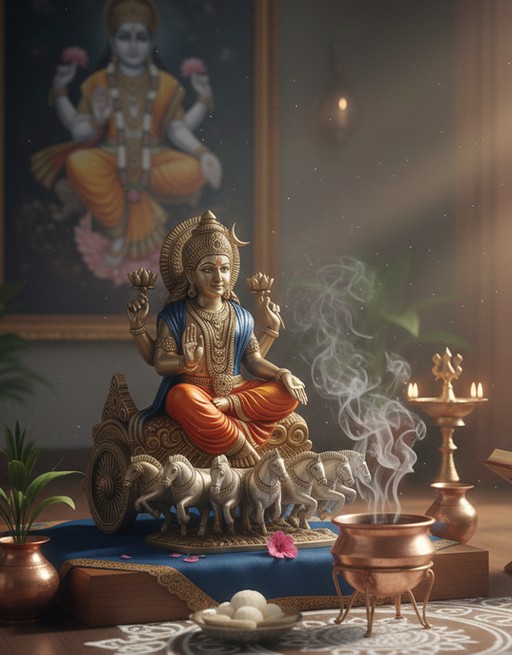
Shravani Upkarm Puja
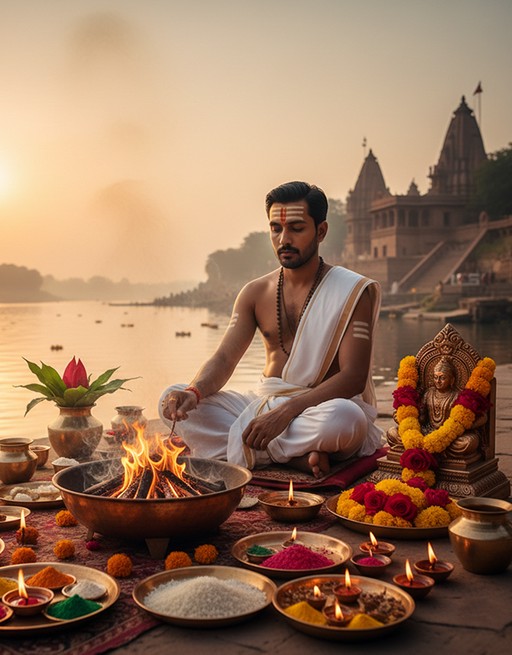
"Shravani Upkarm is an old Vedic rite of renewal. It falls on the full moon of the month of Shravan. On this day the sacred thread, the janeu, is changed. The old thread is set aside and a new one is worn. The rite honours the Saptarishi, the seven great sages. It is a day to thank them for the gift of the Vedas. The worship washes away the sins of the past year. It renews the seeker's vow to a clean and learned life. Bathing in the Ganga is a key part of the rite. It is most sacred when done on the Kashi ghats."
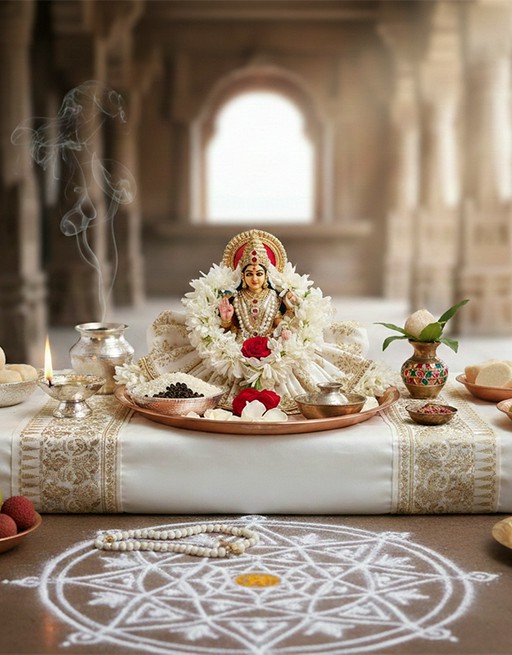
Vaibhav Lakshmi Puja
"Vaibhav Lakshmi is the form of Lakshmi that grants riches. The word vaibhav means grandeur, glory, and plenty. She blesses the home with wealth that lasts. Many earn well but cannot hold their money. This puja works to bring lasting wealth, or sthir Lakshmi. It clears the blocks that let money slip away. The Mother fills the home with comfort and grace. Business families seek her for steady growth. Her worship is most loved at Diwali and Dhanteras. These are the days when Lakshmi walks the earth. Devotees keep their homes clean and bright to receive her."
Bhoomi Devi Gayatri Mantra Siddhi Jaap and Yajna
"Bhoomi Devi is the earth herself. The goddess who holds every life on her shoulders. The mother who carries the weight of every footstep, every harvest, every home ever built. According to ancient scripture, when the demon Hiranyaksha once dragged her into the cosmic ocean, Lord Vishnu took the form of Varaha, the divine boar, and lifted her back to her rightful place. Since then, Bhoomi Devi has been worshipped as the consort of Varaha and as the silent goddess beneath every act of human life."
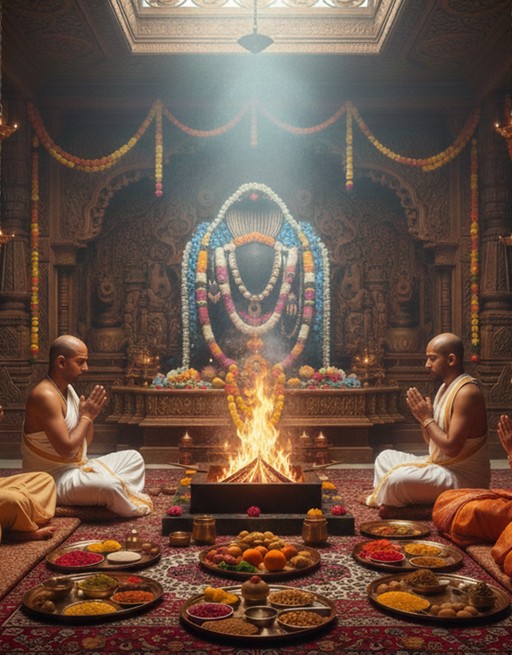
Navchandi Path and Yajna
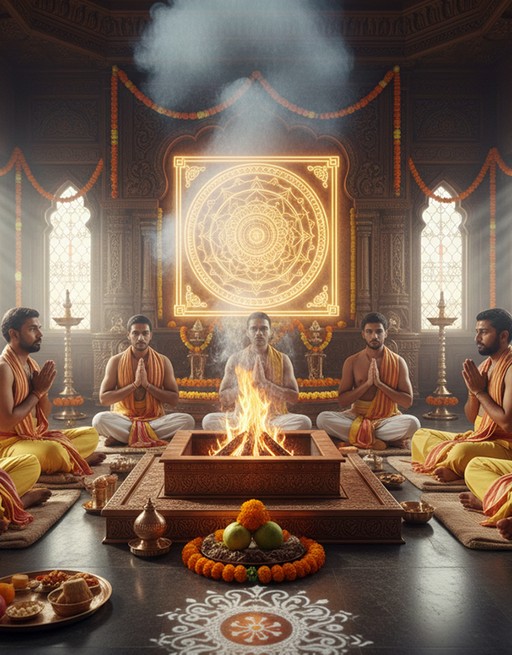
"Navchandi Path & Yajna is one of the most elevated forms of Durga worship in the Vedic tradition. It combines the recitation of the Chandi Path (the seven hundred verses of the Devi Mahatmya) with the energy of a sacred Yajna. The Chandi Path alone is powerful. Performed with a Yajna, its force is multiplied. Each verse becomes an offering into the fire. Each offering rises directly to Maa Durga in all her nine forms."
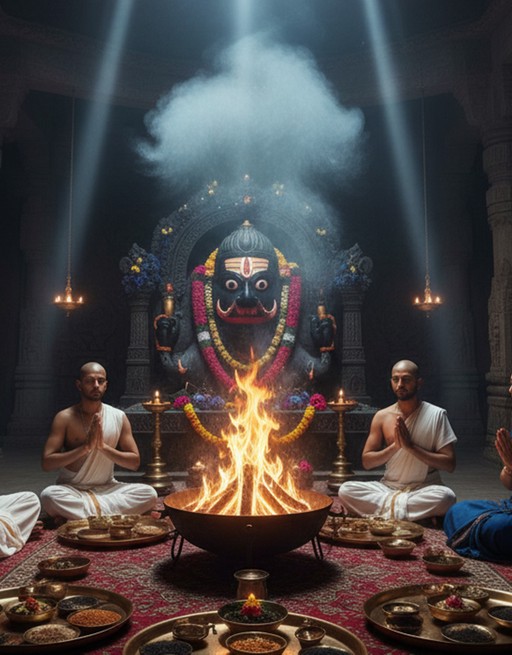
Chhinnamasta Puja and Yajna
"Chhinnamasta Mata is the sixth of the ten Mahavidyas. Her image is one of the most powerful in all of Hindu tradition. She holds her own severed head in one hand, and a sword in the other. Three streams of blood flow from her neck. One nourishes her own head. Two nourish her companions. She is the goddess of supreme sacrifice and supreme freedom. Devotees turn to her when life calls for letting go of what is comfortable, when courage must overcome fear, and when ordinary protection is not enough."
Shukra Dosh Nivaran Puja
"Shukra is the planet of love, beauty, comfort, art, and marital harmony. He is the divine connoisseur, the deity who teaches the soul to enjoy creation and share love generously. When Shukra shines strong, relationships flow. The home is graced with warmth. Marital life feels tender. Financial comforts arrive with ease. When his energy is afflicted, the softness withdraws. Relationships grow distant or conflicted. The beauty seems to drain from familiar things. Women in the family may face health concerns. Life loses its sweetness even when nothing outwardly seems wrong."
Budh Dosh Nivaran Puja
"Budh is the youngest of the classical planets and the most quick-witted. The messenger of the cosmos. The deity of intellect, communication, learning, and skilled craft. He turns thought into words, and words into influence. When Budh shines strong, the devotee speaks with clarity and moves through ideas with ease. When his energy is afflicted, the gifts reverse. Words stumble. Thoughts scatter. Decisions feel impossible. The nervous system grows strained. For students, this can mean dropping grades. For professionals, losing influence. For everyone, the inner voice loses its clarity."
Vastu Dosh Nivaran Jaap Puja and Yajna
"In Vedic tradition, a building is never just a building. Every home is a living entity. It breathes in the energies of the earth beneath it, the sky above it, and the directions around it. When these energies flow in harmony, the home becomes a sanctuary. Prosperity gathers. Sleep is restful. Relationships soften. When the energies are obstructed, the same home can quietly weigh upon the lives within it. The Matsya Purana tells the story of Vastu Dev. The devas pressed his body face-down into the earth, and Lord Brahma blessed him. Any structure built upon his pinned body would prosper, but only if his presence and the directions were honoured."
Kemdrum Yog Shanti Puja
"Kemdrum Yoga forms when the Moon stands alone in the birth chart, with no planets in the houses on either side of him. The Moon, who governs the mind and the emotions, becomes a lonely traveller. Devotees shaped by Kemdrum often feel a particular kind of solitude. Not the loneliness of having no one around. A deeper sense of moving through life without feeling supported. Financial stability comes and goes in waves. Decisions feel as though they must be made alone, without the natural backing one sees in others' lives."
Ketu Dosh Nivaran Puja
"Ketu has no physical body either. He is the headless body of the same asura that Rahu is the head of. If Rahu is the planet of obsession, Ketu is the opposite. He is the planet of detachment, dissatisfaction, and spiritual hunger. His influence shows up quietly. A feeling of not belonging. An inability to enjoy what others find satisfying. Sudden disinterest in things that once mattered. Isolation. A deep inner ache that worldly success cannot soothe. The devotee may have everything and still feel they have nothing."
Kamla Devi Puja and Yajna
"Kamala Devi is the tenth and final of the ten Mahavidyas. She is the Tantric form of Lakshmi Mata. The goddess of supreme wealth, abundance, and good fortune. She sits upon a lotus, with elephants pouring sacred water over her head. Where Lakshmi gives wealth in its everyday form, Kamala gives wealth in its highest, most enduring form. Spiritual abundance. Material prosperity. The fortune that lasts across generations. This is one of the most powerful pujas for wealth and family lineage."
Bhuvaneshwari Puja and Yajna
"Bhuvaneshwari Mata is the fourth of the ten Mahavidyas. Her name means "the queen of all the worlds." She is the goddess from whom the entire universe emerges. She sits upon a throne formed from the five elements themselves. The earth, the water, the fire, the air, and the sky bow at her feet. To worship Bhuvaneshwari is to align oneself with the source of all creation. Her devotees receive not just blessings but command over their own life."