Blessings
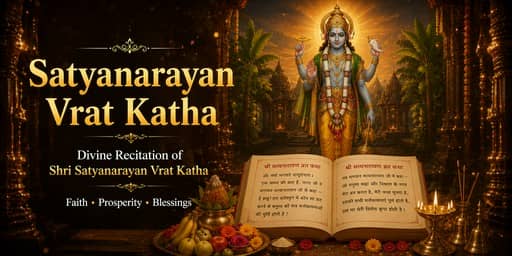
Satyanarayan Vrat Katha
"Satyanarayan Vrat is one of the most beloved household pujas in the Hindu tradition. The word satya means "truth," and Narayan is another name for Vishnu. To worship Satya Narayan is to align the family's life with the truth that Vishnu represents. The vrat is performed at home, often after a new beginning. A new home. A wedding. A child's birth. A successful business deal. The completion of a long-held goal. Tradition holds that those who keep this vrat with sincerity see their family flourish across every dimension of life."

Lalita Sahasranamam Path
"The Lalita Sahasranamam is the thousand names of Lalita Tripura Sundari. The supreme goddess of beauty, wealth, and divine play. Each of the thousand names describes a different aspect of her form, her power, or her grace. She is Lalita, the playful one. Tripura Sundari, the most beautiful in the three worlds. Raja Rajeshwari, the empress of all empresses. The Sahasranamam is part of the Brahmanda Purana, and is one of the most beloved texts in the Shri Vidya tradition. To recite it is to walk the devotee through a thousand doorways of the goddess's beauty."
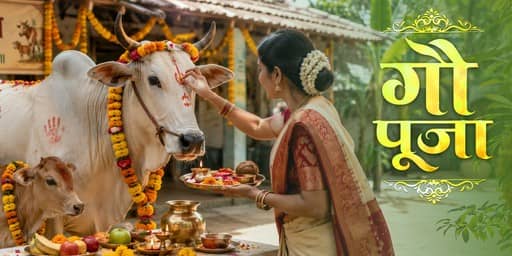
Gau Puja (Kamdhenu)
"Kamdhenu is the divine cow of Hindu tradition. The wish-fulfilling cow who emerged from the cosmic ocean during the great churning. Her name means "the cow of desires." Tradition holds that whoever worships Kamdhenu receives whatever they ask for, because she carries within her body all the gods, all the sacred rivers, and all the elements of the cosmos. She is also called Surabhi, "the fragrant one," and is the divine mother of all cows on earth. To worship Kamdhenu is to ask the most generous mother of the universe for her blessing."
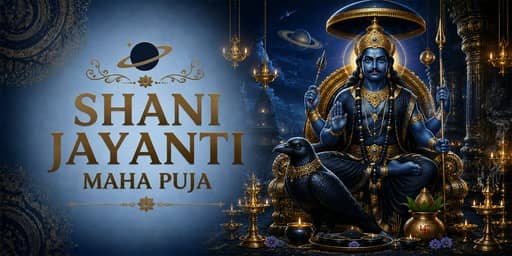
Shani Jayanti Maha Puja
"Shani Jayanti is the birth anniversary of Shani Dev. The single most powerful day of the year for any Shani puja. Tradition holds that Shani Dev was born to Surya Dev and Chhaya Mata on the Amavasya of the month of Jyeshtha. His birth came with profound spiritual force. Even Surya Dev, his own father, is said to have looked away from him at first sight, because Shani's gaze carries the weight of cosmic karma. To worship Shani Dev on his birth day is to ask the great teacher to soften his lessons and bring his hardest phases to a graceful conclusion."
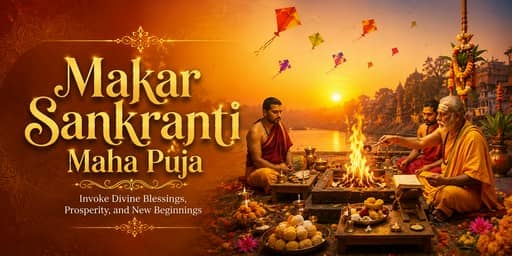
Makar Sankranti Maha Puja
"Makar Sankranti marks the day Surya Dev enters the zodiac sign of Makar (Capricorn). It is one of the few Hindu festivals fixed to a solar date, falling on the 14th or 15th of January every year. The day signals the end of winter and the beginning of warmer, brighter days. Tradition holds that from this day onward, Surya begins his uttarayana journey, the northern movement that brings light, warmth, and new life to the earth. Devotees bathe in the Ganga, offer arghya to the rising sun, and donate sesame and jaggery to the needy."

Naag Panchami Puja
"Naag Panchami is the festival dedicated to the serpent deities. The day falls on the fifth lunar day of Shukla Paksha in the month of Shravan. Tradition holds that on this day, the Naag Devtas (serpent gods) emerge to receive the prayers of devotees. The connection between Hindu tradition and serpents is ancient. Lord Shiva wears the serpent Vasuki as a garland. Lord Vishnu rests on the cosmic serpent Sheshnag. The very churning of the cosmic ocean was done with Vasuki as the churning rope. To worship the Sarp Devta is to honour the deep, hidden forces that hold the cosmos together."
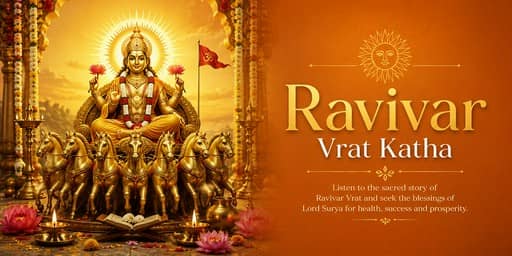
Ravivar Vrat Katha
"Ravivar Vrat is the Sunday vrat dedicated to Surya Dev. Sunday itself is named after Ravi, one of Surya's many names. The vrat is observed by devotees who seek the Sun's blessing for self-confidence, recognition, and the dignified strength that only Surya gives. Tradition holds that those who keep the Ravivar Vrat with sincerity see their reputation rise, their inner authority grow, and their public standing strengthen. The vrat is especially powerful for those whose efforts have gone unrecognised despite hard work."
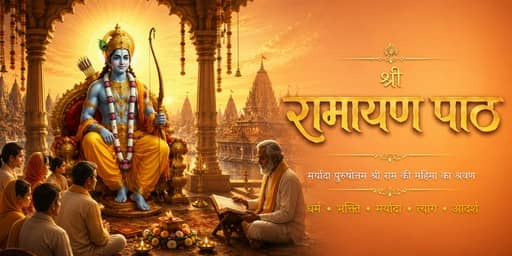
Ramayana Path
"The Ramayana is the original epic of Lord Ram's life. Composed by Maharishi Valmiki, it is the oldest written telling of the story. Twenty-four thousand verses across seven kandas, recounting Ram's birth, his exile, his battle with Ravana, and his return to Ayodhya. The Ramayana is not just a story. It is a guide to dharmic living. Every relationship, every decision, every choice in the epic carries a lesson. To have the Ramayana recited in one's home is to invite the energy of dharma itself into the family."
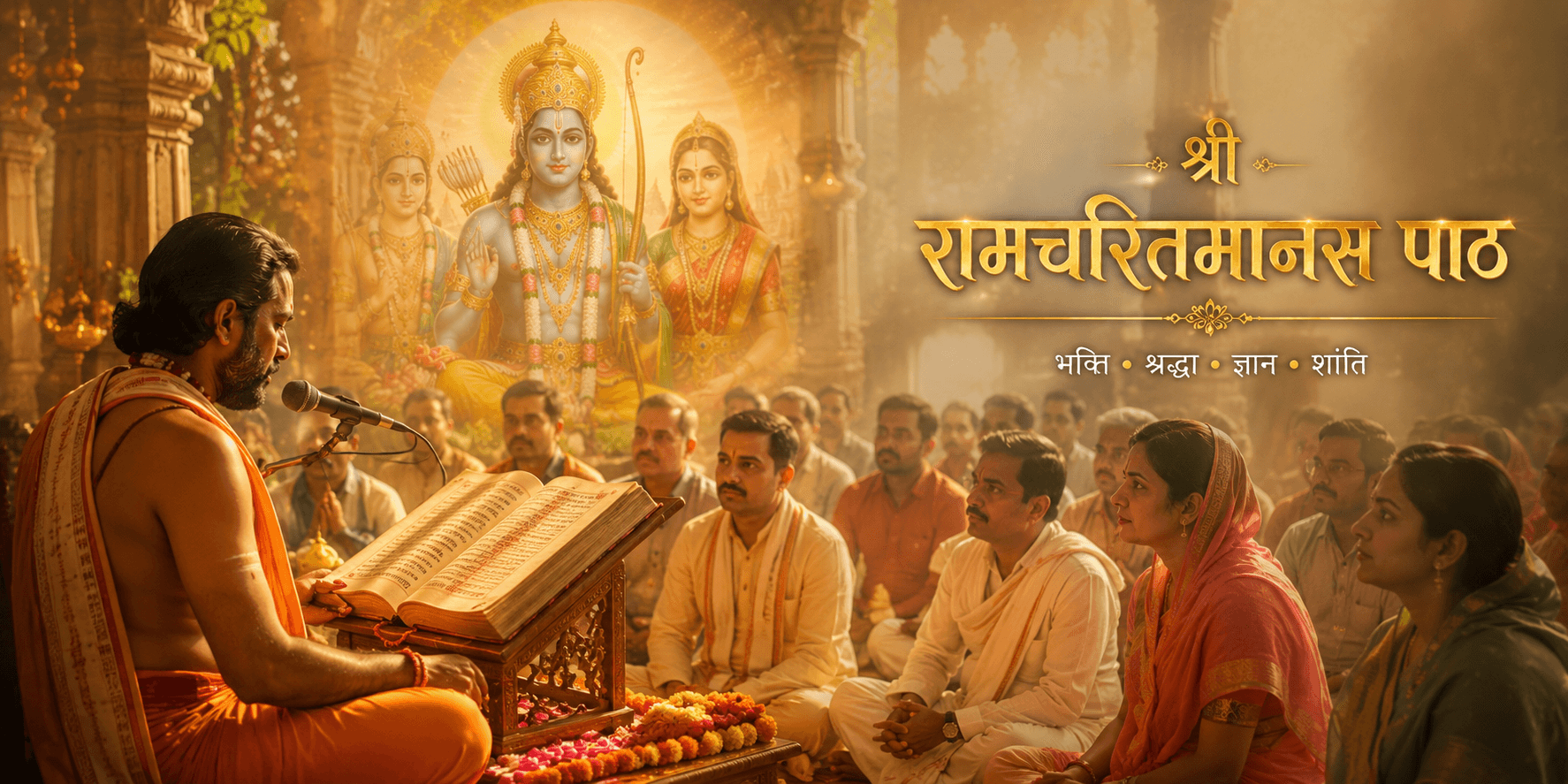
Ramcharitmanas Path
"The Ramcharitmanas is the retelling of the Ramayana by the saint-poet Tulsidas. Written in Awadhi, the language of the common people of his time, the text made the story of Lord Ram accessible to every household. Where Valmiki's Sanskrit Ramayana was studied by scholars, Tulsidas's Ramcharitmanas became the song of every family. For four hundred years, devotees have recited it at home, sung its verses at gatherings, and turned to it during times of difficulty. The Ramcharitmanas is the most beloved version of the Ramayana in India today."
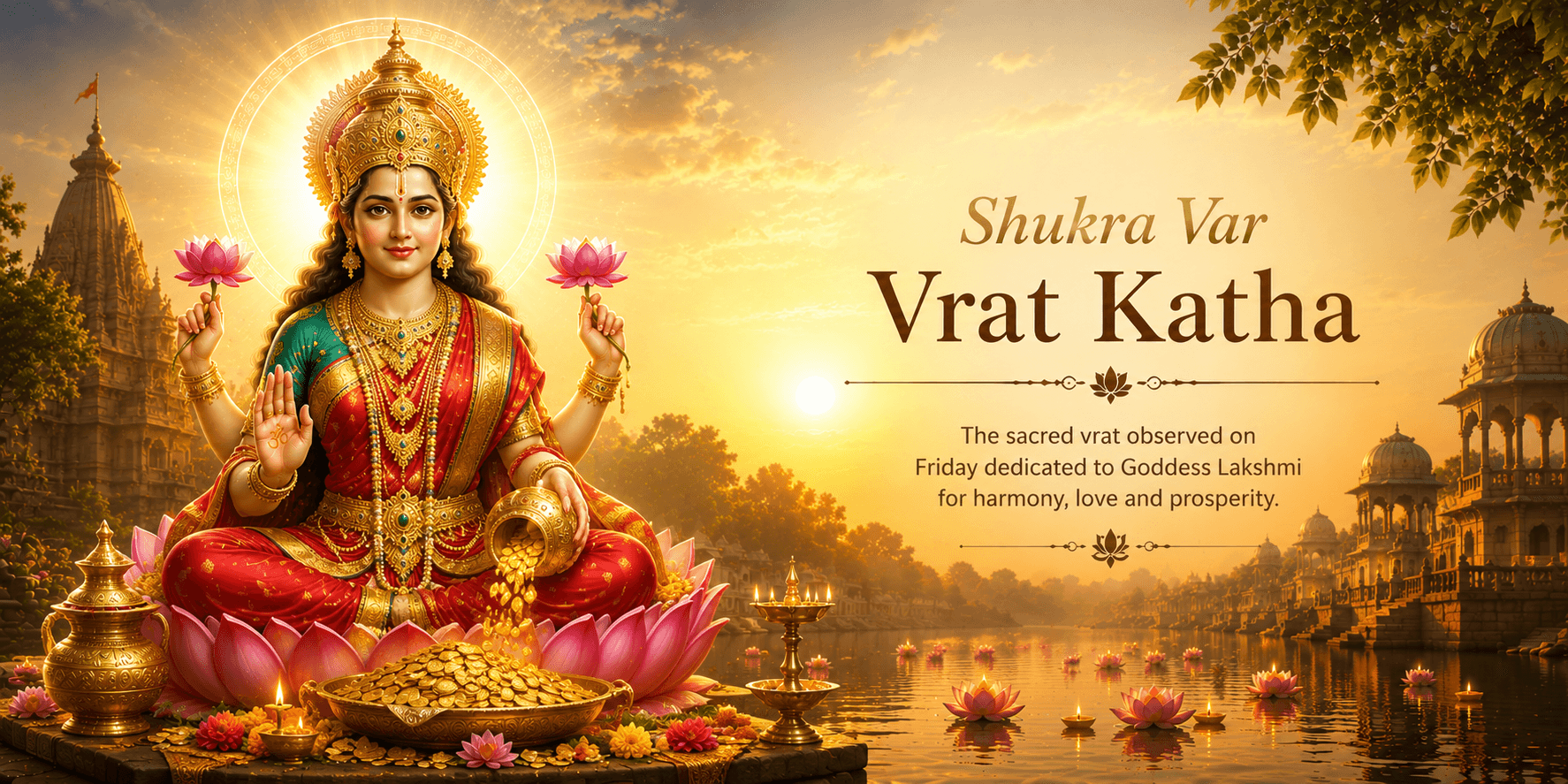
Shukra Var Vrat and Katha
"Shukra Var Vrat is the Friday vrat dedicated to Vaibhav Lakshmi. Friday itself is the day ruled by Shukra (Venus), the planet of beauty, wealth, and pleasure. Vaibhav Lakshmi is the form of Lakshmi Mata who blesses devotees with glory, fame, and the kind of wealth that becomes legacy. The vrat is observed for eleven or twenty-one consecutive Fridays, with the devotee fasting through the day and breaking the fast only after the Lakshmi puja in the evening. Tradition holds that those who complete the vrat with sincerity see their fortune transform."
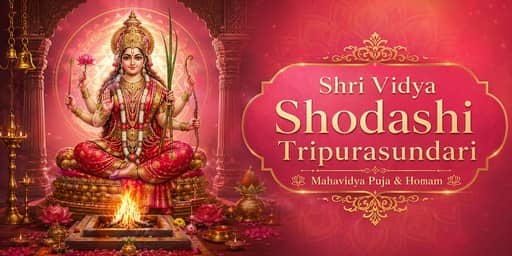
Shri Vidya Shodashi Tripurasundari Mahavidya Puja and Homam
"Tripura Sundari is the third of the ten Mahavidyas. She is also known as Shodashi, "the goddess of sixteen," and Lalita, "the playful one." Of all the Mahavidyas, she is the most beautiful. The most beloved. The most associated with abundance and grace. The tradition that honours her is called Shri Vidya, one of the most refined Tantric paths in the Hindu tradition. It is said that to please Tripura Sundari is to receive everything a devotee could want. Wealth. Beauty. Intellect. Property. The full grace of the divine feminine."
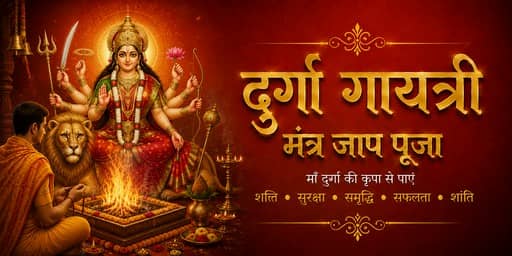
Durga Gayatri Mantra Jaap Puja
"The Durga Gayatri is a special mantra dedicated to Maa Durga. It combines two of the most powerful prayer traditions in Hinduism. The energy of the original Gayatri Mantra, the mother of all Vedic mantras, and the protective grace of Maa Durga herself. Where the original Gayatri invokes the light of wisdom, the Durga Gayatri invokes the strength of the warrior mother. It is the mantra chosen when a devotee needs both inner clarity and outer protection at the same time."