
All Puja
Panchawati Pooja
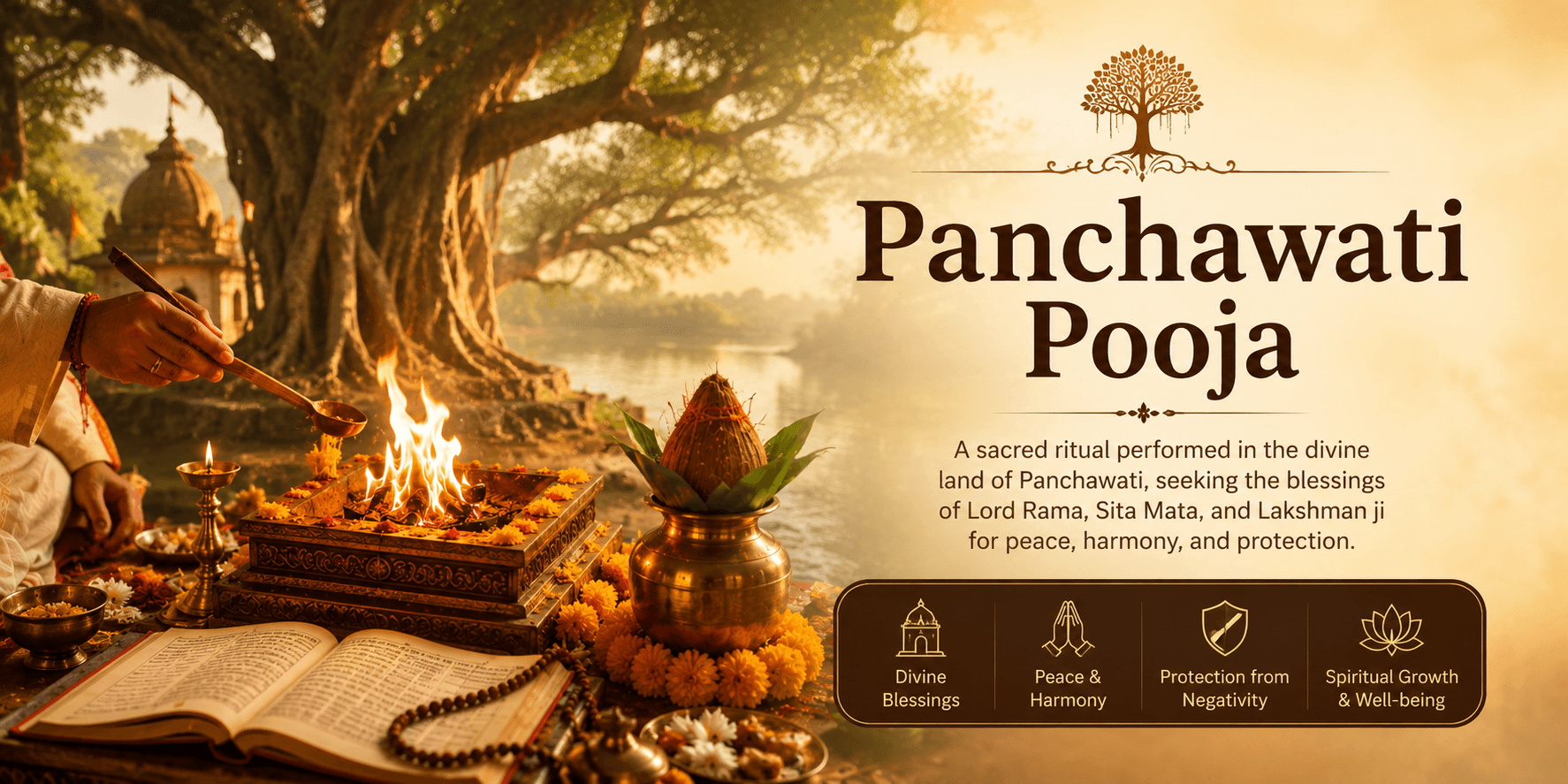
"Panchawati is the sacred grove of five trees. Peepal, Bargad, Ashoka, Amla, and Bilva. These are the same five trees that grew around the home of Lord Ram, Sita Mata, and Lakshman during their fourteen years of exile in the forest. Tradition holds that wherever the Panchawati grows, dharma is established. The trees themselves carry the blessings of Ram, of the rishis who lived among them, and of the natural forces they represent."
Tripura Sundari Shodashi Puja and Yajna
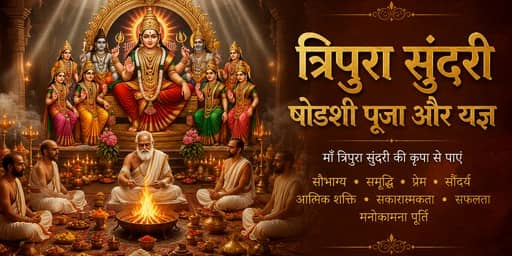
"This puja honours Tripura Sundari Mata, the third of the ten Mahavidyas, in her form as Shodashi. While the Shri Vidya path focuses on the deeper sadhana of the goddess, this puja focuses on her grace as a mother who blesses the home. It is the puja chosen by families who want her warmth more than her formal initiation. Tripura Sundari rules over the joy of being alive. The beauty of relationships. The blessing of a home that feels full. To worship her is to invite that fullness into daily life."
Kali Puja and Yajna
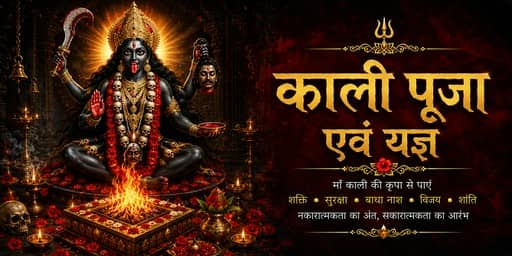
"Kali Mata is the first of the ten Mahavidyas. She is the supreme mother in her most powerful form. Dark as the night sky. Wearing a garland of skulls. Holding a sword in one hand and a severed head in the other. Standing on Lord Shiva himself, who lies beneath her in surrender. Kali is time. Kali is death. Kali is the force that destroys what must end so that what is true may rise. Her devotees turn to her not for gentle blessings but for absolute protection."
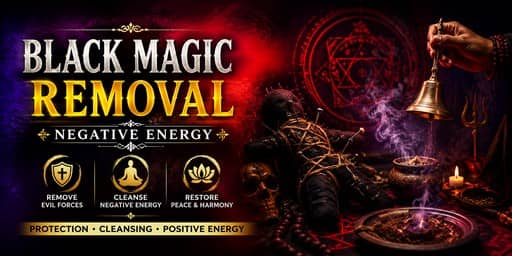
Black Magic Removal Negative Energy
"This puja is performed for devotees who suspect or have been told that their lives have come under the influence of black magic, the evil eye, harmful tantric practices, or sustained negative energies. Negative energy is not a vague modern concept in Hindu understanding. It is real and observable. Devotees affected often describe a clear pattern. Unexplained obstacles in clusters. Sudden health issues without medical cause. Financial losses arriving in waves. Recurring nightmares. A feeling of being watched. Conflicts in healthy relationships without provocation."
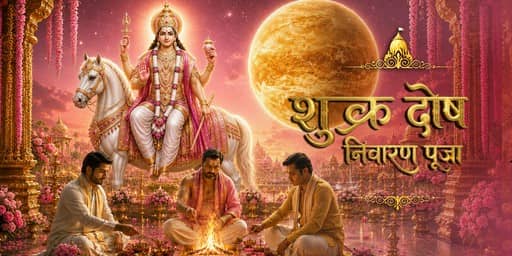
Shukra Dosh Nivaran Puja
"Shukra is the planet of love, beauty, comfort, art, and marital harmony. He is the divine connoisseur, the deity who teaches the soul to enjoy creation and share love generously. When Shukra shines strong, relationships flow. The home is graced with warmth. Marital life feels tender. Financial comforts arrive with ease. When his energy is afflicted, the softness withdraws. Relationships grow distant or conflicted. The beauty seems to drain from familiar things. Women in the family may face health concerns. Life loses its sweetness even when nothing outwardly seems wrong."
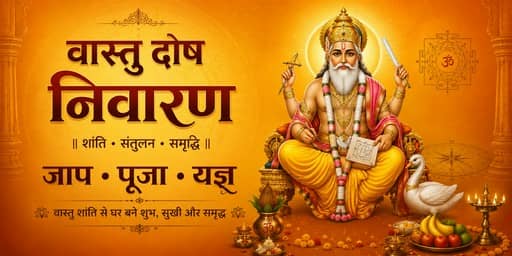
Vastu Dosh Nivaran Jaap Puja and Yajna
"In Vedic tradition, a building is never just a building. Every home is a living entity. It breathes in the energies of the earth beneath it, the sky above it, and the directions around it. When these energies flow in harmony, the home becomes a sanctuary. Prosperity gathers. Sleep is restful. Relationships soften. When the energies are obstructed, the same home can quietly weigh upon the lives within it. The Matsya Purana tells the story of Vastu Dev. The devas pressed his body face-down into the earth, and Lord Brahma blessed him. Any structure built upon his pinned body would prosper, but only if his presence and the directions were honoured."
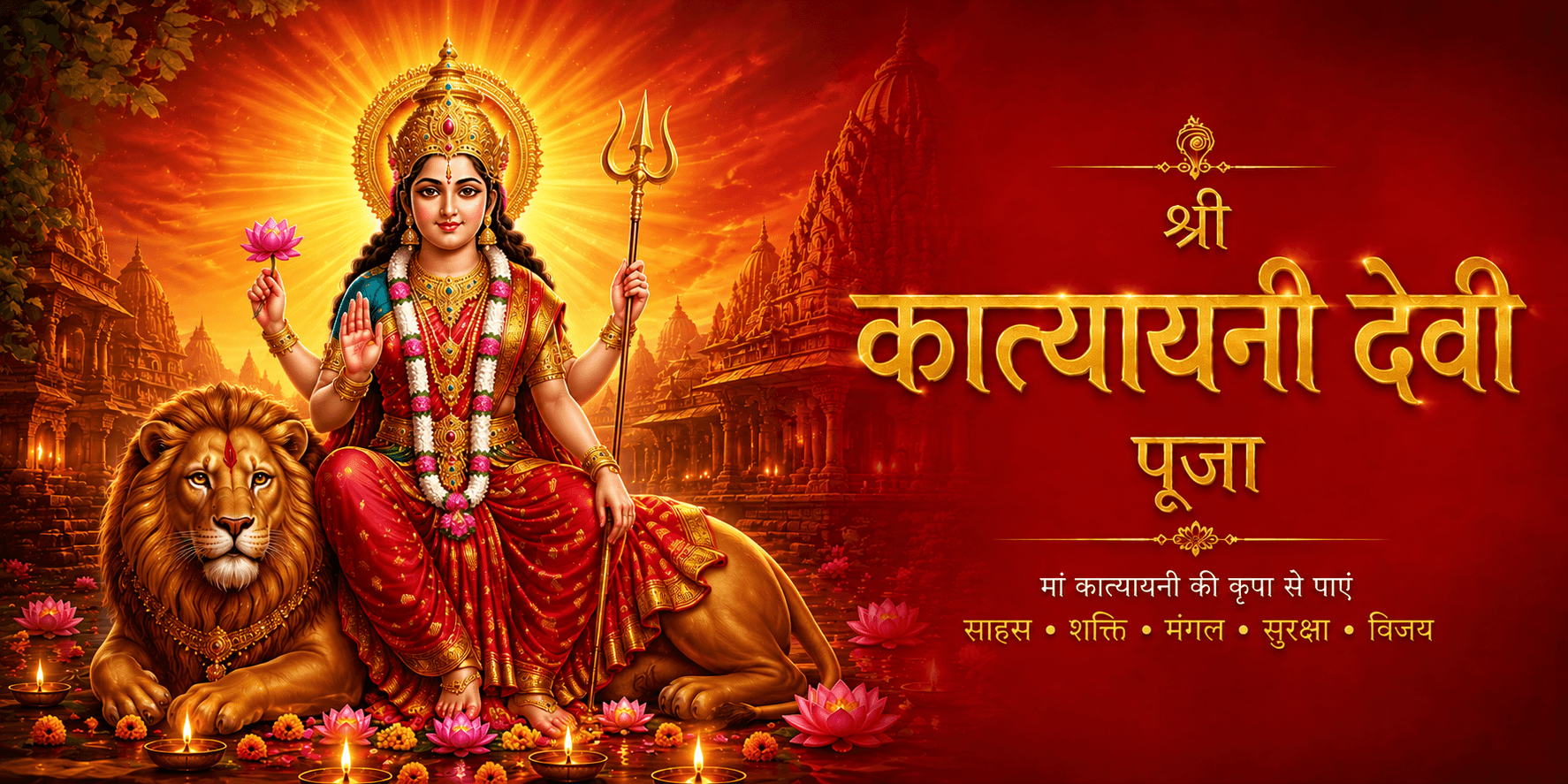
Katyayani Devi Puja
"Katyayani Mata is the sixth of the nine forms of Maa Durga. She was born to the sage Katyayana, after years of his penance, with the combined energy of Brahma, Vishnu, and Mahesh. She emerged to slay the demon Mahishasura. But her warrior origins are not why most devotees come to her. For centuries, she has been known as the granter of soulmates. The unmarried gopis of Vrindavan once prayed to her for Lord Krishna himself as their husband. She answered them."
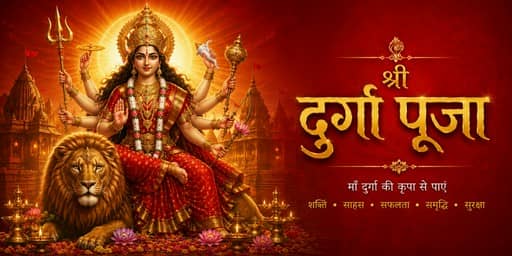
Durga Puja
"Maa Durga rides a lion. She holds eighteen weapons in her many arms. Each weapon is a gift from a different god. Her gaze is the gaze of a mother who will let nothing harm her children. The demon Mahishasura had a boon. No man, no god could kill him. He defeated even Indra. The gods released their combined energies. From that fire, Maa Durga emerged. After nine days of battle, on the tenth day, she slew Mahishasura. That day is Vijayadashami."
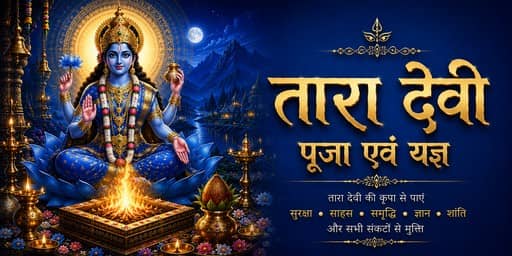
Tara Devi Puja and Yajna
"Tara Devi is the second of the ten Mahavidyas. Her name means "she who carries across." She is the goddess who carries the soul across the ocean of suffering. Across fear. Across confusion. Across the dark phases of life. She appears with a fierce form, but her energy is deeply maternal. She destroys what threatens her devotees, while holding them close. In some traditions, Tara is also worshipped as a form of Kali Mata. Wherever she is invoked, lost souls find their way home."
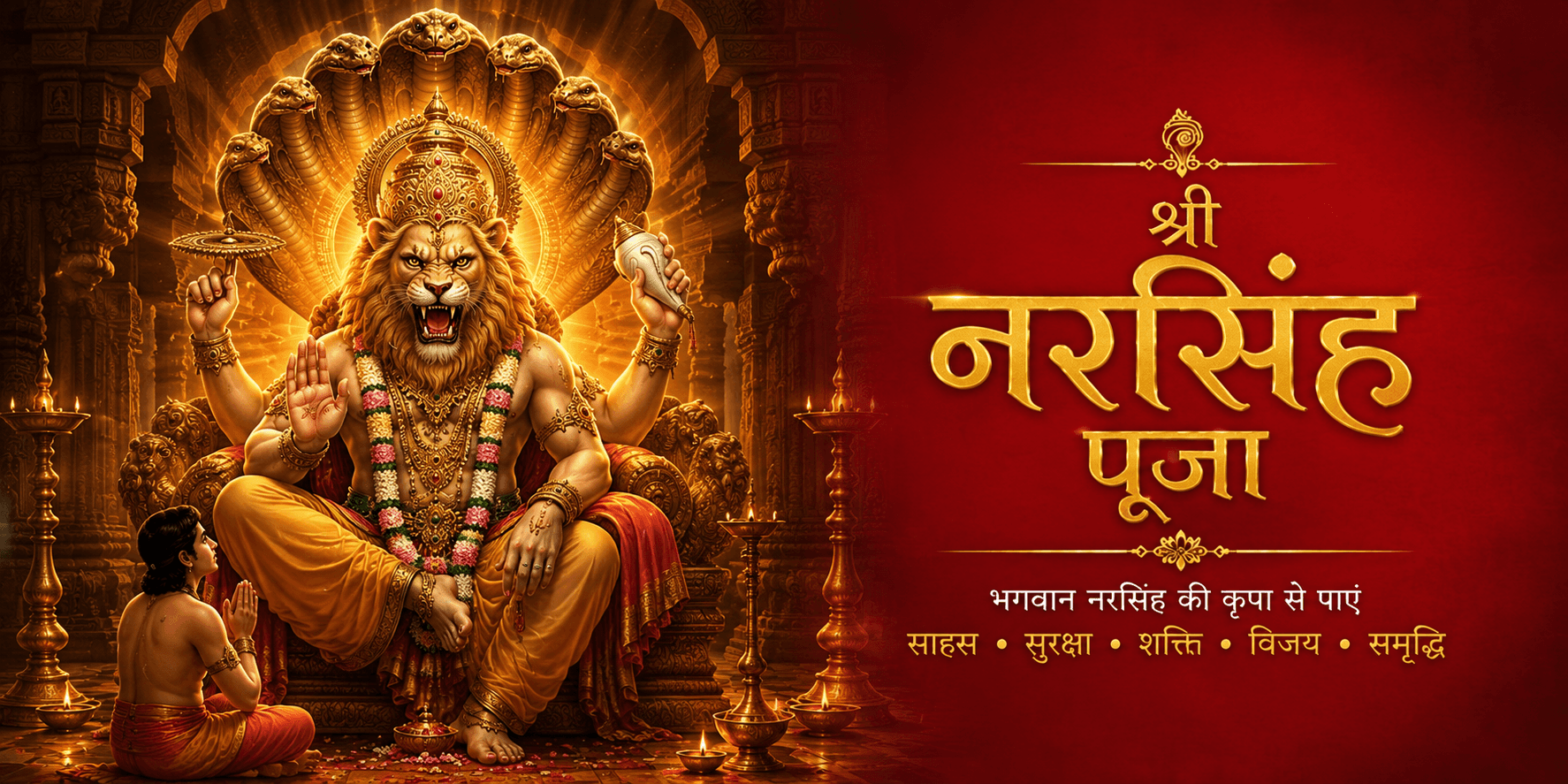
Lord Narasimha Puja
"The story of Narasimha is one of the most loved in Hindu scripture. The demon king Hiranyakashipu had earned a boon. No one could kill him. Not by man or beast. Not by day or night. Not indoors or outdoors. Not by any weapon. He tormented his own son Prahlada, a devoted bhakta of Vishnu. When he struck a pillar at twilight, Vishnu burst forth as Narasimha. Neither man nor beast. At the threshold between day and night. And he tore the demon apart."
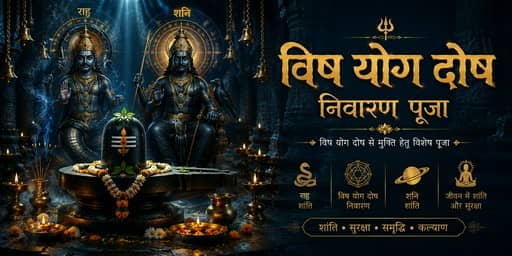
Visha Yog Dosh Nivaran Puja
"Visha Yog forms when the Moon and Saturn come together in the same house. Ancient sages named it Visha, meaning poison. When the gentle, emotional energy of the Moon merges with the cold, restrictive energy of Saturn, the blend behaves like a slow-acting poison. Quiet. Persistent. Hard to identify. The mind feels weighed down. Emotional life feels muted. Health takes a slow downward turn, often in ways that resist clear diagnosis. Income flows are restricted. Sleep becomes difficult. The devotee senses they are walking slightly out of sync with their own happiness."