Divine Collection
Peace
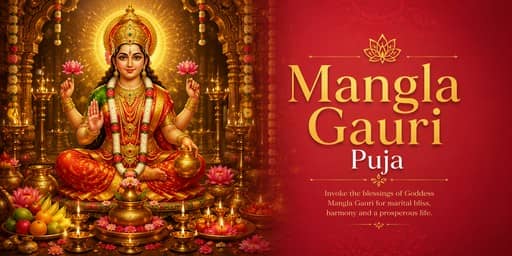
Mangla Gauri Puja
"Mangla Gauri is a loving form of Mata Parvati. She is one of the great Shakti forms revered in Kashi. The shastras hold her as the giver of married joy. Unmarried girls pray to her for a good husband. Married women pray to her for the long life of their spouse. She also blesses couples with healthy children. Her worship clears the Manglik Dosh from the chart. This dosh often delays or troubles a marriage. Mangla Gauri removes that block and smooths the path. Her grace brings peace and harmony to the home. Devotees worship her on Tuesdays and in the month of Shravan."

Lakshmi Ganapati Hawan Puja
"This puja joins Mata Lakshmi with Lord Ganapati in a sacred fire. Ganapati clears the blocks that hold a person back. Lakshmi then brings wealth that stays and does not slip away. The shastras call this lasting wealth sthir Lakshmi. Many earn well but cannot hold their money. This puja works to fix that very problem. The havan, or fire ritual, carries the prayers straight to the gods. Each offering into the fire is a step toward plenty. Business families turn to this puja for steady growth. It is most loved at Diwali, the festival of Lakshmi."

Dashavatar Vishnu Puja
"Lord Vishnu is the protector of the whole universe. Whenever evil rises on earth, he takes birth to set things right. The shastras name his ten great avatars as the Dashavatar. They are Matsya the fish and Kurma the tortoise. Then come Varaha the boar and Narasimha the man-lion. After them come Vaman, Parshuram, Ram, and Krishna. The last two are Buddha and Kalki, who is yet to come. Each form saved dharma at its own hour of need. This puja honours all ten together in one worship."
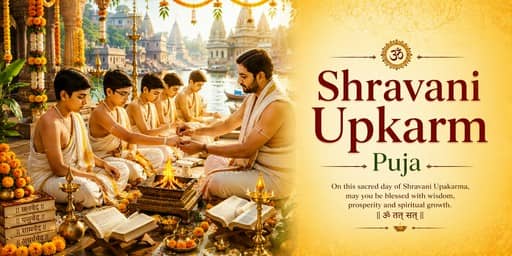
Shravani Upkarm Puja
"Shravani Upkarm is an old Vedic rite of renewal. It falls on the full moon of the month of Shravan. On this day the sacred thread, the janeu, is changed. The old thread is set aside and a new one is worn. The rite honours the Saptarishi, the seven great sages. It is a day to thank them for the gift of the Vedas. The worship washes away the sins of the past year. It renews the seeker's vow to a clean and learned life. Bathing in the Ganga is a key part of the rite. It is most sacred when done on the Kashi ghats."
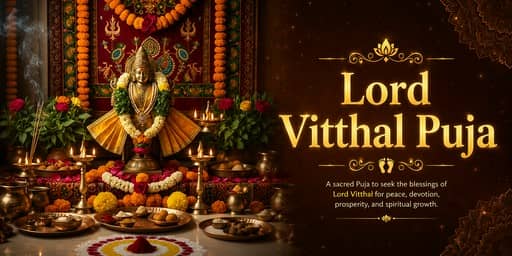
Lord Vitthal Puja
"Lord Vitthal is a beloved form of Lord Krishna. The people of Maharashtra know him as Vithoba and Panduranga. He stands at Pandharpur with his hands on his hips. Rukmini, his consort, stands by his side. The story tells how he waited for his devotee Pundalik. Millions walk to Pandharpur each year to see him. The Warkari saints sang of his love for ages. He grants peace, plenty, and a happy home. This puja calls on Vitthal and Rukmini together. It seeks their grace for wealth, fame, and family joy. Devotees worship him with deep love and song."

Gau Beej Mantra Jaap Vidhan Puja
"Hindu tradition holds the cow as the most sacred of all animals. Sanatan Dharma sees Gau Mata as the home of all gods and goddesses. It is said that thirty-three crore devtas reside within her body. To serve the cow is to serve the whole of creation. Her worship is believed to lead the soul toward freedom. This puja honours Gau Mata through the chanting of her seed mantra. The Gau Beej Mantra carries the power to cleanse old karma. It brings peace to the soul and lifts the weight of ancestral dosha. Devotees have turned to this worship for generations."
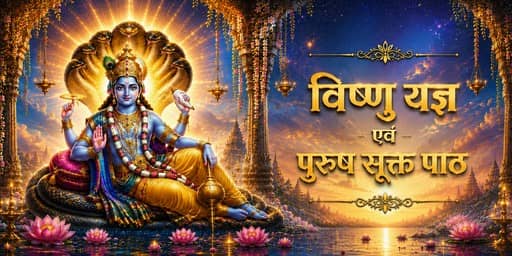
Vishnu Yajna and Purash Sukta Path
"This is a combined puja that brings together the Purusha Sukta hymn (the Rigvedic prayer to the cosmic being) and a full Vishnu Yajna. The Purusha Sukta is one of the oldest and most sacred Vedic hymns, describing the cosmic Purusha from whom the universe emerges. When it is recited alongside a Vishnu Yajna, the energy is multiplied. The cosmic prayer is anchored in the sacred fire. The offerings reach Vishnu directly through the flames. This is one of the most powerful Vishnu pujas in the entire Vedic tradition."
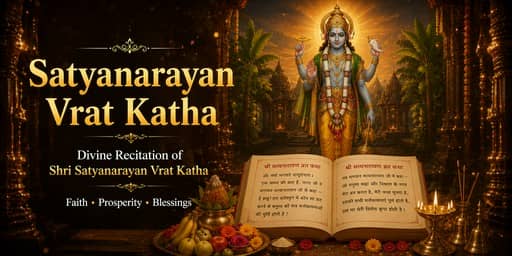
Satyanarayan Vrat Katha
"Satyanarayan Vrat is one of the most beloved household pujas in the Hindu tradition. The word satya means "truth," and Narayan is another name for Vishnu. To worship Satya Narayan is to align the family's life with the truth that Vishnu represents. The vrat is performed at home, often after a new beginning. A new home. A wedding. A child's birth. A successful business deal. The completion of a long-held goal. Tradition holds that those who keep this vrat with sincerity see their family flourish across every dimension of life."

Holika Puja and Katha
"Holika Puja is performed on the night before Holi. The story behind it is one of the most powerful in Hindu tradition. Holika was the sister of the demon king Hiranyakashipu. She had a boon that fire could not harm her. When her brother ordered her to kill his own son Prahlada, a devoted bhakta of Vishnu, she sat with him in a roaring fire, believing she would survive and the child would burn. But the opposite happened. Holika perished. Prahlada walked out unharmed. The fire that night marks the eternal truth. Where devotion stands, evil cannot. Holika Dahan, the burning of Holika, is observed every year to remember this victory."
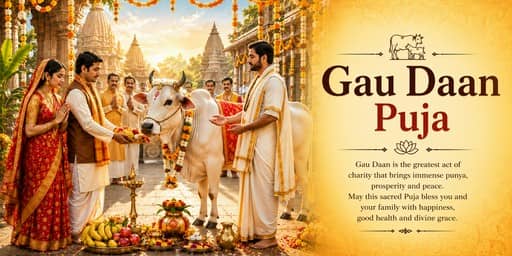
Gau Daan Puja
"Gau Daan means the gift of a cow. The shastras hold it as the greatest of all charity. To give a cow is to give a home to all the gods. Tradition says the cow carries the soul across after death. She helps it cross the river Vaitarani to the next world. This daan washes away the heaviest of old sins. It clears negative karma and the fear of the unknown. It is also the remedy for Nadi Dosh in a match. The gift brings the grace of Lord Krishna upon the giver. Devotees perform it before marriage and on holy days. It is one of the surest paths to moksha."
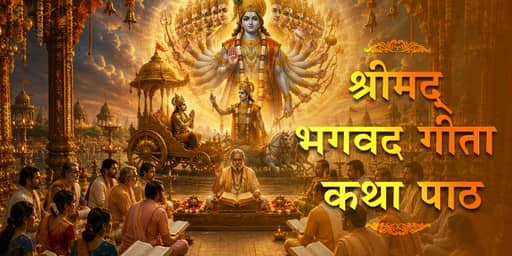
Shree Mad Bhagawad Geeta Katha Path
"The Bhagavad Geeta is the most sacred philosophical text in the Hindu tradition. The seven hundred verses spoken by Lord Krishna to Arjuna on the battlefield of Kurukshetra, just before the Mahabharata war began. Arjuna stood frozen, unable to fight against his own kinsmen. Krishna, as his charioteer and guide, taught him the deepest truths of life. The nature of the soul. The path of dharma. The art of action without attachment. The reality beneath the changing world. The Geeta is not just scripture. It is the most complete guide to living that humanity has ever received."

Shree Purusha Sukta Path and Yajna
"The Purusha Sukta is one of the most ancient and sacred hymns in the Rigveda. It describes the Purusha, the cosmic being, from whose body the entire universe is created. The sky is his head. The earth is his feet. The sun is his eye. The hymn is the foundation of Vedic philosophy itself, and is recited at every major yajna across the Hindu tradition. The Purusha Sukta is considered the supreme prayer to Vishnu in his cosmic form. To have it recited as a focused path with yajna is to align the family's life with the cosmic order itself."