
Occasions & Ceremonies
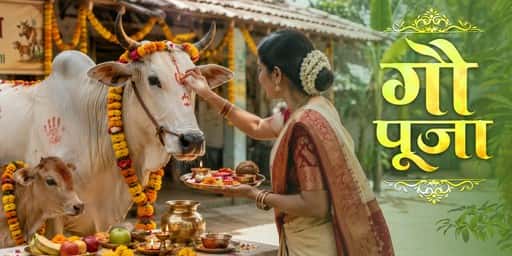
Gau Pujan (Gau Grass Feeding)
"Kamdhenu is the divine cow of Hindu tradition. The wish-fulfilling cow who emerged from the cosmic ocean during the great churning. Her name means "the cow of desires." Tradition holds that whoever worships Kamdhenu receives whatever they ask for, because she carries within her body all the gods, all the sacred rivers, and all the elements of the cosmos. She is also called Surabhi, "the fragrant one," and is the divine mother of all cows on earth. To worship Kamdhenu is to ask the most generous mother of the universe for her blessing."
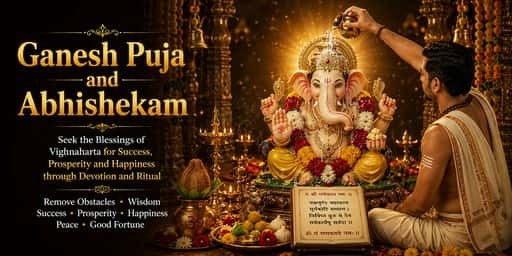
Ganesh Puja and Abhishekam
"Ganesh Ji is the first deity worshipped in every Hindu ritual. Families call on him before weddings, new homes, new businesses, and exams. He clears the path. He blesses the work ahead. Tradition says he is easily pleased. Laddus, modaks, and devotion are enough. Once Ganesh Ji is pleased, he also calls on Shree Lakshmi Mata to bless the home with wealth."
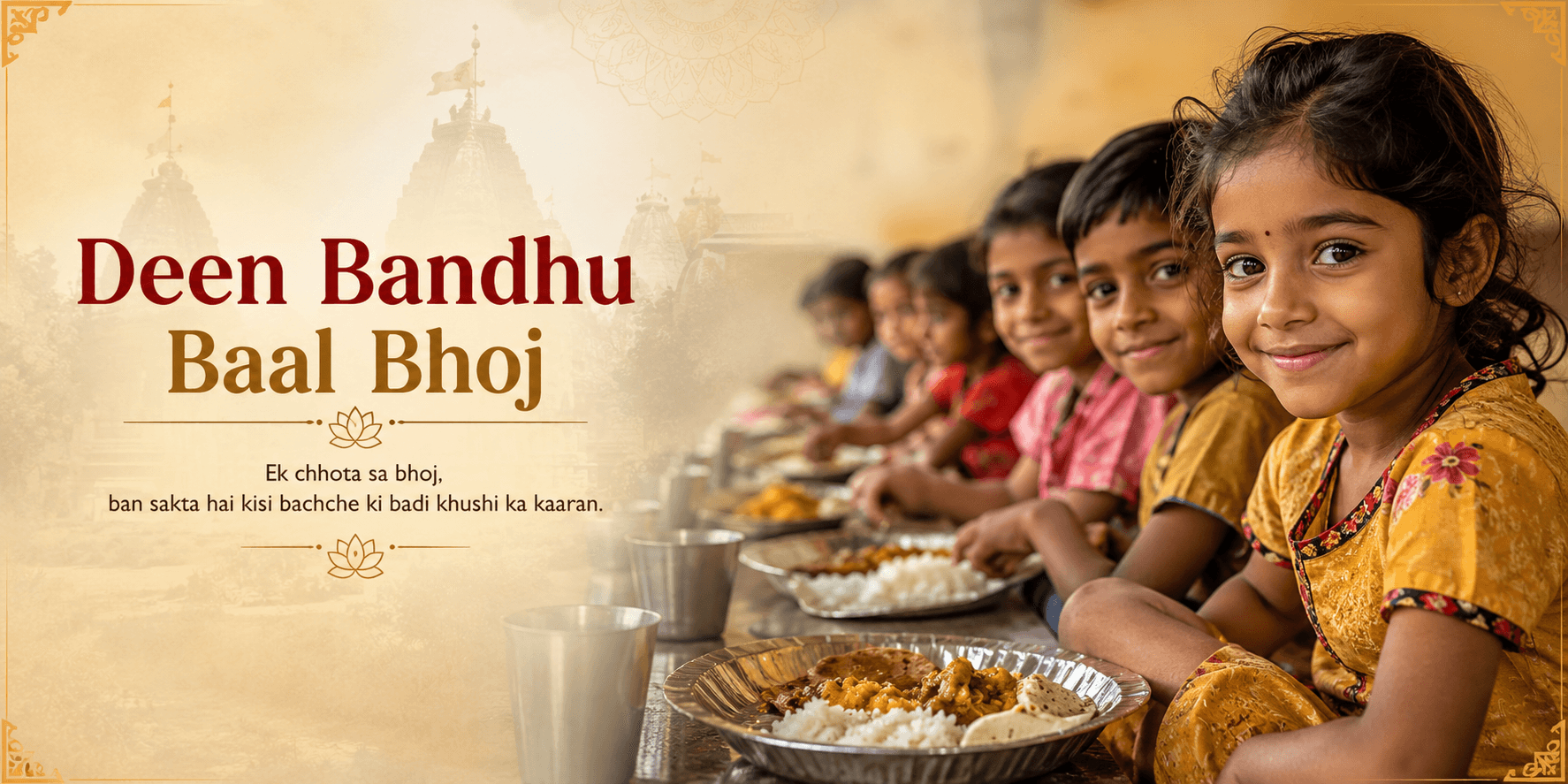
Deen Bandhu Baal Bhoj
"Annadaan, the gift of food, is called the mahadaan. The greatest of all gifts. The shastras place it above every other charity, because food is the one gift that satisfies completely. Deen Bandhu means the friend of the poor, and this bhoj feeds the children who need that friend most."
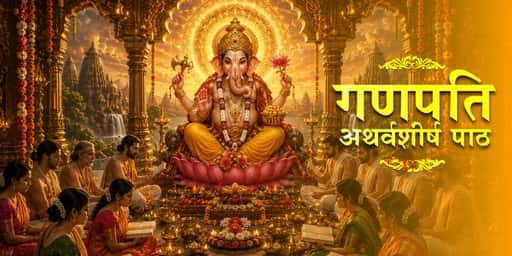
Ganapati Atharvashirsha Path
"The Ganapati Atharvashirsha is the supreme prayer to Lord Ganesha. Drawn from the Atharva Veda, it declares Ganesha not just as a deity, but as the supreme Brahman himself, the source of all reality. The text is unique in its philosophical depth. Where most Ganesha prayers ask for the removal of obstacles, the Atharvashirsha invokes Ganesha as the highest cosmic principle. To recite it as a focused path is to invite the deepest, most powerful form of Ganesha's grace into the home."
-puja-65265027289f0ede88af4b82-92241301-s.jpg&w=3840&q=60)
Gau (Cow) Puja
"The cow is the most sacred animal in Hindu tradition. She is called Gau Mata, the mother cow. Tradition holds that all the gods reside within her body. Lord Brahma in her face. Lord Shiva in her forehead. Lord Vishnu in her shoulders. The Ganga, the Yamuna, and the Saraswati in her hooves. To touch a cow with devotion is to touch every deity at once. To offer her food and worship her is to honour the source of life itself, since the cow gives milk to humans and feeds the soil for every crop."
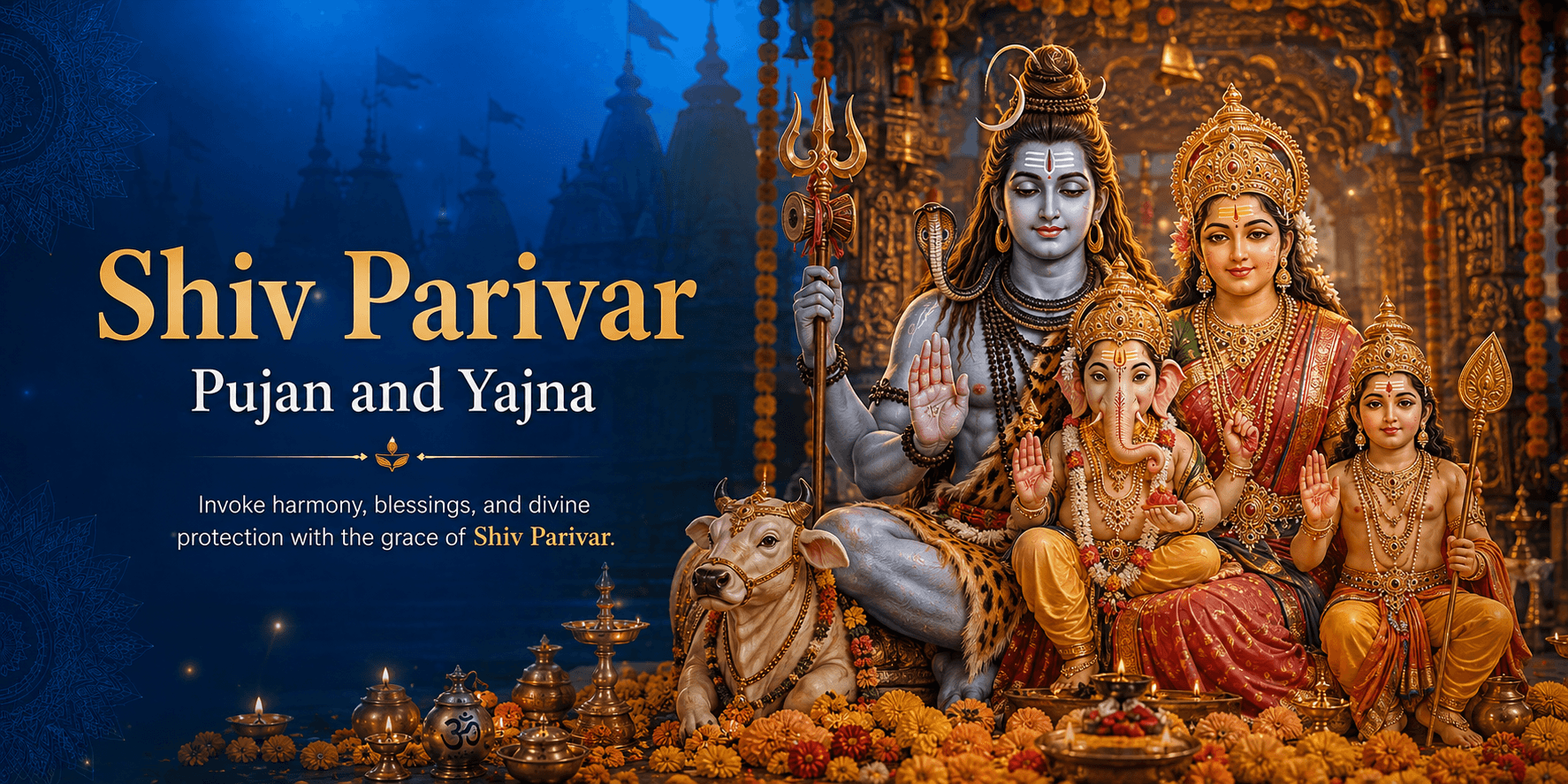
Shiv Parivar Pujan and Yajna
"The Shiv Parivar is the divine family. Lord Shiva. Mata Parvati. Lord Ganesha. Lord Kartikeya. Nandi, the sacred bull. Together they are the original family of the cosmos. The model of harmony, mutual love, and family devotion. To worship the Shiv Parivar together is to invite all of these blessings into the devotee's own home. Each member of the family carries a specific grace. Together, they bless the home with completeness."
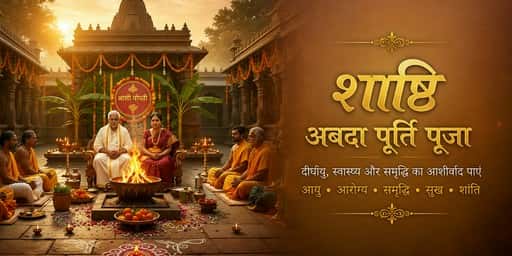
Shasthi Abda Poorti Puja
"Shasthi Abda Poorti is the ceremony performed when a person completes sixty years of life. The number sixty holds deep meaning in the Vedic calendar. It marks the completion of one full cycle of cosmic time. The person has lived through every combination of the five elements, the nine planets, and the lunar cycles. The ceremony honours this milestone. It is a moment of gratitude for the years lived, and a fresh blessing for the years ahead."
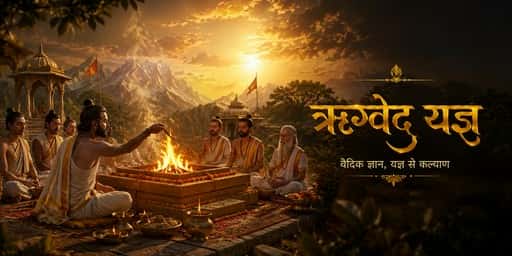
Rigveda Yajna
"The Rigveda is the oldest scripture in the Hindu tradition. The first of the four Vedas. Composed thousands of years ago, it contains over a thousand hymns dedicated to the gods, with the largest number addressed to Indra (the king of the gods) and Agni (the sacred fire). The Rigveda Yajna is the fire ritual built around these original hymns. It is one of the most powerful and most ancient yajnas in existence. To have it performed is to participate in the same tradition that the earliest sages of India established."
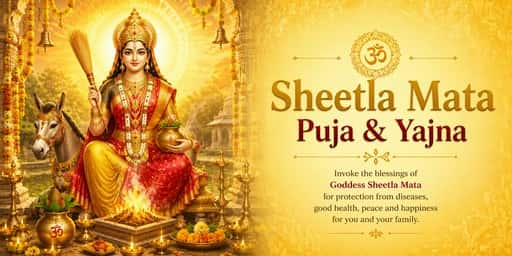
Sheetla Mata Puja and Yajna
"Sheetala Mata is the cooling form of the Divine Mother. Her name means the one who brings coolness and calm. Hindu tradition reveres her as the goddess who guards against disease. People worship her to keep illness away from the home. She rides a donkey and carries a pot of healing water. Her worship is most loved in the hot months of the year. Mothers pray to her for the health of their children. She cools fever, heals the body, and brings peace to the home. Her blessing is said to bring success and plenty too. Devotees have turned to her for protection for ages."
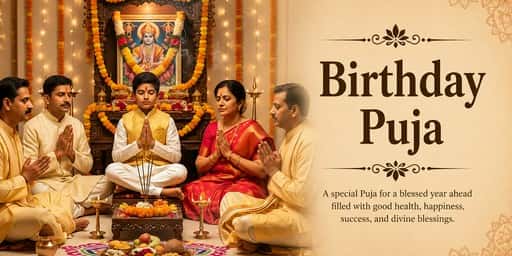
Birthday Puja
"A birthday is more than a day of cake and gifts. In Hindu tradition, it is a sacred mark of life. This puja blesses the person for the year ahead. It calls on Lord Ganesh to clear the path of the new year. It joins Rishi Markandeya, the sage who won long life. The shastras tell how Shiva saved him from death. His grace brings health and long years to the seeker. The worship also honours your Ishta Dev and Kul Dev. It seeks their blessing for strength and a good life. Families perform it to start each new year with grace."
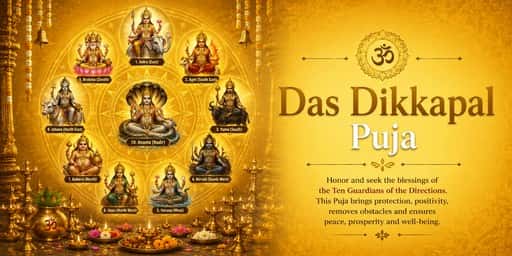
Das Dikkapal Puja
"The shastras name ten guardians who rule the ten directions. They are led by Indra and called the Das Dikkapal. Each one watches over a side of the world. Indra guards the east and Yama the south. Varuna guards the west and Kubera the north. The others hold the corners, the sky, and the earth below. Together they keep the whole space around us safe. This puja honours all ten guardians in one worship. It seeks their blessing for protection on every side. With them pleased, no harm can enter from any direction. The seeker then moves forward without a block."
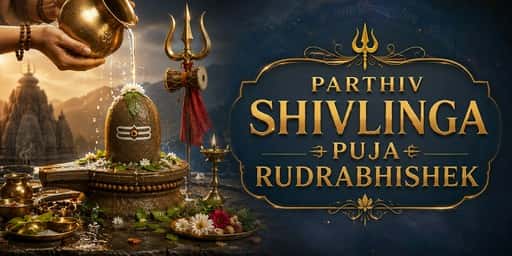
Parthiv Shivlinga Puja and Rudrabhishek
"A Parthiv Shivlinga is a Shivling shaped from sacred earth, prepared fresh for the puja. The tradition is one of the oldest in Hindu worship. Ancient texts hold that worshipping a Parthiv Shivling carries greater power than worshipping any permanent Shivling, because the very act of shaping the linga is itself a form of devotion. The earth is gathered. The form is made by hand. The Shivling stands only for the duration of the puja, then returns to the earth. This temporary, deeply personal Shivling carries Shiva's grace in its purest form."