Marriage Obstacles
Gau Daan Puja
"Gau Daan means the gift of a cow. The shastras hold it as the greatest of all charity. To give a cow is to give a home to all the gods. Tradition says the cow carries the soul across after death. She helps it cross the river Vaitarani to the next world. This daan washes away the heaviest of old sins. It clears negative karma and the fear of the unknown. It is also the remedy for Nadi Dosh in a match. The gift brings the grace of Lord Krishna upon the giver. Devotees perform it before marriage and on holy days. It is one of the surest paths to moksha."
Shukra Dosh Nivaran Puja
"Shukra is the planet of love, beauty, comfort, art, and marital harmony. He is the divine connoisseur, the deity who teaches the soul to enjoy creation and share love generously. When Shukra shines strong, relationships flow. The home is graced with warmth. Marital life feels tender. Financial comforts arrive with ease. When his energy is afflicted, the softness withdraws. Relationships grow distant or conflicted. The beauty seems to drain from familiar things. Women in the family may face health concerns. Life loses its sweetness even when nothing outwardly seems wrong."
Chandi Path and Homam
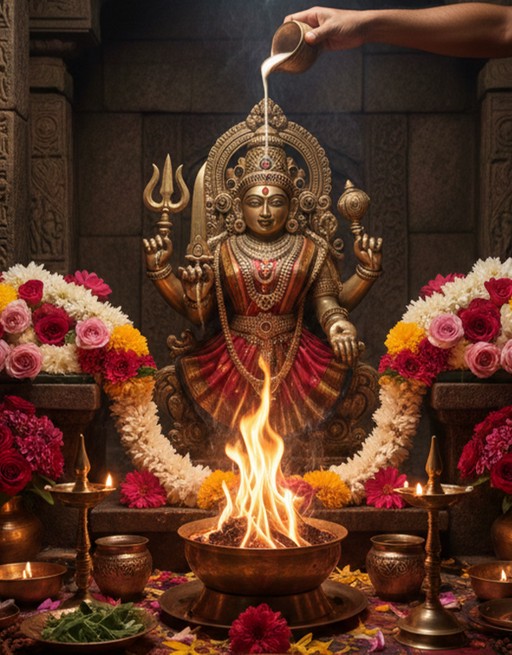
"Chandi Path is the recitation of the Devi Mahatmya, also known as the Durga Saptashati. Seven hundred verses from the Markandeya Purana, recounting the great victories of Maa Durga. Her battle against Mahishasura. Her defeat of Shumbha and Nishumbha. Her many forms as she rises to protect dharma. When the Chandi Path is performed with a Homam (sacred fire ritual), the energy is multiplied. Each verse becomes an offering into the fire."
Mangalik Dosh Nivaran Puja
"Mars is the warrior of the cosmos. The planet of fire, courage, and ambition. When Mangal is well placed, he gives strength and drive. But when he falls into the 1st, 4th, 7th, 8th, or 12th house, the same energy turns sharp. This is Manglik Dosh, the most discussed astrological condition in marriage matching. The dosh shows up during kundli milan. A strong Manglik Dosh in either partner can bring friction, sudden quarrels, and unrest in married life."
Vat Savitri Vrat Katha and Puja
"This vrat is observed by married women across India for the long life and well-being of their husbands. The story behind it is one of the most loved in Hindu tradition. Savitri's husband Satyavan was destined to die young. When Yama, the lord of death, came to take him, Savitri followed them with such unwavering devotion that Yama granted her boon after boon. Finally, she asked for Satyavan's life back. Yama, bound by his own words, returned her husband."
Tulsi Puja
"The Tulsi plant is the holiest plant in Hindu homes. Tradition reveres it as a form of the goddess herself. Lord Vishnu is said to love Tulsi above all leaves. No worship of Vishnu is complete without her. This puja honours Mata Tulsi with the sacred Shaligram. The two stand for the divine bond of Vishnu and his consort. Many homes hold a Tulsi Vivah, the wedding of the plant. Where Tulsi is worshipped, peace and plenty stay. The plant clears the air and guards the home. Its worship brings joy, wealth, and family growth. Devotees water it and light a lamp by it each evening."
Banana Tree Puja
"The banana tree is sacred in Hindu worship. Tradition links it to Guru Brihaspati, the planet of wisdom and fortune. It is also dear to Lord Vishnu and Lord Krishna. A weak Brihaspati in the chart delays marriage and growth. It can also block learning, wealth, and respect. This puja worships the banana tree to strengthen that planet. The tree stands for plenty, faith, and a clean life. Devotees water its roots and tie sacred threads to it. They walk around it and offer prayers for their wishes. The worship is most loved on Thursdays, the day of the Guru."
Markesh Dosh Nivaran Puja
"In a birth chart, some planets rule the span of life. The shastras call the harmful one of these the Markesh. A badly placed Markesh can bring danger to health and life. It stirs illness, fear, and sudden trouble. It can also block marriage, money, and peace. The right Markesh is read from the chart itself. This puja calms that planet through its own mantras. It softens the harm and clears the threat. The seeker then gains health, safety, and steady years. With the dosh settled, good fortune returns. Devotees turn to this puja in times of fear and illness."
Brihaspati Var Vrat Katha
"Brihaspati Var Vrat is the Thursday vrat dedicated to Brihaspati Dev, the cosmic teacher of the gods. Thursday itself is ruled by Brihaspati (Jupiter), the planet of wisdom, marriage, children, and dharmic living. The vrat is one of the most beloved in Hindu tradition. Unmarried devotees observe it for early marriage. Couples observe it for the blessing of children. Families observe it for the rise of fortune and the deepening of faith. Lord Vishnu is invoked alongside Brihaspati Dev, since both share the same expansive, benevolent nature."
Mangalvar Vrat Katha
"Mangalvar Vrat is the Tuesday vrat dedicated to Hanuman Ji. Tuesday itself is the day ruled by Mangal Dev, the planet of strength and courage. Tradition holds that Hanuman Ji, born of fire and wind, is the only deity who fully channels Mangal's energy. The vrat is observed by devotees seeking inner courage, victory over enemies, success in marriage, promotion at work, and freedom from chronic illness. It is one of the most beloved weekday vrats in the Hindu calendar, observed by both men and women."
Indrakshi Puja
"Indrakshi Mata is one of the most powerful protective goddesses in the Vedic tradition. Her name means "she with the eyes of Indra." The Indrakshi Stotra was first taught by Lord Indra himself to sage Brihaspati. It is recited for protection from disease, from enemies, and from the unseen forces that can harm a devotee. For centuries, families have turned to this puja during prolonged illness, mysterious afflictions, and times when conventional remedies have not worked."
Navgrah Shanti Puja
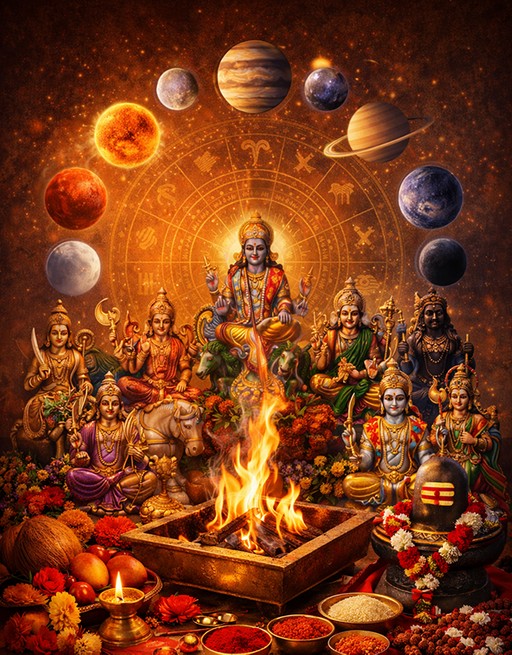
"Every life is shaped by nine celestial forces. Surya, Chandra, Mangal, Budh, Guru, Shukra, Shani, Rahu, and Ketu. These are not distant stars. In Vedic tradition, they are living divine forces. At the moment of birth, their position imprints itself on the soul. That imprint is the birth chart. When the planets are favourably placed, life flows. When they fall into difficult positions, the devotee senses something is out of sync."