Blessings
Haritalika Teej Vrat Katha
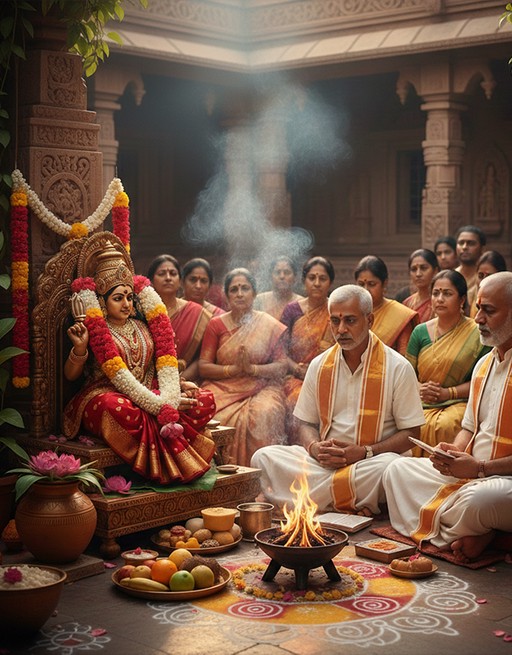
"Haritalika Teej is a sacred fast for women. It honours the union of Lord Shiva and Mata Parvati. The shastras tell how Parvati won Shiva as her husband. She did fierce penance to gain his hand. Her friend took her to the forest to help her resolve. The word Haritalika comes from that very tale. Married women keep this fast for the long life of their husband. Unmarried girls keep it to gain a good groom. They fast without food or water through the day. They worship Shiva and Parvati and hear the sacred katha. The vrat brings married joy and good fortune."
Lord Vitthal Puja
"Lord Vitthal is a beloved form of Lord Krishna. The people of Maharashtra know him as Vithoba and Panduranga. He stands at Pandharpur with his hands on his hips. Rukmini, his consort, stands by his side. The story tells how he waited for his devotee Pundalik. Millions walk to Pandharpur each year to see him. The Warkari saints sang of his love for ages. He grants peace, plenty, and a happy home. This puja calls on Vitthal and Rukmini together. It seeks their grace for wealth, fame, and family joy. Devotees worship him with deep love and song."
Akshaya Navami Puja
"Akshaya Navami is a holy day of lasting merit. The word akshaya means that which never fades. Any good deed done on this day is said to grow forever. The day honours the sacred Amla tree, the gooseberry. Tradition holds that Lord Vishnu lives within the Amla tree. Mata Lakshmi too is said to rest in its shade. Devotees worship under the tree and share a meal there. They water its roots and walk around it in prayer. The day brings wealth, fame, and lasting plenty. It also marks the start of the Vrindavan parikrama. Devotees keep it for grace that never runs out."
Narak Chaturdashi Puja
"Narak Chaturdashi falls the day before Diwali. It is also known as Chhoti Diwali or Roop Chaudas. The shastras tell how Krishna slew the demon Narakasura. His death freed sixteen thousand captives from the demon. The day marks the win of light over dark. People light lamps to drive away all evil. They worship Yamraj to escape the fear of an early death. They also honour Lakshmi, Ganesh, and Vishnu together. An oil bath at dawn is a key part of the day. It is said to wash away sin and bring beauty. The day clears negative force and brings family joy."
Karnavedha Sanskaar Puja
"Karnavedha is the piercing of a child's ears. It is one of the sixteen sacred sanskars of Hindu life. The rite is far older than mere custom or style. Ayurveda holds that the ear point aids health and mind. The shastras say it opens the child to sacred sound. It guards against illness and sharpens the senses. The rite is done in the early years of life. The worship begins with Ganpati to clear all blocks. Vishnu and the Ishta Devta are honoured for grace. Families gather to bless the child on this day. Done in Kashi, the rite carries the highest merit."
Ganapati Atharvashirsha Path
"The Ganapati Atharvashirsha is the supreme prayer to Lord Ganesha. Drawn from the Atharva Veda, it declares Ganesha not just as a deity, but as the supreme Brahman himself, the source of all reality. The text is unique in its philosophical depth. Where most Ganesha prayers ask for the removal of obstacles, the Atharvashirsha invokes Ganesha as the highest cosmic principle. To recite it as a focused path is to invite the deepest, most powerful form of Ganesha's grace into the home."
Shree Purusha Sukta Path and Yajna
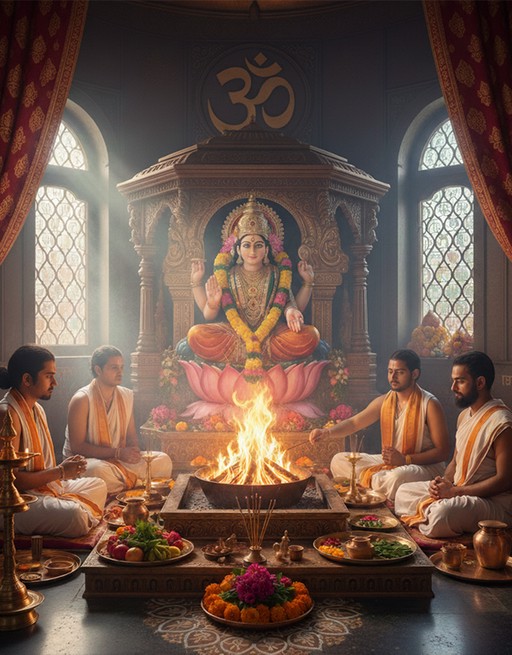
"The Purusha Sukta is one of the most ancient and sacred hymns in the Rigveda. It describes the Purusha, the cosmic being, from whose body the entire universe is created. The sky is his head. The earth is his feet. The sun is his eye. The hymn is the foundation of Vedic philosophy itself, and is recited at every major yajna across the Hindu tradition. The Purusha Sukta is considered the supreme prayer to Vishnu in his cosmic form. To have it recited as a focused path with yajna is to align the family's life with the cosmic order itself."
Raksha Bandhan Puja
"Raksha Bandhan is the festival of sacred protection. The word raksha means "protection," and bandhan means "bond." On this day, sisters tie the sacred raksha thread on their brothers' wrists, asking the divine to keep them safe through the year ahead. Brothers, in return, vow to protect their sisters always. The bond is older than the festival itself. Tradition holds that even the gods have tied raksha threads. Indrani once tied one on Indra before his battle with Vritra, and he won."
Vishwakarma Puja
"Vishwakarma is the divine architect of the cosmos. He is called Dev Shilpi, the celestial craftsman. Tradition holds that he designed the city of Lanka in gold, the city of Dwarka for Lord Krishna, the palace of Indra in heaven, and the weapons of the gods themselves. His blessing rests on every tool, every machine, every workplace, and every piece of work created with skill. To worship Vishwakarma is to ask the original architect to bless the work of one's own hands."
Vasant Panchami Puja
"Vasant Panchami is the festival dedicated entirely to Maa Saraswati. The day falls in the bright fortnight of Magha, when spring begins. It marks the awakening of the earth itself, and the awakening of the mind in the devotee. Tradition holds that on this day, Saraswati Mata first emerged from Lord Brahma's mouth, bringing with her the gift of knowledge, music, and the arts. Schools, libraries, and homes across India worship her on this day, seeking the blessing of learning and creative inspiration."
Gau (Cow) Puja
"The cow is the most sacred animal in Hindu tradition. She is called Gau Mata, the mother cow. Tradition holds that all the gods reside within her body. Lord Brahma in her face. Lord Shiva in her forehead. Lord Vishnu in her shoulders. The Ganga, the Yamuna, and the Saraswati in her hooves. To touch a cow with devotion is to touch every deity at once. To offer her food and worship her is to honour the source of life itself, since the cow gives milk to humans and feeds the soil for every crop."
Shiv Parivar Pujan and Yajna
"The Shiv Parivar is the divine family. Lord Shiva. Mata Parvati. Lord Ganesha. Lord Kartikeya. Nandi, the sacred bull. Together they are the original family of the cosmos. The model of harmony, mutual love, and family devotion. To worship the Shiv Parivar together is to invite all of these blessings into the devotee's own home. Each member of the family carries a specific grace. Together, they bless the home with completeness."


-puja-65265027289f0ede88af4b82-92241301-s.jpg&w=3840&q=70)