
Vedic Puja
Panchawati Pooja
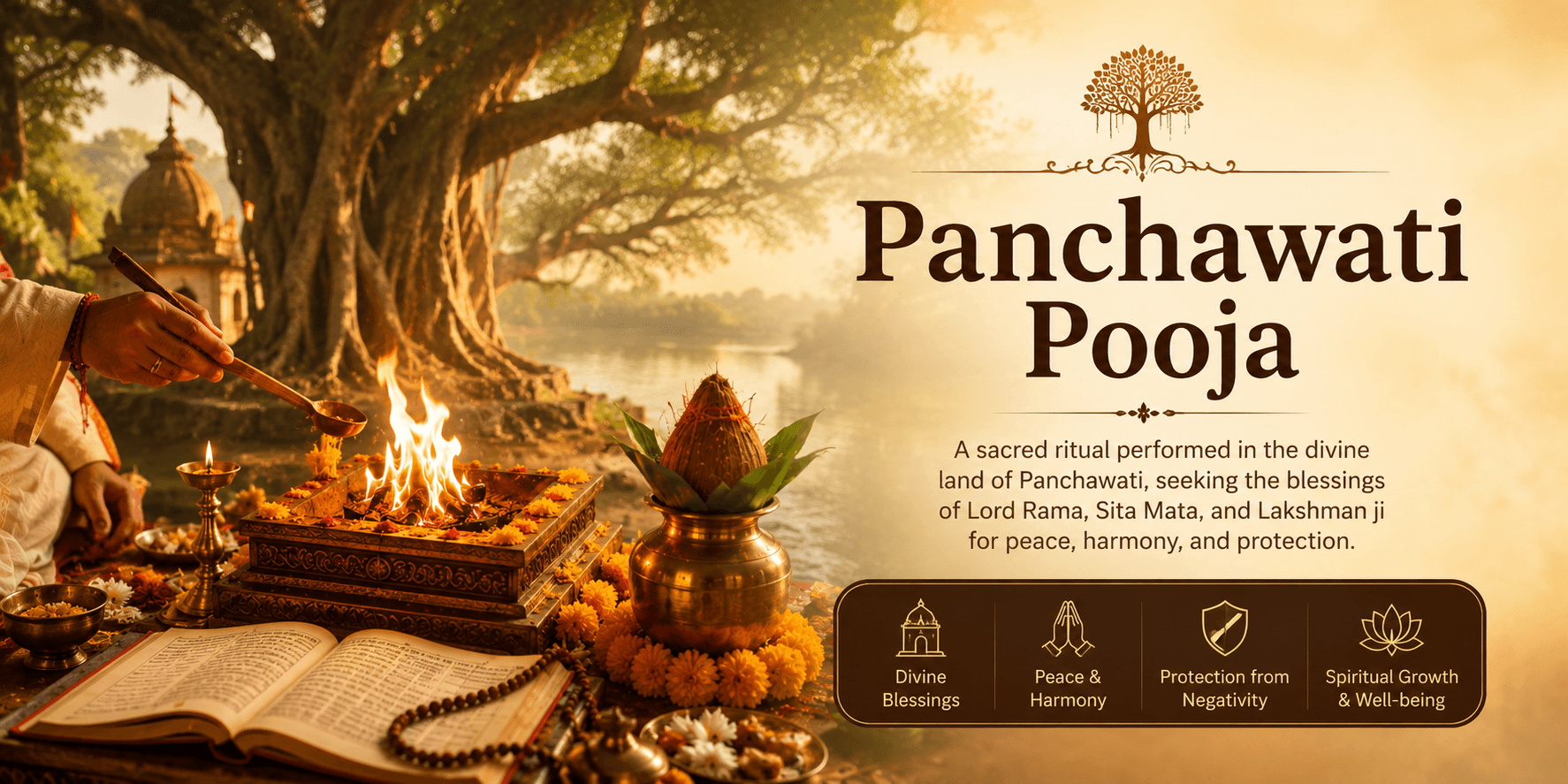
"Panchawati is the sacred grove of five trees. Peepal, Bargad, Ashoka, Amla, and Bilva. These are the same five trees that grew around the home of Lord Ram, Sita Mata, and Lakshman during their fourteen years of exile in the forest. Tradition holds that wherever the Panchawati grows, dharma is established. The trees themselves carry the blessings of Ram, of the rishis who lived among them, and of the natural forces they represent."
Tripura Sundari Shodashi Puja and Yajna
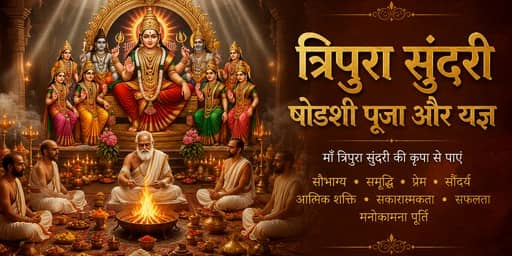
"This puja honours Tripura Sundari Mata, the third of the ten Mahavidyas, in her form as Shodashi. While the Shri Vidya path focuses on the deeper sadhana of the goddess, this puja focuses on her grace as a mother who blesses the home. It is the puja chosen by families who want her warmth more than her formal initiation. Tripura Sundari rules over the joy of being alive. The beauty of relationships. The blessing of a home that feels full. To worship her is to invite that fullness into daily life."
Kali Puja and Yajna
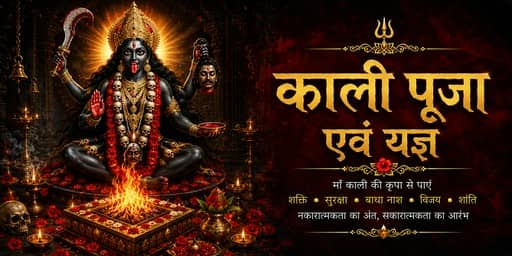
"Kali Mata is the first of the ten Mahavidyas. She is the supreme mother in her most powerful form. Dark as the night sky. Wearing a garland of skulls. Holding a sword in one hand and a severed head in the other. Standing on Lord Shiva himself, who lies beneath her in surrender. Kali is time. Kali is death. Kali is the force that destroys what must end so that what is true may rise. Her devotees turn to her not for gentle blessings but for absolute protection."
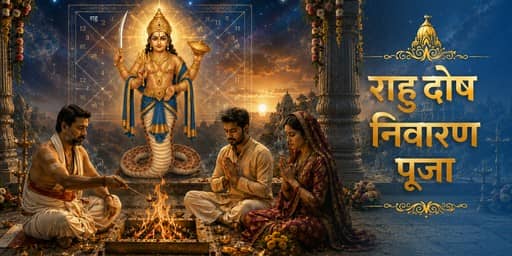
Rahu Dosh Nivaran Puja
"Rahu has no physical body. He is a shadow. The severed head of an asura who once tasted the nectar of immortality and was cursed to remain forever between worlds. He casts illusions. He magnifies desires. He unsettles whatever he touches. In a modern devotee's life, Rahu shows up as obsession, mental fog, addiction, restlessness, and sudden gains followed by sudden losses. The mind cannot rest. Sleep is troubled. Decisions are made in haste and regretted at leisure."
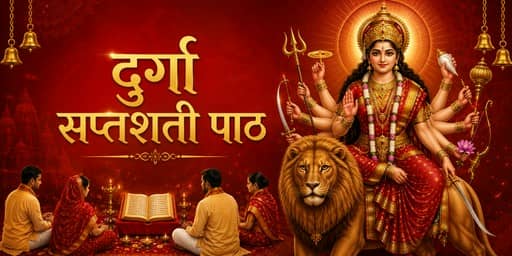
Durga Saptashati Path
"Durga Saptashati is also known as the Devi Mahatmya. The Glory of the Goddess. The text has seven hundred verses drawn from the Markandeya Purana. They recount the great stories of Maa Durga's victories. Her birth from the combined energies of the gods. Her epic battle against Mahishasura. Her defeat of Shumbha and Nishumbha. For over fifteen centuries, devotees across India have recited it during Navratri and at every moment of crisis. The very chanting of its verses summons the goddess into the room. Each chapter is itself an invocation."
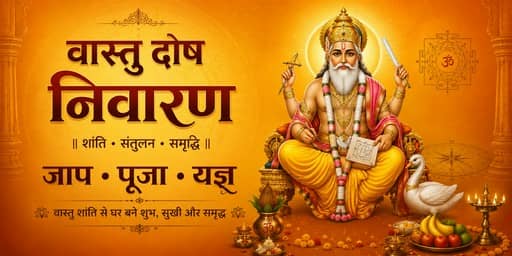
Vastu Dosh Nivaran Jaap Puja and Yajna
"In Vedic tradition, a building is never just a building. Every home is a living entity. It breathes in the energies of the earth beneath it, the sky above it, and the directions around it. When these energies flow in harmony, the home becomes a sanctuary. Prosperity gathers. Sleep is restful. Relationships soften. When the energies are obstructed, the same home can quietly weigh upon the lives within it. The Matsya Purana tells the story of Vastu Dev. The devas pressed his body face-down into the earth, and Lord Brahma blessed him. Any structure built upon his pinned body would prosper, but only if his presence and the directions were honoured."
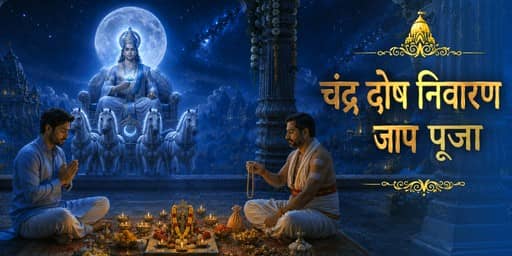
Chandra Dosh Nivaran Puja Jaap
"The Moon governs the mind. He is the planet of feelings, memory, intuition, and the inner self. When Chandra is well placed, the mind is calm. Intuition flows. Sleep is restful. When he is afflicted, the inner weather turns. Moods shift without reason. Sleep grows troubled. Memory feels unreliable. The devotee may feel emotionally fragile in ways they cannot explain. After Chandra was once cursed by Daksha to wane away, he prayed to Lord Shiva. Shiva lifted him onto his matted locks and gave him refuge. Since then, Shiva has been known as Chandrashekhar, the one who wears the moon."
Durga Puja
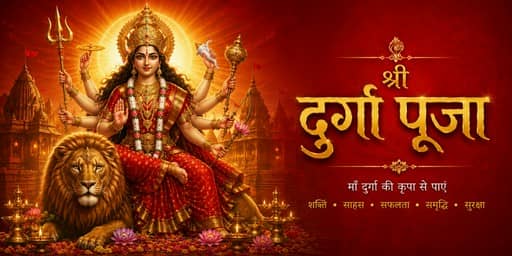
"Maa Durga rides a lion. She holds eighteen weapons in her many arms. Each weapon is a gift from a different god. Her gaze is the gaze of a mother who will let nothing harm her children. The demon Mahishasura had a boon. No man, no god could kill him. He defeated even Indra. The gods released their combined energies. From that fire, Maa Durga emerged. After nine days of battle, on the tenth day, she slew Mahishasura. That day is Vijayadashami."
Tara Devi Puja and Yajna
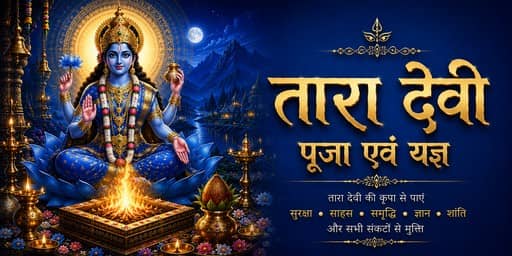
"Tara Devi is the second of the ten Mahavidyas. Her name means "she who carries across." She is the goddess who carries the soul across the ocean of suffering. Across fear. Across confusion. Across the dark phases of life. She appears with a fierce form, but her energy is deeply maternal. She destroys what threatens her devotees, while holding them close. In some traditions, Tara is also worshipped as a form of Kali Mata. Wherever she is invoked, lost souls find their way home."
Shrapit Dosh Nivaran Puja
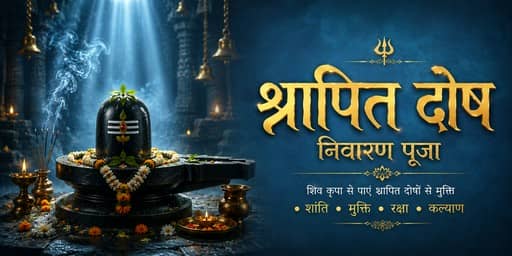
"Shrapit Dosh is one of the most demanding karmic afflictions in Vedic astrology. It forms when Rahu and Shani occupy the same house, or sit in mutual aspect. Their combined energy is so heavy that ancient sages described it as the weight of an unresolved curse from a previous lifetime. The word shrapit literally means "the cursed one." But this is not punishment. A curse is simply unfinished karma, an action whose consequences travel across lifetimes seeking resolution. The soul does not remember. But the chart does."
Katyayani Devi Puja
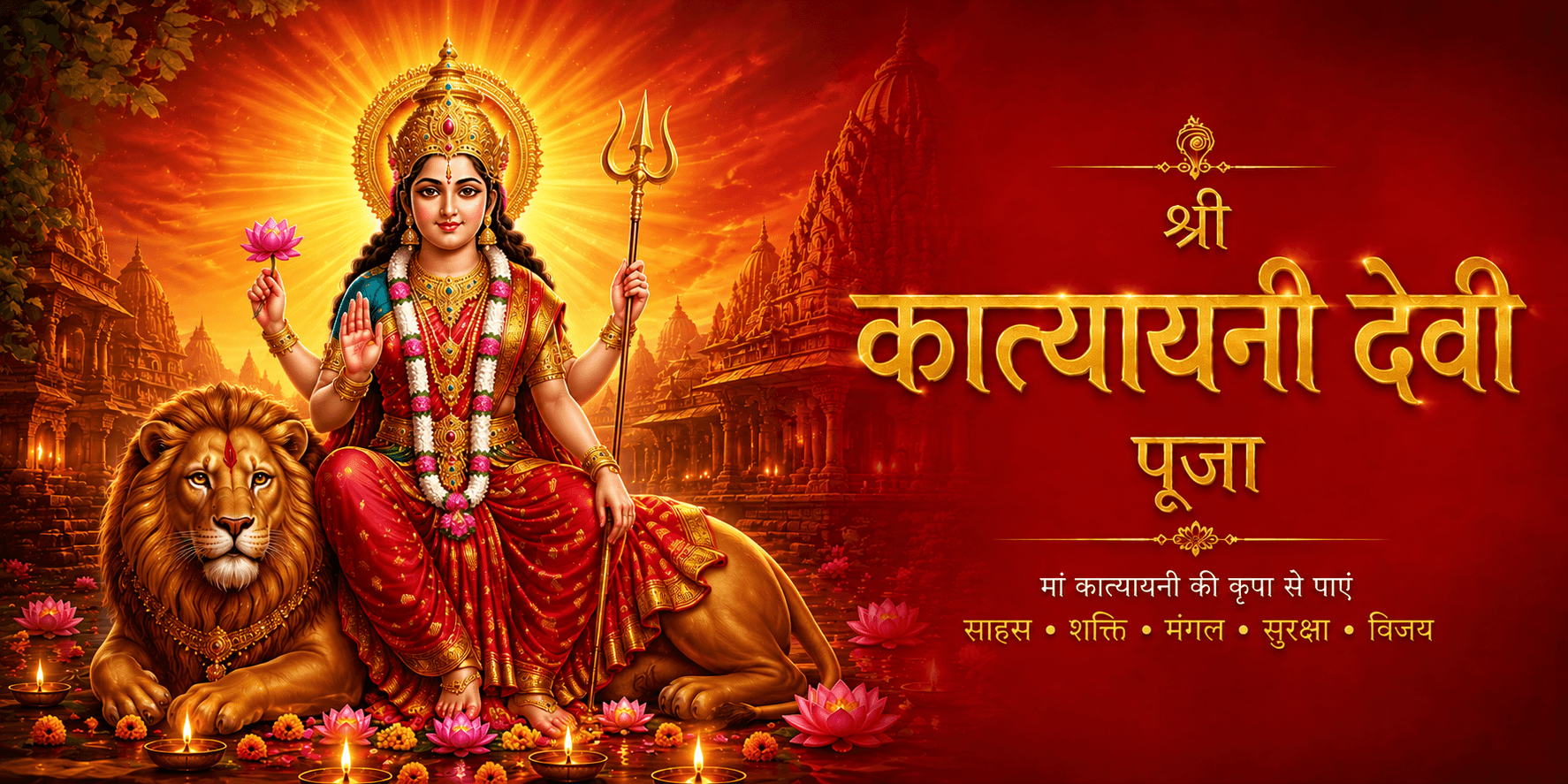
"Katyayani Mata is the sixth of the nine forms of Maa Durga. She was born to the sage Katyayana, after years of his penance, with the combined energy of Brahma, Vishnu, and Mahesh. She emerged to slay the demon Mahishasura. But her warrior origins are not why most devotees come to her. For centuries, she has been known as the granter of soulmates. The unmarried gopis of Vrindavan once prayed to her for Lord Krishna himself as their husband. She answered them."