
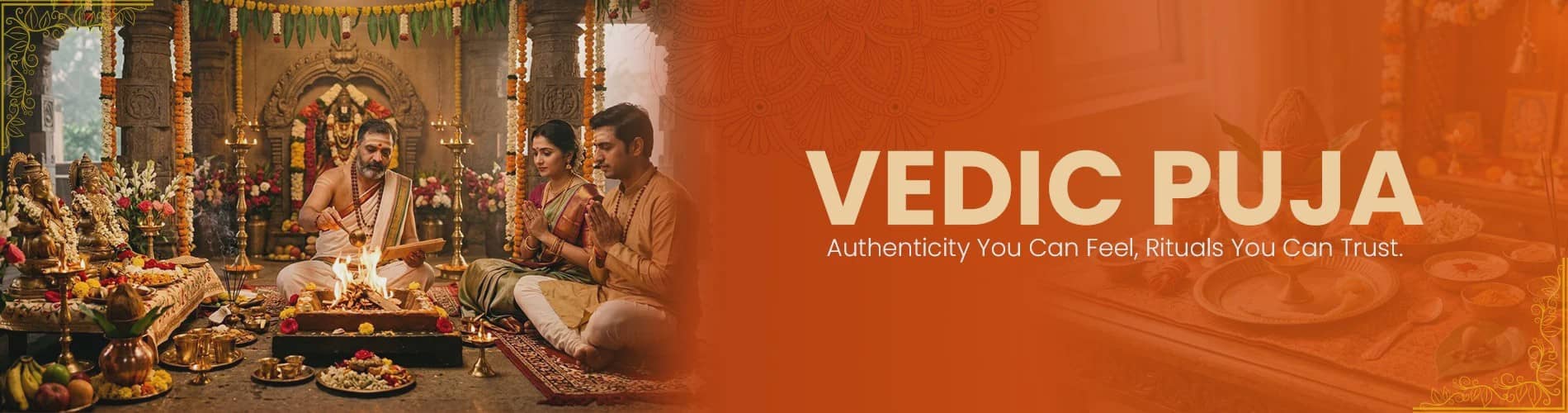
Vedic Puja
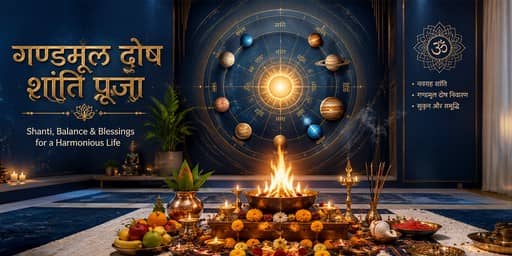
Gandmool Dosh Shanti Puja
"This puja is performed for newborn children born with one of two related afflictions. Mool Dosh and Gandant Dosh. Both come from where the Moon was placed at the moment of birth. Mool Dosh is identified when a child is born under one of the six Gandmool Nakshatras. Ashwini, Ashlesha, Magha, Jyeshtha, Mool, or Revati. Gandant Dosh is identified when a child is born at the precise junction between a water sign and a fire sign in the Moon's position. Cancer to Leo. Scorpio to Sagittarius. Pisces to Aries. These are the knots of the cosmos."
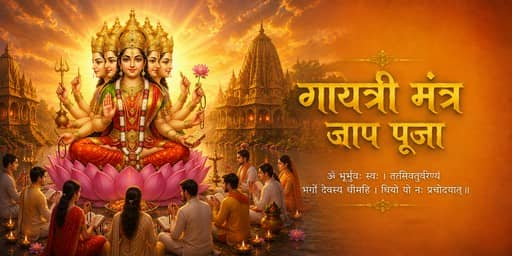
Gayatri Mantra Jaap Puja
"The Gayatri Mantra is called the mother of all Vedic mantras. Sage Vishwamitra first revealed it in the Rigveda. It is a prayer to Savitr, the divine source of light. It asks for one thing only. That our intellect be lit, and our path guided by wisdom."
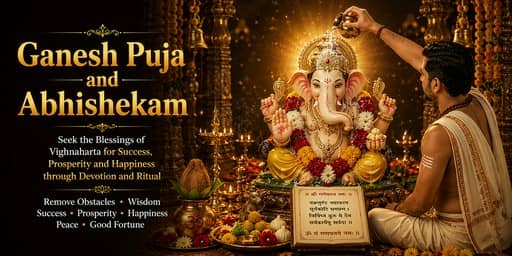
Ganesh Puja and Abhishekam
"Ganesh Ji is the first deity worshipped in every Hindu ritual. Families call on him before weddings, new homes, new businesses, and exams. He clears the path. He blesses the work ahead. Tradition says he is easily pleased. Laddus, modaks, and devotion are enough. Once Ganesh Ji is pleased, he also calls on Shree Lakshmi Mata to bless the home with wealth."
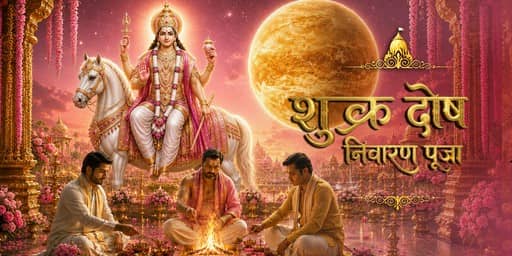
Shukra Dosh Nivaran Puja
"Shukra is the planet of love, beauty, comfort, art, and marital harmony. He is the divine connoisseur, the deity who teaches the soul to enjoy creation and share love generously. When Shukra shines strong, relationships flow. The home is graced with warmth. Marital life feels tender. Financial comforts arrive with ease. When his energy is afflicted, the softness withdraws. Relationships grow distant or conflicted. The beauty seems to drain from familiar things. Women in the family may face health concerns. Life loses its sweetness even when nothing outwardly seems wrong."
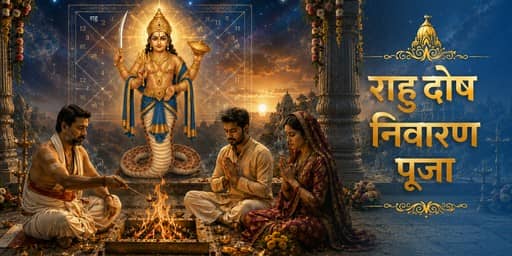
Rahu Dosh Nivaran Puja
"Rahu has no physical body. He is a shadow. The severed head of an asura who once tasted the nectar of immortality and was cursed to remain forever between worlds. He casts illusions. He magnifies desires. He unsettles whatever he touches. In a modern devotee's life, Rahu shows up as obsession, mental fog, addiction, restlessness, and sudden gains followed by sudden losses. The mind cannot rest. Sleep is troubled. Decisions are made in haste and regretted at leisure."
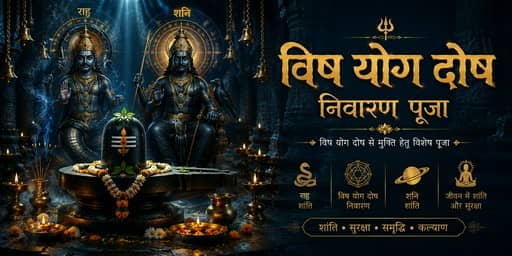
Visha Yog Dosh Nivaran Puja
"Visha Yog forms when the Moon and Saturn come together in the same house. Ancient sages named it Visha, meaning poison. When the gentle, emotional energy of the Moon merges with the cold, restrictive energy of Saturn, the blend behaves like a slow-acting poison. Quiet. Persistent. Hard to identify. The mind feels weighed down. Emotional life feels muted. Health takes a slow downward turn, often in ways that resist clear diagnosis. Income flows are restricted. Sleep becomes difficult. The devotee senses they are walking slightly out of sync with their own happiness."
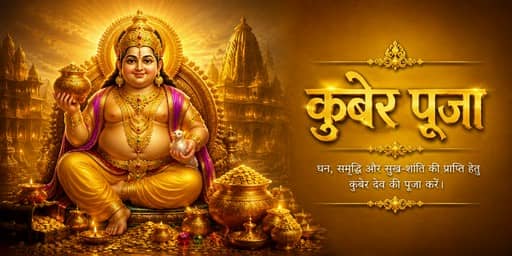
Kuber Puja
"Kuber is the treasurer of the gods. The keeper of all wealth in the universe. He once did severe penance to Lord Shiva and was rewarded with the duty of guarding the treasures of the cosmos. He lives in Alaka, the legendary city of gold in the Himalayas. Lakshmi Mata brings wealth into a home. Kuber makes sure it stays. This is the puja for stable, protected, lasting wealth."
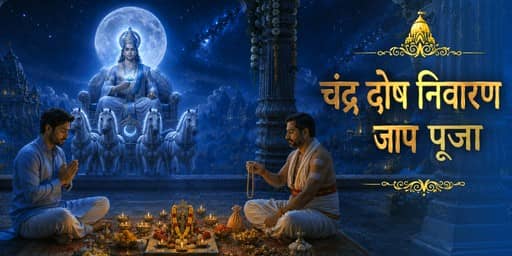
Chandra Dosh Nivaran Puja Jaap
"The Moon governs the mind. He is the planet of feelings, memory, intuition, and the inner self. When Chandra is well placed, the mind is calm. Intuition flows. Sleep is restful. When he is afflicted, the inner weather turns. Moods shift without reason. Sleep grows troubled. Memory feels unreliable. The devotee may feel emotionally fragile in ways they cannot explain. After Chandra was once cursed by Daksha to wane away, he prayed to Lord Shiva. Shiva lifted him onto his matted locks and gave him refuge. Since then, Shiva has been known as Chandrashekhar, the one who wears the moon."
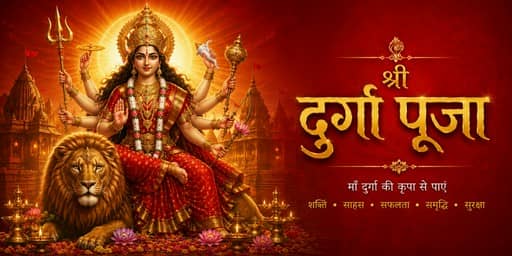
Durga Puja
"Maa Durga rides a lion. She holds eighteen weapons in her many arms. Each weapon is a gift from a different god. Her gaze is the gaze of a mother who will let nothing harm her children. The demon Mahishasura had a boon. No man, no god could kill him. He defeated even Indra. The gods released their combined energies. From that fire, Maa Durga emerged. After nine days of battle, on the tenth day, she slew Mahishasura. That day is Vijayadashami."
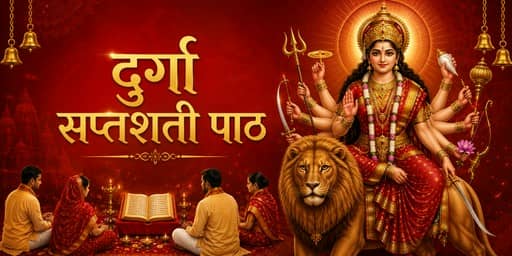
Durga Saptashati Path
"Durga Saptashati is also known as the Devi Mahatmya. The Glory of the Goddess. The text has seven hundred verses drawn from the Markandeya Purana. They recount the great stories of Maa Durga's victories. Her birth from the combined energies of the gods. Her epic battle against Mahishasura. Her defeat of Shumbha and Nishumbha. For over fifteen centuries, devotees across India have recited it during Navratri and at every moment of crisis. The very chanting of its verses summons the goddess into the room. Each chapter is itself an invocation."
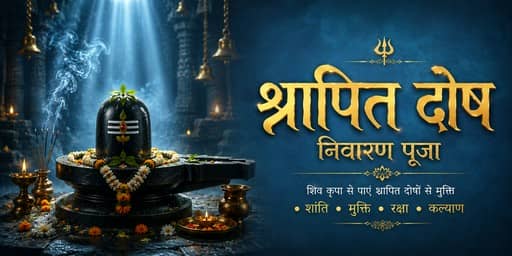
Shrapit Dosh Nivaran Puja
"Shrapit Dosh is one of the most demanding karmic afflictions in Vedic astrology. It forms when Rahu and Shani occupy the same house, or sit in mutual aspect. Their combined energy is so heavy that ancient sages described it as the weight of an unresolved curse from a previous lifetime. The word shrapit literally means "the cursed one." But this is not punishment. A curse is simply unfinished karma, an action whose consequences travel across lifetimes seeking resolution. The soul does not remember. But the chart does."