
Vedic Puja
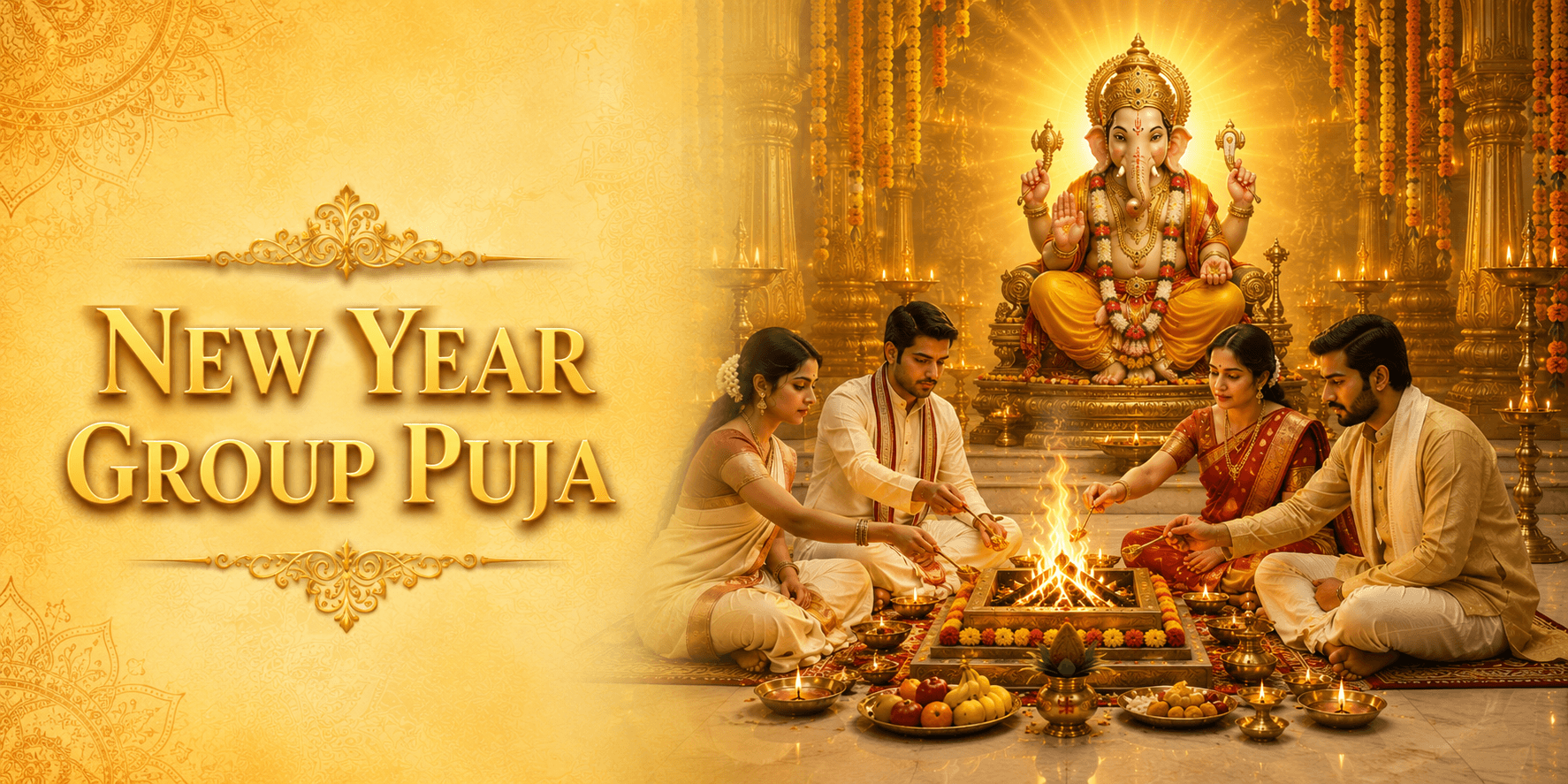
New Year Group Puja
"The Vedic tradition never begins anything important without a sankalp, and no sankalp is larger than a whole year. This group puja takes that sankalp on the first day of the year, in Kashi. Ganesh Ji is worshipped first, as he must be, to clear the path of the twelve months ahead. Vishnu Ji is invoked to preserve and carry every undertaking. Lakshmi Mata is invoked for prosperity through the year. The Navagraha are pacified so that no planetary period turns a good year sour. The worship closes with the Panch Devta, the five deities of the Panchayatana tradition, Ganesh, Vishnu, Shiva, Devi, and Surya, whose combined presence leaves no direction unguarded."
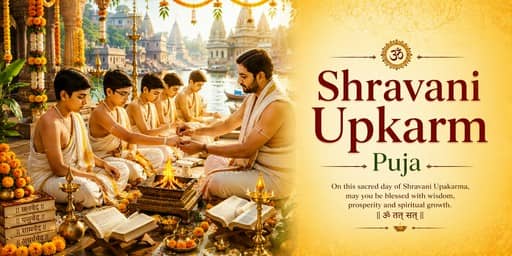
Shravani Upkarm Puja
"Shravani Upkarm is an old Vedic rite of renewal. It falls on the full moon of the month of Shravan. On this day the sacred thread, the janeu, is changed. The old thread is set aside and a new one is worn. The rite honours the Saptarishi, the seven great sages. It is a day to thank them for the gift of the Vedas. The worship washes away the sins of the past year. It renews the seeker's vow to a clean and learned life. Bathing in the Ganga is a key part of the rite. It is most sacred when done on the Kashi ghats."
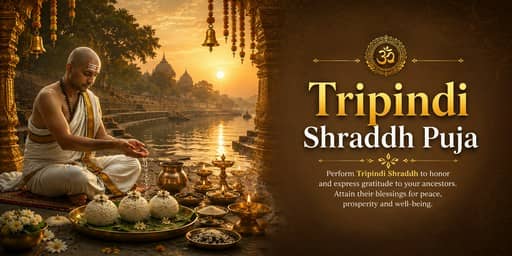
Tripindi Shraddh Puja
"Tripindi Shraddh is a special rite from the shastras. It is meant for ancestors whose last rites were left undone. When a death goes without proper shraddh, the soul stays restless. This unrest can carry on for three generations. It then shows as Pitra Dosha in the family line. The dosha blocks marriage, children, health, and growth. Tripindi Shraddh settles the debt of all three generations at once. The word tripindi points to these three layers of ancestors. The rite gives them rest and lifts their grace upon the family. Kashi is held the best place on earth for this puja."
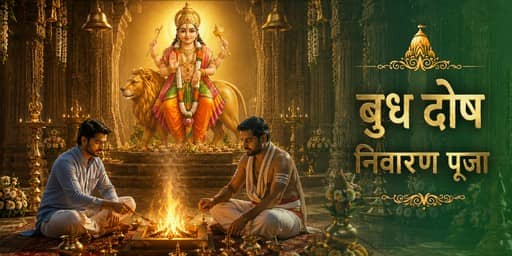
Budh Dosh Nivaran Puja
"Budh is the youngest of the classical planets and the most quick-witted. The messenger of the cosmos. The deity of intellect, communication, learning, and skilled craft. He turns thought into words, and words into influence. When Budh shines strong, the devotee speaks with clarity and moves through ideas with ease. When his energy is afflicted, the gifts reverse. Words stumble. Thoughts scatter. Decisions feel impossible. The nervous system grows strained. For students, this can mean dropping grades. For professionals, losing influence. For everyone, the inner voice loses its clarity."
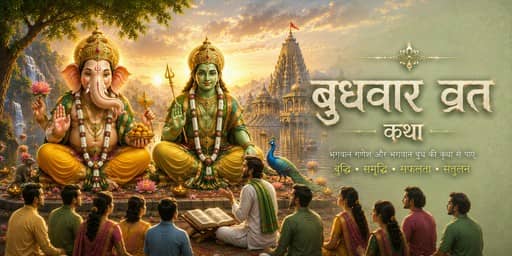
Budhwar Vrat and Katha
"Budhwar Vrat is the Wednesday vrat dedicated to Budh Dev. Wednesday itself is ruled by Budh (Mercury), the planet of intellect, communication, and skilled work. The vrat is observed by devotees seeking sharper thinking, better speech, business growth, and family happiness. Lord Ganesha and Lord Krishna are invoked alongside Budh Dev. Ganesha is the deity of intellect itself. Krishna is the master of speech and persuasion. Together with Budh, they form the most powerful combination for everything Mercury governs."
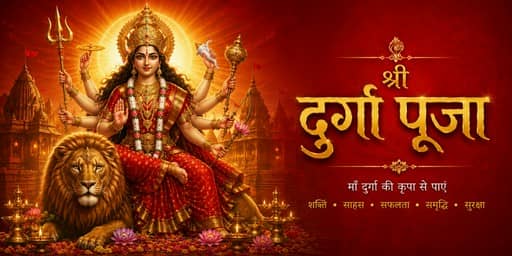
Durga Puja
"Maa Durga rides a lion. She holds eighteen weapons in her many arms. Each weapon is a gift from a different god. Her gaze is the gaze of a mother who will let nothing harm her children. The demon Mahishasura had a boon. No man, no god could kill him. He defeated even Indra. The gods released their combined energies. From that fire, Maa Durga emerged. After nine days of battle, on the tenth day, she slew Mahishasura. That day is Vijayadashami."
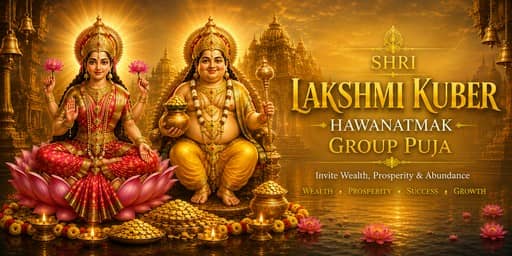
Lakshmi Kuber Hawanatmak Group Puja
"Wealth has two sides, and this hawan worships both. Lakshmi Mata is the flow of abundance, the wealth that arrives. Kuber Ji is the lord of the stored treasure, the wealth that stays. He is the treasurer of the devtas, the dikpala who guards the north, the direction of wealth itself, and the keeper of the nine nidhis, the fabled treasures of the cosmos. The tradition of worshipping them together is ancient and precise. On Dhanteras and Deepawali, Lakshmi Pujan is held incomplete without Kuber beside her. Her grace brings wealth in. His grace stops it from slipping away."
Shrapit Dosh Nivaran Puja
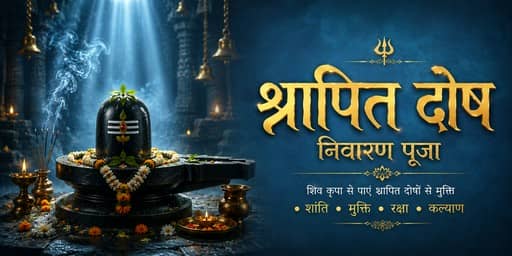
"Shrapit Dosh is one of the most demanding karmic afflictions in Vedic astrology. It forms when Rahu and Shani occupy the same house, or sit in mutual aspect. Their combined energy is so heavy that ancient sages described it as the weight of an unresolved curse from a previous lifetime. The word shrapit literally means "the cursed one." But this is not punishment. A curse is simply unfinished karma, an action whose consequences travel across lifetimes seeking resolution. The soul does not remember. But the chart does."
Katyayani Devi Puja
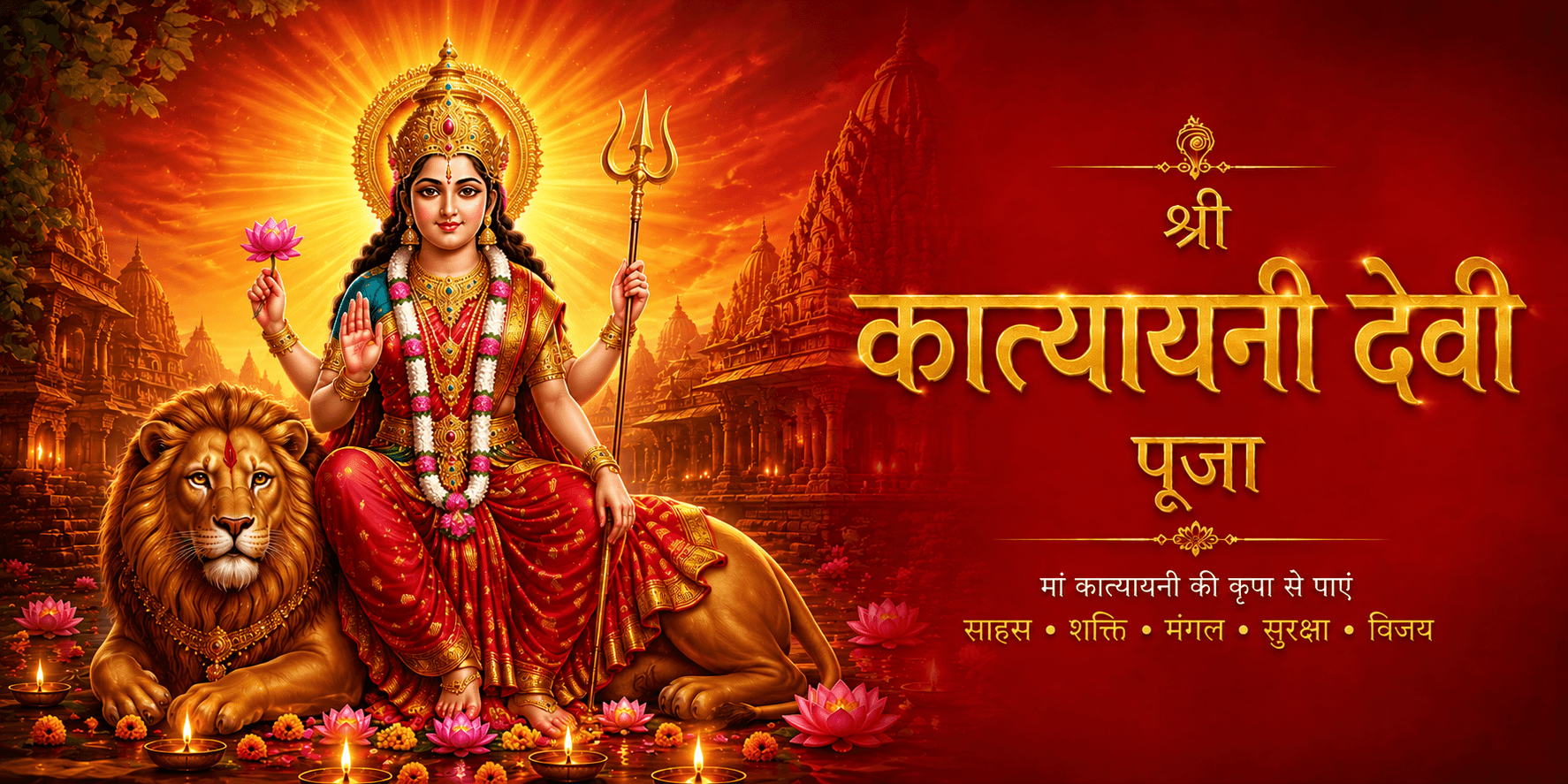
"Katyayani Mata is the sixth of the nine forms of Maa Durga. She was born to the sage Katyayana, after years of his penance, with the combined energy of Brahma, Vishnu, and Mahesh. She emerged to slay the demon Mahishasura. But her warrior origins are not why most devotees come to her. For centuries, she has been known as the granter of soulmates. The unmarried gopis of Vrindavan once prayed to her for Lord Krishna himself as their husband. She answered them."
Saraswati Pujan
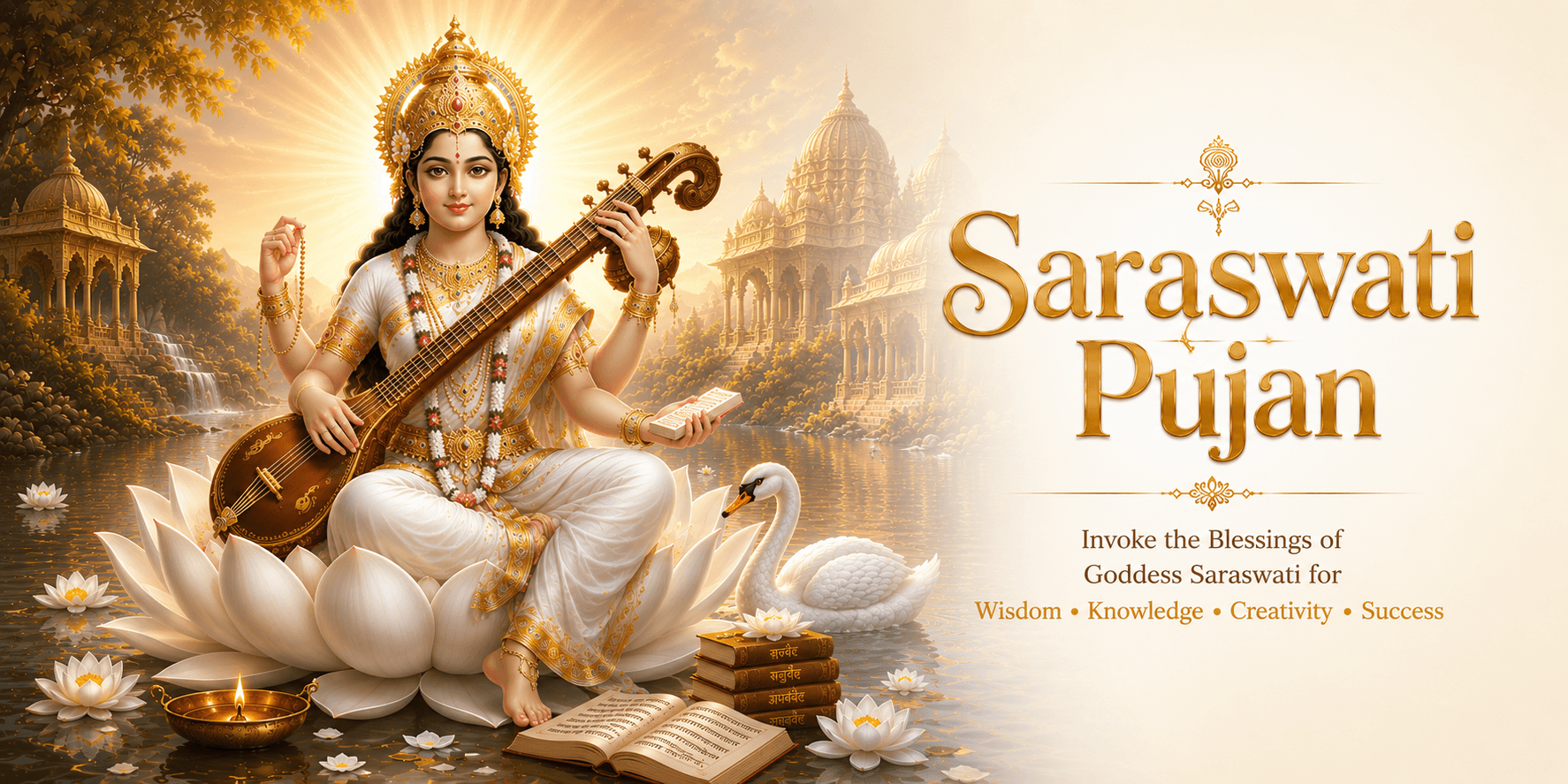
"Saraswati Mata is the goddess of all learning. She sits on a white lotus, dressed in pure white. She holds the veena. A book and a rosary rest at her side. Three great goddesses share the work of the universe. Lakshmi gives wealth. Durga gives strength. Saraswati gives the rarest gift of all. The light of true knowledge."
Arisht Gun Dosh Nivaran Puja
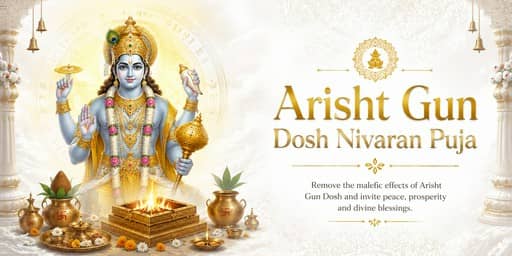
"Every birth chart carries the marks of the nine planets. Some sit in good houses and bring good results. Others fall in bad houses and turn harmful. The shastras call these harmful planets the Arishta Grah. Their bad placement blocks health, wealth, and peace. Work stalls, money slips, and worries pile up. The person tries hard but the results do not come. This puja finds the planets that cause the harm. It calms them through their own mantras and offerings. Once settled, they stop their harm and turn kind. The chart then opens the way to good results."