
Vedic Puja
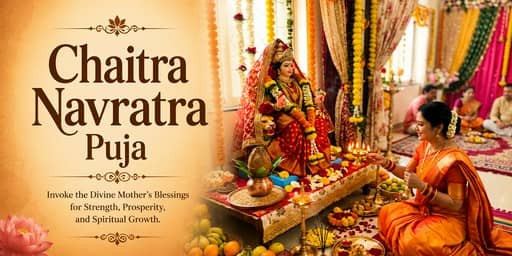
Chaitra Navratra Puja
"Chaitra Navratri brings the nine sacred nights of the Goddess. They fall at the start of the Hindu new year, in the month of Chaitra. These are among the holiest days in the whole calendar. Devotees worship the nine forms of Durga, one for each day. The first day honours Shailputri and the last honours Siddhidatri. Each form grants a different blessing to the seeker. Many keep fasts and light the akhand jyoti through all nine days. The Mother is said to walk close to her devotees at this time. She gives strength to the weak and wealth to the deserving. People pray to her for safety, courage, and a fresh start."

Shani Sadhe Sati Mantra Jaap Puja
"Sadhe Sati is the seven-and-a-half-year transit of Saturn across the Moon sign. It is the most discussed and most feared Shani period in Vedic astrology. During Sadhe Sati, life often feels relentlessly slow. Every effort takes years to bear fruit. Patience itself begins to feel exhausted. But Sadhe Sati is not punishment. Shani is the cosmic disciplinarian, slow and absolutely just. Those who walk through this transit with devotion emerge stronger, wiser, and aligned with their real purpose."
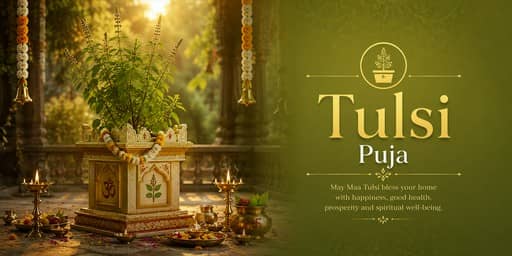
Tulsi Puja
"The Tulsi plant is the holiest plant in Hindu homes. Tradition reveres it as a form of the goddess herself. Lord Vishnu is said to love Tulsi above all leaves. No worship of Vishnu is complete without her. This puja honours Mata Tulsi with the sacred Shaligram. The two stand for the divine bond of Vishnu and his consort. Many homes hold a Tulsi Vivah, the wedding of the plant. Where Tulsi is worshipped, peace and plenty stay. The plant clears the air and guards the home. Its worship brings joy, wealth, and family growth. Devotees water it and light a lamp by it each evening."
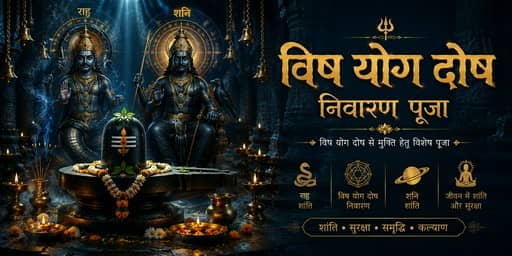
Visha Yog Dosh Nivaran Puja
"Visha Yog forms when the Moon and Saturn come together in the same house. Ancient sages named it Visha, meaning poison. When the gentle, emotional energy of the Moon merges with the cold, restrictive energy of Saturn, the blend behaves like a slow-acting poison. Quiet. Persistent. Hard to identify. The mind feels weighed down. Emotional life feels muted. Health takes a slow downward turn, often in ways that resist clear diagnosis. Income flows are restricted. Sleep becomes difficult. The devotee senses they are walking slightly out of sync with their own happiness."
Annaprashan Sanskar Puja
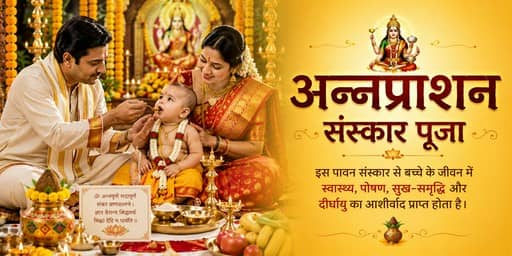
"Annaprashan is the child's first taste of solid food. It is one of the sixteen sacred sanskars of Hindu life. Until now the child has lived on its mother's milk. This rite marks the first bite of grain. It is done around the sixth month for a boy. For a girl it is done in the fifth or seventh month. The first food is often kheer, sweet and soft. The rite seeks the grace of Annapurna, the goddess of food. It prays that the child never goes hungry in life. The worship begins with Ganpati to clear all blocks. Families gather to bless the child on this happy day."
Tripura Sundari Shodashi Puja and Yajna
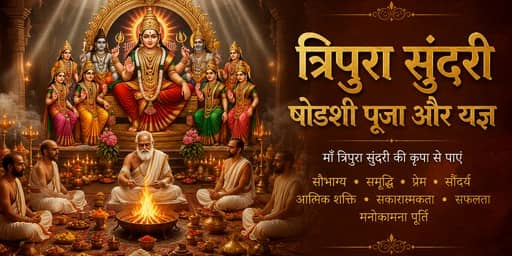
"This puja honours Tripura Sundari Mata, the third of the ten Mahavidyas, in her form as Shodashi. While the Shri Vidya path focuses on the deeper sadhana of the goddess, this puja focuses on her grace as a mother who blesses the home. It is the puja chosen by families who want her warmth more than her formal initiation. Tripura Sundari rules over the joy of being alive. The beauty of relationships. The blessing of a home that feels full. To worship her is to invite that fullness into daily life."
Durga Puja
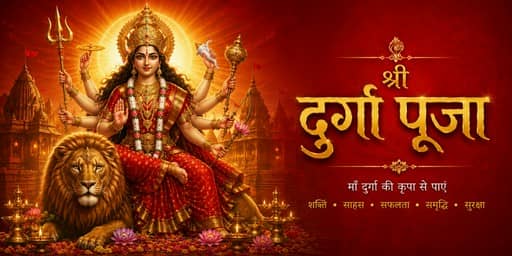
"Maa Durga rides a lion. She holds eighteen weapons in her many arms. Each weapon is a gift from a different god. Her gaze is the gaze of a mother who will let nothing harm her children. The demon Mahishasura had a boon. No man, no god could kill him. He defeated even Indra. The gods released their combined energies. From that fire, Maa Durga emerged. After nine days of battle, on the tenth day, she slew Mahishasura. That day is Vijayadashami."
Tara Devi Puja and Yajna
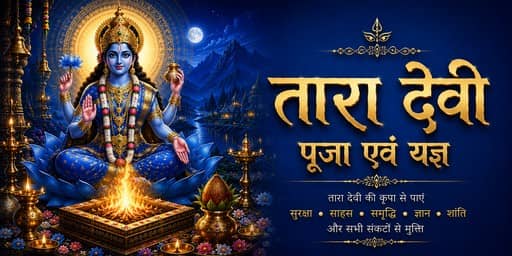
"Tara Devi is the second of the ten Mahavidyas. Her name means "she who carries across." She is the goddess who carries the soul across the ocean of suffering. Across fear. Across confusion. Across the dark phases of life. She appears with a fierce form, but her energy is deeply maternal. She destroys what threatens her devotees, while holding them close. In some traditions, Tara is also worshipped as a form of Kali Mata. Wherever she is invoked, lost souls find their way home."
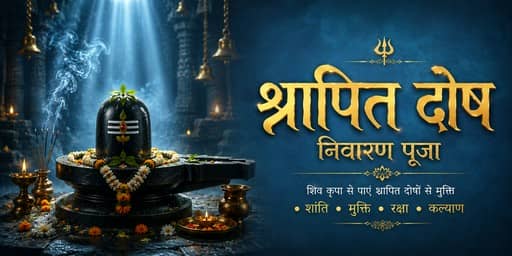
Shrapit Dosh Nivaran Puja
"Shrapit Dosh is one of the most demanding karmic afflictions in Vedic astrology. It forms when Rahu and Shani occupy the same house, or sit in mutual aspect. Their combined energy is so heavy that ancient sages described it as the weight of an unresolved curse from a previous lifetime. The word shrapit literally means "the cursed one." But this is not punishment. A curse is simply unfinished karma, an action whose consequences travel across lifetimes seeking resolution. The soul does not remember. But the chart does."
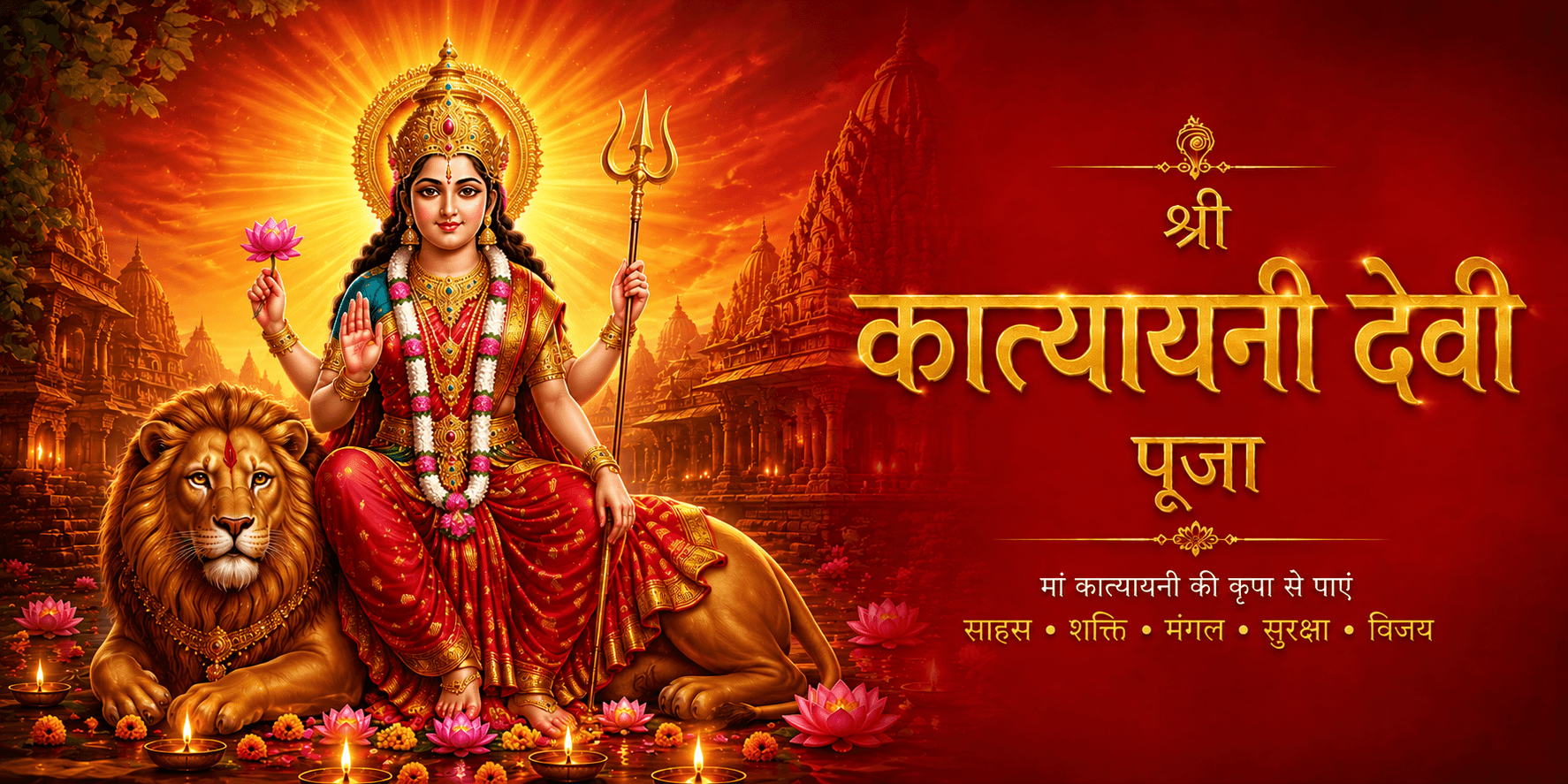
Katyayani Devi Puja
"Katyayani Mata is the sixth of the nine forms of Maa Durga. She was born to the sage Katyayana, after years of his penance, with the combined energy of Brahma, Vishnu, and Mahesh. She emerged to slay the demon Mahishasura. But her warrior origins are not why most devotees come to her. For centuries, she has been known as the granter of soulmates. The unmarried gopis of Vrindavan once prayed to her for Lord Krishna himself as their husband. She answered them."
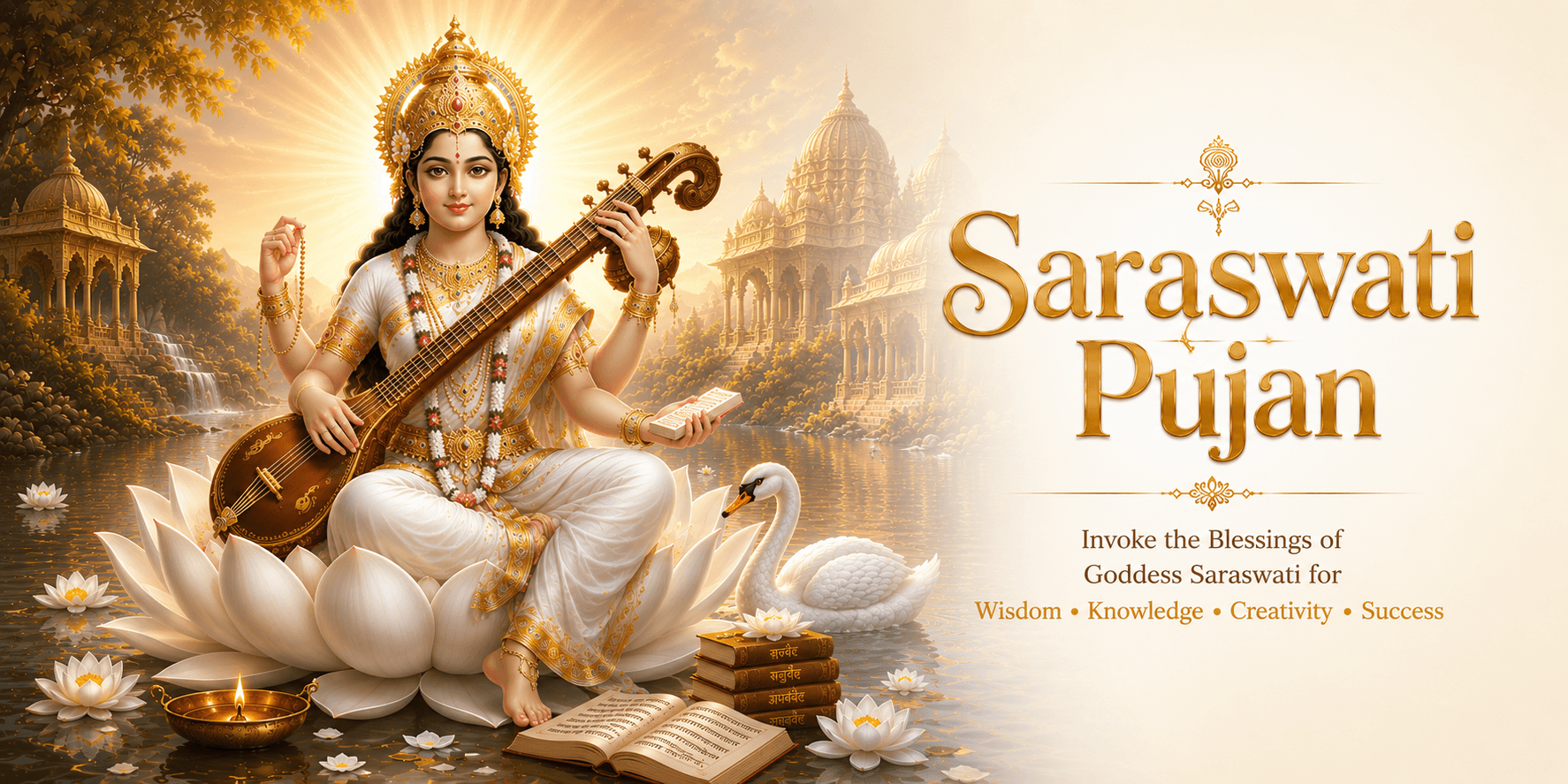
Saraswati Pujan
"Saraswati Mata is the goddess of all learning. She sits on a white lotus, dressed in pure white. She holds the veena. A book and a rosary rest at her side. Three great goddesses share the work of the universe. Lakshmi gives wealth. Durga gives strength. Saraswati gives the rarest gift of all. The light of true knowledge."