
Divine Collection
Weekly Puja

Vaibhav Lakshmi Puja
"Vaibhav Lakshmi is the form of Lakshmi that grants riches. The word vaibhav means grandeur, glory, and plenty. She blesses the home with wealth that lasts. Many earn well but cannot hold their money. This puja works to bring lasting wealth, or sthir Lakshmi. It clears the blocks that let money slip away. The Mother fills the home with comfort and grace. Business families seek her for steady growth. Her worship is most loved at Diwali and Dhanteras. These are the days when Lakshmi walks the earth. Devotees keep their homes clean and bright to receive her."
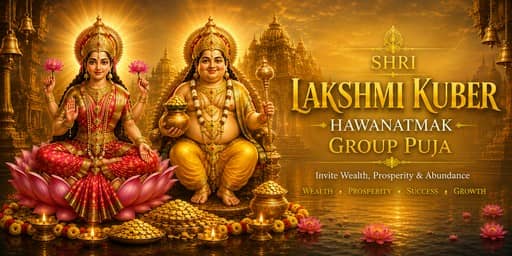
Lakshmi Kuber Hawanatmak Group Puja
"Wealth has two sides, and this hawan worships both. Lakshmi Mata is the flow of abundance, the wealth that arrives. Kuber Ji is the lord of the stored treasure, the wealth that stays. He is the treasurer of the devtas, the dikpala who guards the north, the direction of wealth itself, and the keeper of the nine nidhis, the fabled treasures of the cosmos. The tradition of worshipping them together is ancient and precise. On Dhanteras and Deepawali, Lakshmi Pujan is held incomplete without Kuber beside her. Her grace brings wealth in. His grace stops it from slipping away."
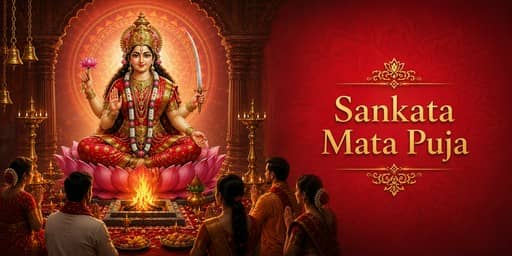
Sankata Mata Puja
"Sankata Mata's name means "the goddess who removes difficulties." She is a beloved form of the Divine Mother in Kashi, with her own ancient temple in the city. Devotees turn to her when life feels heavy with sankat, a Sanskrit word that means crisis, difficulty, or trouble. Where ordinary remedies have not worked, where the way forward feels closed, Sankata Mata answers. Tradition holds that those who pray to her with sincerity feel their burdens lift, even when the outer circumstances have not yet changed. Students, brides-to-be, and families facing chronic difficulty are her most devoted seekers."

Lalita Sahasranamam Path
"The Lalita Sahasranamam is the thousand names of Lalita Tripura Sundari. The supreme goddess of beauty, wealth, and divine play. Each of the thousand names describes a different aspect of her form, her power, or her grace. She is Lalita, the playful one. Tripura Sundari, the most beautiful in the three worlds. Raja Rajeshwari, the empress of all empresses. The Sahasranamam is part of the Brahmanda Purana, and is one of the most beloved texts in the Shri Vidya tradition. To recite it is to walk the devotee through a thousand doorways of the goddess's beauty."
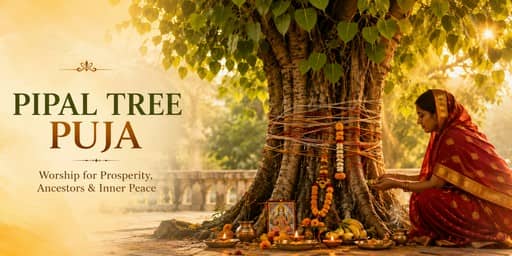
Pipal Tree Puja
"The Pipal tree is the most sacred tree in Hindu tradition. The Bhagavad Geeta calls it the Ashwattha, the tree under which Lord Krishna himself stands. Tradition holds that the gods reside in different parts of the Pipal. Lord Vishnu lives in its trunk. Lord Brahma lives in its roots. Lord Shiva lives in its leaves. The tree is also the form in which Shani Dev is said to be most easily worshipped. Devotees circumambulate the Pipal seven times, tie sacred threads, and offer water at its roots. The tree is one of the few in the world that releases oxygen even at night. Hindu tradition has worshipped it for thousands of years."