Divine Collection
Jobs Promotion Better
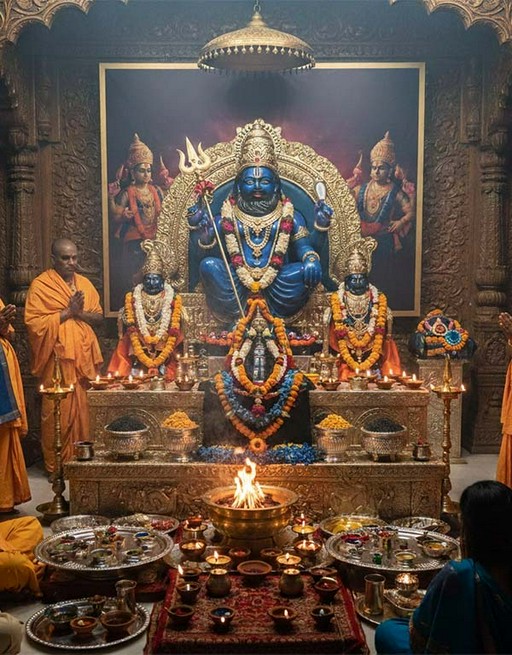
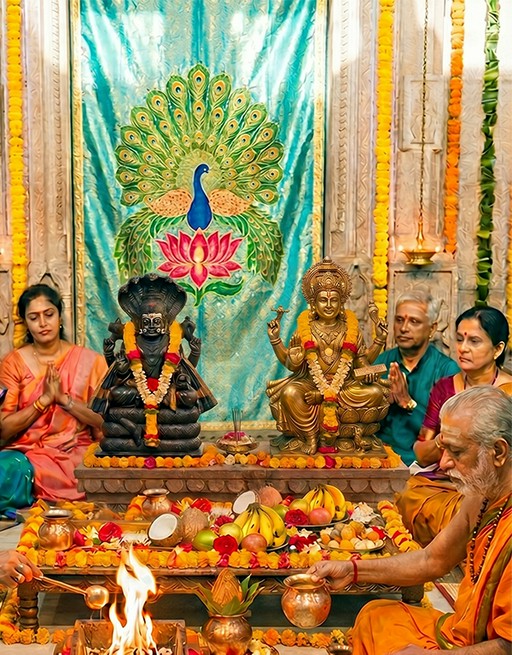
Deepawali (Diwali) Group Puja
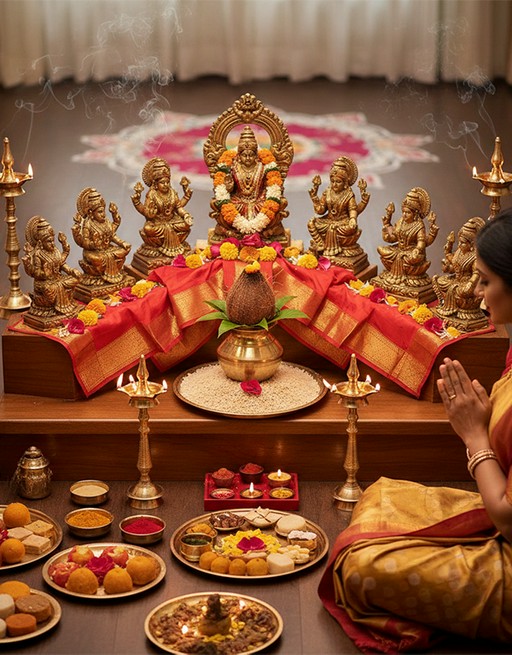
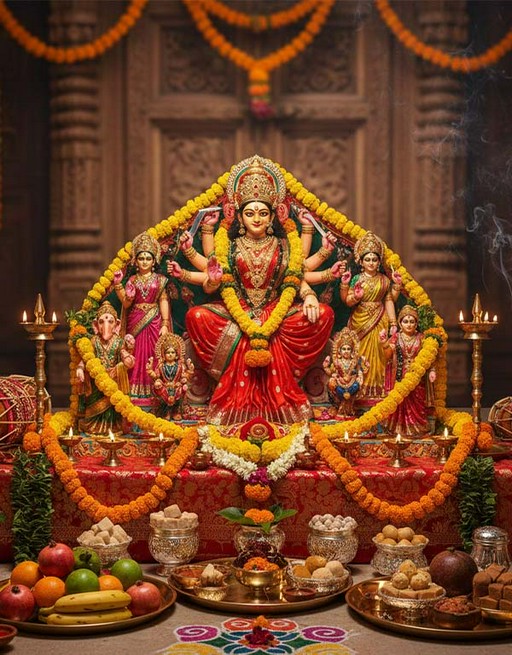
"Deepawali is the biggest festival in the Hindu year. It marks the return of Lord Ram to Ayodhya. People light rows of lamps to welcome him home. The night is sacred to Lakshmi, the goddess of wealth. She walks the earth and enters homes that wait for her. The puja begins with Ganesh, who clears all blocks. It then turns to Lakshmi for wealth and plenty. This group puja joins many devotees in one worship. The shared prayer carries great strength on this night. It brings lasting wealth, fame, and growth in business. Devotees keep their homes clean and bright to receive the Mother."
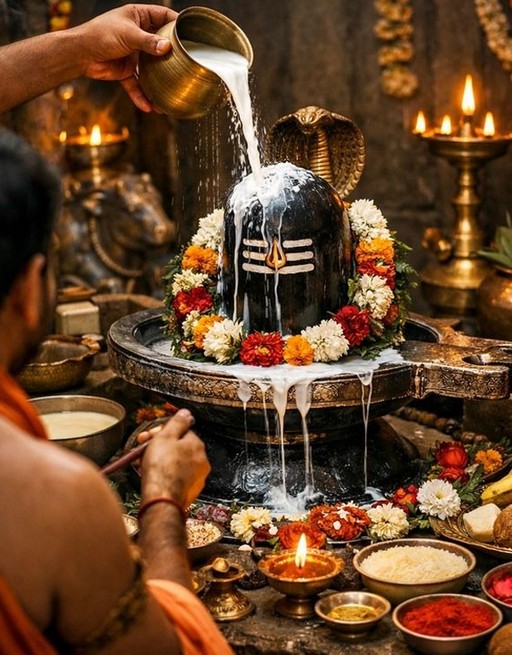
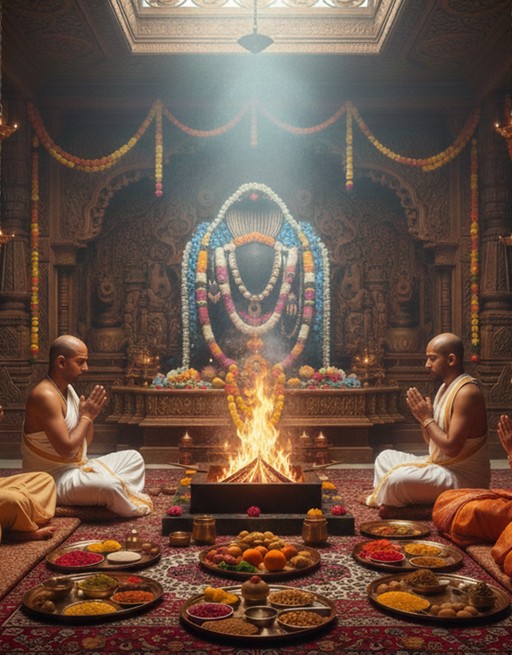
Rudrabhishek Group Puja
"Rudrabhishek is the sacred bathing of the Shivling. It is one of the most loved of all Shiva worships. Rudra is the fierce and healing form of Lord Shiva. The shastras say this rite pleases him the most. The Shivling is bathed in milk, curd, honey, and water. Each pour is made with the chant of the Rudra mantras. The bath washes away sin and clears all trouble. It brings health, peace, and the grace of Shiva. This group puja joins many devotees in one worship. The shared prayer carries great strength. Devotees seek Shiva's blessing for a calm and full life."
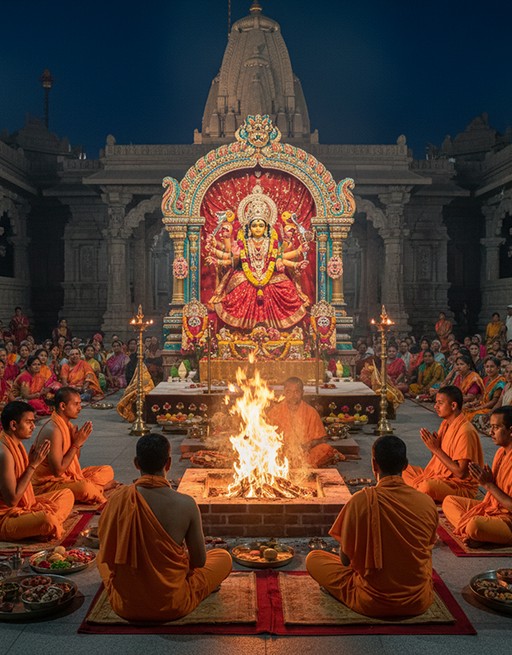
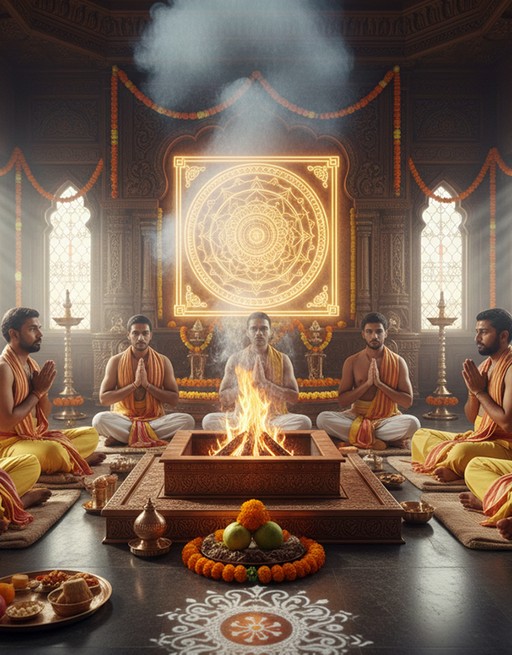
Rudra Homatmak Puja At Kailash Mansarovar
"Kailash Mansarovar is the holiest seat of Lord Shiva. Mount Kailash rises in the far Himalayas as the eternal abode of Shiva and Parvati. Below it lies Mansarovar, the sacred lake formed in the mind of Brahma. The shastras hold this as the most powerful place on earth for Shiva worship. Few reach this far and high to worship there. A puja at this seat is rare and full of merit. This homa is a fire worship of Lord Shiva in his Rudra form. The sacred fire carries each prayer to the Lord. It brings health, peace, and a fresh strength for life. Devotees long for this worship at the very throne of Shiva."
Shree Purusha Sukta Path and Yajna
"The Purusha Sukta is one of the most ancient and sacred hymns in the Rigveda. It describes the Purusha, the cosmic being, from whose body the entire universe is created. The sky is his head. The earth is his feet. The sun is his eye. The hymn is the foundation of Vedic philosophy itself, and is recited at every major yajna across the Hindu tradition. The Purusha Sukta is considered the supreme prayer to Vishnu in his cosmic form. To have it recited as a focused path with yajna is to align the family's life with the cosmic order itself."
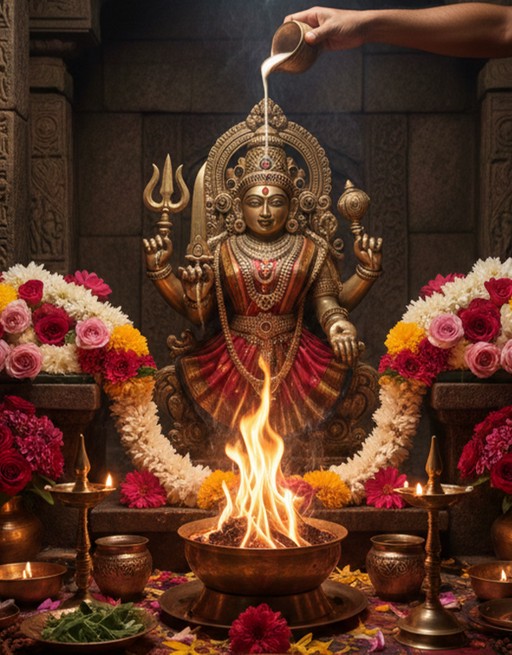
Shree Suktam Puja
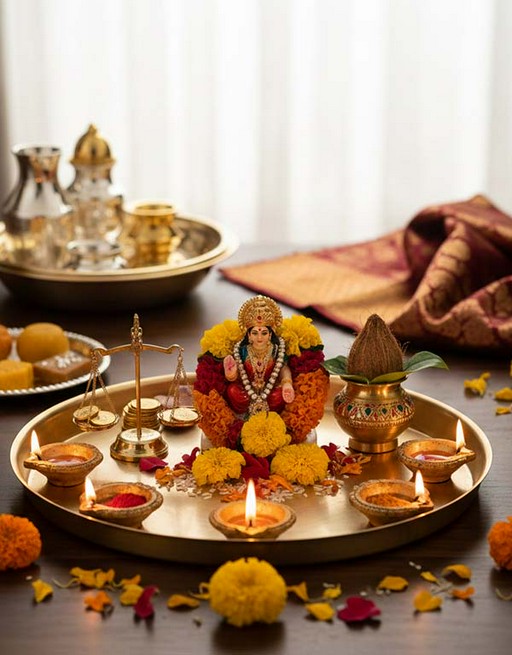
"The Shree Suktam Puja is the complete ritual ceremony built around the Shri Suktam hymn. Where the Path focuses on the recitation alone, the Puja adds the full ceremonial framework. Sankalp at the beginning. The formal worship of Lakshmi Mata's idol. The Shri Suktam recitation as the heart of the ritual. The havan to seal the offerings. The aarti to close the vidhi. This is the puja chosen when a family wants the complete Lakshmi ceremony, with every element of the classical tradition observed in full."
Shri Suktam 100 Path
"The Shri Suktam 100 Path is the elevated form of the Shri Suktam recitation. The fifteen verses of the Shri Suktam are chanted not once, but one hundred times. Each repetition multiplies the power of the previous one. By the end of the path, the verses have been chanted fifteen hundred times, with the energy of Lakshmi Mata compounding through every round. This is the puja chosen when a family needs not the standard blessing, but the most powerful Lakshmi puja available in the Vedic tradition."
Shani Jayanti Maha Puja
"Shani Jayanti is the birth anniversary of Shani Dev. The single most powerful day of the year for any Shani puja. Tradition holds that Shani Dev was born to Surya Dev and Chhaya Mata on the Amavasya of the month of Jyeshtha. His birth came with profound spiritual force. Even Surya Dev, his own father, is said to have looked away from him at first sight, because Shani's gaze carries the weight of cosmic karma. To worship Shani Dev on his birth day is to ask the great teacher to soften his lessons and bring his hardest phases to a graceful conclusion."
Pradosh Vrat Katha
"Pradosh Vrat is observed on the Trayodashi tithi, the thirteenth lunar day of every fortnight. The word pradosh means "the time at twilight," and refers to the sacred window between sunset and nightfall. Tradition holds that during this window, Lord Shiva dances on Mount Kailash while all the gods watch in devotion. Devotees who observe Pradosh Vrat receive Shiva's grace at his most joyful, most generous moment. The vrat is observed by households across India for the blessing of children, health, and the resolution of long-standing struggles."
Ramcharitmanas Path
"The Ramcharitmanas is the retelling of the Ramayana by the saint-poet Tulsidas. Written in Awadhi, the language of the common people of his time, the text made the story of Lord Ram accessible to every household. Where Valmiki's Sanskrit Ramayana was studied by scholars, Tulsidas's Ramcharitmanas became the song of every family. For four hundred years, devotees have recited it at home, sung its verses at gatherings, and turned to it during times of difficulty. The Ramcharitmanas is the most beloved version of the Ramayana in India today."
Shukra Var Vrat and Katha
"Shukra Var Vrat is the Friday vrat dedicated to Vaibhav Lakshmi. Friday itself is the day ruled by Shukra (Venus), the planet of beauty, wealth, and pleasure. Vaibhav Lakshmi is the form of Lakshmi Mata who blesses devotees with glory, fame, and the kind of wealth that becomes legacy. The vrat is observed for eleven or twenty-one consecutive Fridays, with the devotee fasting through the day and breaking the fast only after the Lakshmi puja in the evening. Tradition holds that those who complete the vrat with sincerity see their fortune transform."
Budhwar Vrat and Katha
"Budhwar Vrat is the Wednesday vrat dedicated to Budh Dev. Wednesday itself is ruled by Budh (Mercury), the planet of intellect, communication, and skilled work. The vrat is observed by devotees seeking sharper thinking, better speech, business growth, and family happiness. Lord Ganesha and Lord Krishna are invoked alongside Budh Dev. Ganesha is the deity of intellect itself. Krishna is the master of speech and persuasion. Together with Budh, they form the most powerful combination for everything Mercury governs."
Brihaspati Var Vrat Katha
"Brihaspati Var Vrat is the Thursday vrat dedicated to Brihaspati Dev, the cosmic teacher of the gods. Thursday itself is ruled by Brihaspati (Jupiter), the planet of wisdom, marriage, children, and dharmic living. The vrat is one of the most beloved in Hindu tradition. Unmarried devotees observe it for early marriage. Couples observe it for the blessing of children. Families observe it for the rise of fortune and the deepening of faith. Lord Vishnu is invoked alongside Brihaspati Dev, since both share the same expansive, benevolent nature."

-group-puja-6527e18f5ccc5711cd862203-54243791.png)