
Divine Collection
Peace
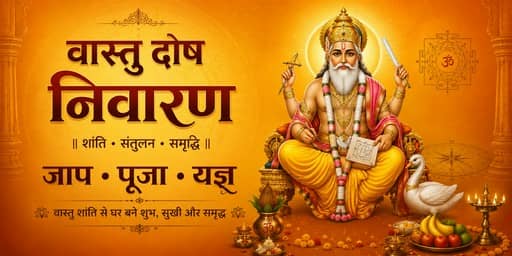
Vastu Dosh Nivaran Jaap Puja and Yajna
"In Vedic tradition, a building is never just a building. Every home is a living entity. It breathes in the energies of the earth beneath it, the sky above it, and the directions around it. When these energies flow in harmony, the home becomes a sanctuary. Prosperity gathers. Sleep is restful. Relationships soften. When the energies are obstructed, the same home can quietly weigh upon the lives within it. The Matsya Purana tells the story of Vastu Dev. The devas pressed his body face-down into the earth, and Lord Brahma blessed him. Any structure built upon his pinned body would prosper, but only if his presence and the directions were honoured."
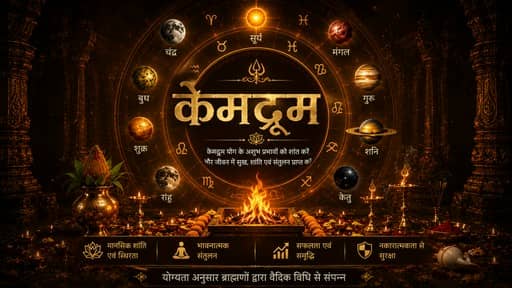
Kemdrum Yog Shanti Puja
"Kemdrum Yoga forms when the Moon stands alone in the birth chart, with no planets in the houses on either side of him. The Moon, who governs the mind and the emotions, becomes a lonely traveller. Devotees shaped by Kemdrum often feel a particular kind of solitude. Not the loneliness of having no one around. A deeper sense of moving through life without feeling supported. Financial stability comes and goes in waves. Decisions feel as though they must be made alone, without the natural backing one sees in others' lives."
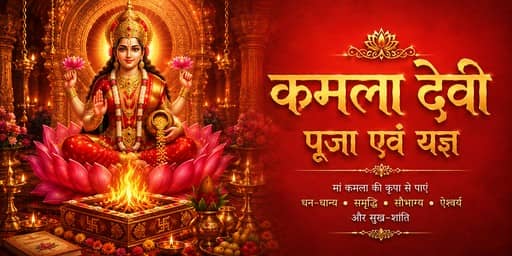
Kamla Devi Puja and Yajna
"Kamala Devi is the tenth and final of the ten Mahavidyas. She is the Tantric form of Lakshmi Mata. The goddess of supreme wealth, abundance, and good fortune. She sits upon a lotus, with elephants pouring sacred water over her head. Where Lakshmi gives wealth in its everyday form, Kamala gives wealth in its highest, most enduring form. Spiritual abundance. Material prosperity. The fortune that lasts across generations. This is one of the most powerful pujas for wealth and family lineage."
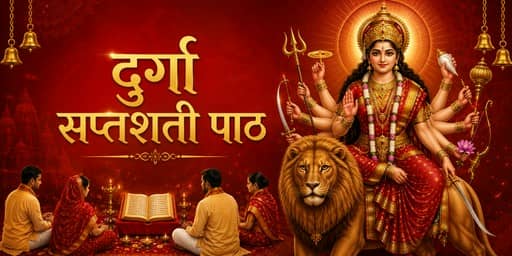
Durga Saptashati Path
"Durga Saptashati is also known as the Devi Mahatmya. The Glory of the Goddess. The text has seven hundred verses drawn from the Markandeya Purana. They recount the great stories of Maa Durga's victories. Her birth from the combined energies of the gods. Her epic battle against Mahishasura. Her defeat of Shumbha and Nishumbha. For over fifteen centuries, devotees across India have recited it during Navratri and at every moment of crisis. The very chanting of its verses summons the goddess into the room. Each chapter is itself an invocation."
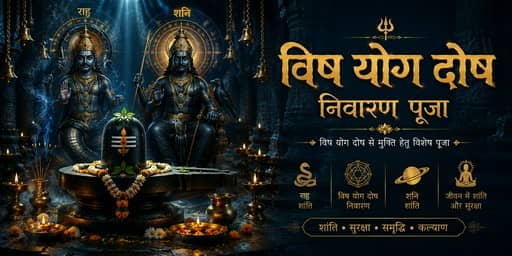
Visha Yog Dosh Nivaran Puja
"Visha Yog forms when the Moon and Saturn come together in the same house. Ancient sages named it Visha, meaning poison. When the gentle, emotional energy of the Moon merges with the cold, restrictive energy of Saturn, the blend behaves like a slow-acting poison. Quiet. Persistent. Hard to identify. The mind feels weighed down. Emotional life feels muted. Health takes a slow downward turn, often in ways that resist clear diagnosis. Income flows are restricted. Sleep becomes difficult. The devotee senses they are walking slightly out of sync with their own happiness."
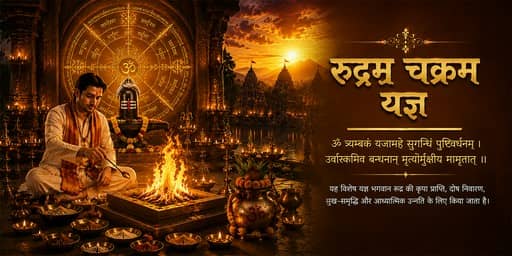
Rudram Chakram Yajna
"Rudram Chakram Yajna is the fire ritual built around the Sri Rudram, the foundational Shiva hymn from the Yajurveda. The Rudram is one of the oldest and most powerful Vedic texts. It invokes Shiva in his Rudra form, the fierce protector and the destroyer of negativity. The Chakram (circle) refers to the cyclical, repeated chanting of the Rudram, where each round multiplies the power of the previous one. The yajna fire carries every chanted verse upward, where the offerings reach Lord Shiva directly."
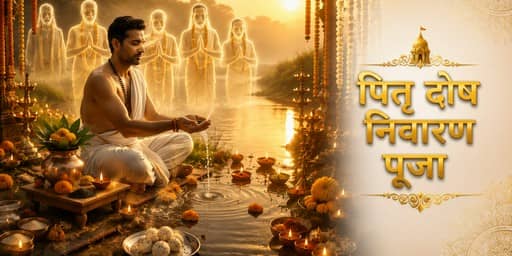
Pitra Dosh Nivaran Puja
"Pitra Dosh is an affliction passed down through the family lineage. It forms when the souls of departed ancestors have not received the rituals, prayers, or peace they were due. In Hindu tradition, the bond between the living and the ancestors is unbreakable. Every family carries within it the prayers and the unfulfilled wishes of those who came before. Sometimes also their lingering sorrows. When these remain unresolved across generations, they take the form of Pitra Dosh. A quiet shadow over the family's path. It is often felt as repeated obstacles in marriage, conception, education, and career, despite every effort. The dosh is not a curse. It is a calling. The ancestors are gently asking to be remembered, honoured, and finally released into peace."
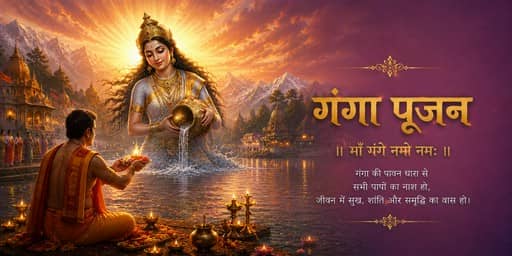
Ganga Pujan
"Ganga did not always flow on earth. Sage Bhagiratha did years of penance to bring her down, so her waters could free the souls of his ancestors. But her descent was so powerful, it would have shattered the earth. Lord Shiva caught her in his matted locks and let her flow gently onto the Himalayas. Since then, Ganga has been more than a river. She is the mother who takes away the sins of those who touch her waters."
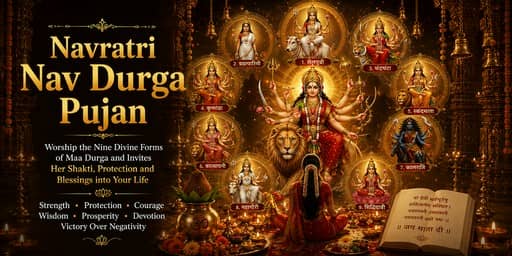
Navratri Nav Durga Pujan
"Navratri is nine nights of devotion to Maa Durga. Each night honours one of her nine forms. Shailputri, Brahmacharini, Chandraghanta, Kushmanda, Skandamata, Katyayani, Kaalratri, Mahagauri, and Siddhidatri. The first three days bring strength. The next three bring prosperity. The final three bring wisdom. By the ninth night, the devotee has been blessed by every form of the Mother."