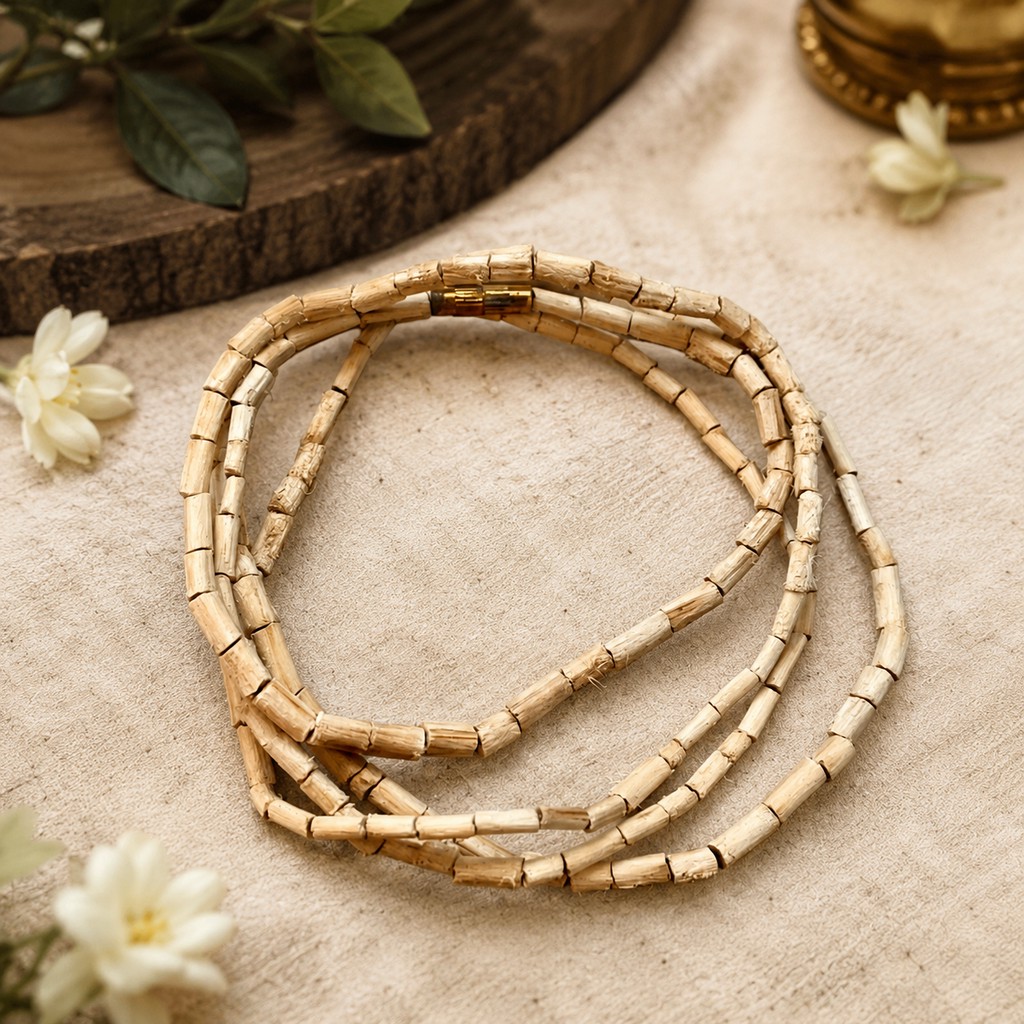
Tulsi kanthi Mala Details
Sacred Tulsi kanthi Mala - Divine Blessings of Shree Vishnu Ji
A Sacred Symbol of Devotion, Purity & Divine Connection
Tulsi holds a deeply revered place in Sanatan Dharma and is especially sacred to Lord Vishnu and Lord Krishna. Worshipped as Tulasi Devi, she is lovingly regarded in Vaishnava traditions as one of the most beloved devotees of Lord Krishna.
A Tulsi Mala is much more than a spiritual ornament. It represents faith, surrender, devotion and the desire to remain connected with the Supreme Lord in everyday life.
Spiritual Significance of Tulsi Mala
According to Vaishnava traditions and references in sacred scriptures such as the Padma Purana and Skanda Purana, Tulsi is especially dear to Lord Vishnu. Wearing Tulsi beads around the neck is regarded as a sacred expression of devotion and a symbol of taking shelter in the Lord.
In the devotional traditions of Vrindavan, Mathura and other Krishna temples, Tulsi Kanthi Mala holds a special significance. Devotees wear it as a reminder of their spiritual identity and their dedication to the path of Bhakti.
Why Wear a Tulsi Mala?
Divine Connection: Symbolises devotion and a spiritual connection with Lord Vishnu and Shri Krishna.
Symbol of Bhakti: Represents surrender, faith and dedication to the Supreme Lord.
Spiritual Remembrance: Encourages the wearer to remember God's name and teachings throughout daily life.
Sattvic Living: Serves as a reminder to follow a life guided by purity, compassion and righteous actions.
Vaishnava Tradition: Traditionally worn by devotees as a mark of devotion to Lord Hari.
Sacred Mantra for Daily Chanting
ॐ नमो भगवते वासुदेवाय
Om Namo Bhagavate Vasudevaya
This sacred mantra is dedicated to Lord Vishnu and is widely chanted by devotees seeking divine grace, inner peace and spiritual growth.
Carry the Blessings of Hari in Your Everyday Life
Wear this Sacred Tulsi Mala as an expression of your devotion to Lord Vishnu and Shri Krishna. Let every bead remind you of faith, humility and the eternal path of Bhakti.